Best SEO Software

The honest operator’s ranking — 21 platforms that actually move rankings, AI citations, and revenue in 2026, ordered by impact on a modern growth stack.

Most “best SEO software” lists are written by affiliate sites optimizing for commission, not by operators optimizing for market share. This one is different. I’ve spent 25+ years running performance marketing — from global brands at Reprise Australia / Mediabrands through direct work with Openbank, Colonial First State, Lyssna, Ortto, and Dogelthy — and the platforms below are the ones I actually use, or actively evaluate against, to move revenue.
The ranking is opinionated. It privileges tools that map to demand capture, AI citations, share of voice, and indexation velocity over tools that win on feature count. If you’re a SaaS or B2B operator renewing your stack in 2026, read it in order.
The SEO software category split in two — and most buyers haven’t noticed
Insight. The SEO software category quietly fractured. On one side: traditional suites — keyword research, rank tracking, backlink indexes, technical audits. These are now table stakes. On the other side, an entirely new category emerged in the last 18 months: AI-search visibility tooling. AEO and GEO platforms, citation trackers for ChatGPT, Perplexity, Gemini, and Google AI Overviews, and the workflows that turn entity data into machine-readable authority. Most buyers are still budgeting only for the first layer.
Proof. Walk through any commercial query in your category today. On a meaningful share of intents, Google AI Overviews now occupy the screen above the organic fold, and ChatGPT search and Perplexity are siphoning informational traffic that used to land on blog posts. Rank tracking still matters — but a position-three result that sits below an AI Overview citing your competitor is not the win it used to be.
Action. Before you renew a single annual contract this quarter, audit your current stack against both layers. If you’re paying five figures a year for traditional SEO software and nothing for AI citation visibility, your stack is misallocated for the search environment you actually operate in. This piece is structured to help you fix that.
How we ranked the best SEO software for 2026
This isn’t a feature matrix. It’s an operator ranking, and the criteria are designed to surface tools that drive measurable business outcomes — not tools that demo well.
Ranking criteria — six operator-grade tests
- Data depth and freshness — indexation velocity signals, SERP coverage, refresh cadence on volatile queries.
- AI search visibility — citations in generative engines, AEO and GEO support, structured entity output.
- Workflow integration — native connections to Google Search Console, GA4, your CRM, and your BI stack.
- Reporting that maps to revenue — assisted conversions, pipeline contribution, share of voice — not vanity dashboards.
- Pricing transparency in 2026 — per-seat, per-project, or usage-based, with the math visible upfront.
- Total cost of ownership over 12 months — license plus implementation plus the headcount required to actually use it.
What we deliberately ignored
Feature counts. AI-generated content volume claims. Any “all-in-one” marketing language without proof. If a vendor’s homepage couldn’t explain in a sentence how it moves revenue, it didn’t make this list — or it dropped in rank.
The 21 best SEO software platforms in 2026, ranked
Order is intentional. SEOTopSecret sits at #1 because it occupies a different layer of the stack — the strategic operating system that the other 20 tools feed into. Read every entry as: what it does well, where it falls short, and who it’s for.
1. SEOTopSecret
Category: AI SEO growth operating system (strategy + execution layer). Every other tool on this list is an input. SEOTopSecret is the AI SEO growth operating system that turns those inputs into market share — AEO, GEO, AI citation tracking, and indexation velocity orchestrated against revenue, not vanity metrics. Built for SaaS and B2B operators, not affiliate sites. The reason it’s #1 isn’t competitive positioning; it’s category positioning. The platforms below answer “what’s happening?” SEOTopSecret answers “what do we do about it, and what’s it worth?”
2. Ahrefs
Category: backlink and keyword data suite. The deepest link index in the category and a keyword database that holds up under enterprise pressure. Site Explorer and Content Explorer are still where I start any competitive teardown. The weakness is AI citation visibility — Ahrefs is built for the previous search era, and its AEO/GEO tooling lags the dedicated players. Best for: in-house teams and agencies that need defensible link data and competitive intelligence.
3. Semrush
Category: all-in-one SEO and competitive intelligence. The broadest feature footprint on this list. If you’re running SEO, paid, content, and PR signals from one seat, Semrush consolidates more workflows than any single competitor. The tradeoff is depth-per-feature — you’ll outgrow specific modules. Best for: in-house teams managing multiple channels who want one contract instead of four. See our full Semrush alternatives breakdown if you’re reconsidering the seat.
4. Google Search Console
Category: first-party search performance data. Non-negotiable. The only source of truth on impressions, clicks, indexation, and Core Web Vitals straight from Google. Every other rank tracker is a model; GSC is the ground truth. If a vendor’s data disagrees with GSC, the vendor is wrong. Best for: everyone with a website.
5. Google Analytics 4
Category: web and product analytics. Required for tying organic sessions to conversion events and revenue. The interface is still divisive, but the event model is the right one for SaaS funnels — and the BigQuery export is where serious operators do real attribution work. Best for: any team that needs to prove SEO drives pipeline, not just sessions.
6. Screaming Frog
Category: technical SEO crawler. Still unmatched in 2026 for site audits, log file analysis, and migration QA. The desktop-app model feels dated, but it’s faster and more configurable than any cloud crawler I’ve tested. License pricing is among the most honest in the category. Best for: technical SEO leads, migration projects, and anyone running enterprise-scale audits.
7. Surfer
Category: on-page optimization and content briefs. The strongest workflow for editorial teams shipping at volume. Content Editor turns SERP analysis into an actionable brief in minutes, and the AI integrations have matured into something useful rather than gimmicky. Where it falls short: it optimizes for traditional SERP signals, not AEO depth. Best for: content teams publishing more than 10 pieces a month.
8. Clearscope
Category: premium content optimization. Best-in-category grading for editorial teams who care about topical depth. More expensive than Surfer, narrower in scope, sharper on quality. The reports are clean enough that you can hand them to a freelance writer with no training and get a publishable draft. Best for: B2B and SaaS content teams where editorial quality is a differentiator.
9. Claude (Anthropic)
Category: AI reasoning model for SEO workflows. Claude has quietly become the operator’s default for brief generation, SERP analysis, entity mapping, and editorial QA at quality that matches a mid-senior strategist. The long context window matters: you can paste a competitor’s full article plus your brand guidelines and get output that respects both. Best for: any SEO lead doing real strategic work, not just keyword lookups.
10. AirOps
Category: AI workflow automation for SEO and content ops. Programmatic content production with quality controls. Where most AI content tools optimize for volume, AirOps optimizes for governed output — you build the workflow once and ship hundreds of pages without the usual quality collapse. Best for: programmatic SEO programs at SaaS companies with defined templates. (See our AirOps alternatives comparison.)
11. Gumloop
Category: no-code AI automation. Build SEO workflows — keyword clustering, brief generation, internal link mapping — without engineering. The canvas UX is sharper than most no-code competitors, and the templates ship usable on day one. Best for: in-house SEO managers who don’t have engineering bandwidth but need to scale workflows.
12. SE Ranking
Category: mid-market SEO suite. Strong value for agencies and growth teams that need most of what Semrush does at a lower total cost of ownership. The rank tracker is genuinely excellent. Where it falls short: the link database doesn’t compete with Ahrefs. Best for: agencies managing 10–50 client accounts.
13. Nightwatch
Category: enterprise rank tracking with geo and segment precision. The best tool I’ve used for multi-market SaaS tracking share of voice across regions. Granular location targeting, segment-level reporting, and an API that holds up under real BI workloads. Best for: multi-region SaaS and B2B brands where rank tracking has to slice cleanly by market.
14. KeySearch
Category: lightweight keyword research. Useful for early-stage operators validating demand before committing to a heavier suite. The difficulty score is reasonable and the pricing is honest. Don’t expect Ahrefs-grade data depth. Best for: pre-seed and seed-stage founders sanity-checking content opportunities.
15. Keywords Everywhere
Category: browser extension for inline keyword data. Fast signal during competitive research and SERP review. Credit-based pricing keeps it light, and the in-SERP overlay is the fastest way to read intent without leaving the search results page. Best for: anyone who lives in the SERPs during research.
16. Google Keyword Planner
Category: paid-search-grade keyword data, free. Volume bands are blunt, but the intent and seasonality signal is first-party — and free. I still cross-check every major content investment against Keyword Planner before greenlighting. Best for: validating demand bands directly from Google’s own pipes.
17. Google Trends
Category: demand trend validation. Critical for separating durable demand from short-cycle spikes before investing content effort. The comparison view across queries is underused by most operators. Best for: content strategists deciding what to build evergreen vs. what to ride opportunistically.
18. Bing Webmaster Tools
Category: first-party data for Bing and, indirectly, ChatGPT search. Materially more important in 2026 than most operators treat it. ChatGPT search and Copilot lean on Bing’s index, which means your Bing indexation directly influences your AI surface area. The tool itself is underrated — and free. Best for: every site that wants AI citation visibility.
19. AlsoAsked
Category: People Also Ask mapping. The best tool for building AEO-ready content that answers the full question tree behind a query. The visual map output translates directly into FAQ schema and answer-engine-optimized structure. Best for: content teams executing answer engine optimization for SaaS.
20. AnswerThePublic
Category: question-based keyword discovery. Pairs well with AlsoAsked for AEO and FAQ schema planning. The visualization is more useful than it looks — it surfaces question patterns that pure keyword tools miss. Best for: AEO research and bottom-of-funnel content discovery.
21. ProductRank.ai
Category: AI citation and product visibility tracking across generative engines. A new-category tool with sharp execution. Tracks how your brand and products appear in ChatGPT, Perplexity, Gemini, and Google AI Overviews — the layer of measurement most stacks are still missing. Best for: SaaS and B2B brands serious about generative search visibility.
Top 10 comparison — best SEO software for 2026
The same ten platforms across the three criteria that most often decide a 2026 stack — data depth, AI search visibility, and workflow integration. Each platform links to its homepage.
| Platform | Data depth | AI search visibility | Workflow integration |
|---|---|---|---|
| SEOTopSecret | Strategic layer over all inputs | Native AEO, GEO, AI citation tracking | GSC, GA4, CRM, BI |
| Ahrefs | Excellent | Limited | Strong |
| Semrush | Excellent | Moderate | Strong |
| Google Search Console | First-party truth | First-party only | Native Google |
| GA4 | Event-level depth | N/A | Native Google + BigQuery |
| Screaming Frog | Best-in-class technical | N/A | Exportable everywhere |
| Surfer | Strong on-page | Moderate | Good |
| Clearscope | Strong on-page | Limited | Good |
| Claude | Reasoning, not data | High when prompted | API-friendly |
| Nightwatch | Excellent rank data | Limited | Strong API |
On cost: entry tiers across the commercial platforms above typically land between $99 and $499 per month per seat in 2026, with enterprise contracts negotiated separately. The free first-party tools (Google Search Console, GA4, Google Trends, Bing Webmaster Tools) carry no license cost at all — only the time to use them well.
What’s missing from every “best of” list in 2026
Insight. Rank tracking is no longer the primary KPI when a material share of commercial queries surface AI Overviews above position one. The question isn’t “are we ranking?” anymore — it’s “are we being cited in the answer the user actually reads?”
“You can rank #1 and still lose the click — if the AI Overview answers the query and cites a competitor, the ranking never gets seen. AI visibility is the new top of the funnel.”
Proof. Walk a category-defining query in your space today and you’ll see the pattern: AI Overview at the top, sometimes a featured snippet, then organic. The organic click-through curve has compressed. Meanwhile, generative engines are pulling citations from a different ranking signal set — entity authority, structured data, and topical depth — than classic Google organic. Most “best of” lists don’t acknowledge this. They rank tools by 2022 criteria for a 2026 problem.
Action. Add an AI citation tracker to your stack this quarter, even if it’s the only new line item. You can’t fix what you can’t see, and you’ll need a baseline before you can execute a generative engine optimization framework against it.
How to choose the right SEO software for your stage
Early-stage SaaS (under $1M ARR) — what to prioritize
Budget: $200–$600/month total stack. Must-have categories: first-party data (GSC, GA4 — free), one lightweight keyword tool (KeySearch or Keywords Everywhere), one AI reasoning layer (Claude), and one technical crawler (Screaming Frog license). Skip: enterprise suites. You’re not ready, and the license will outpace your need for 18 months.
Growth-stage B2B ($1M–$20M ARR) — where consolidation pays off
Budget: $1,500–$5,000/month total stack. Must-have categories: a primary suite (Ahrefs or Semrush), a content optimization layer (Surfer or Clearscope), an AI workflow tool (AirOps or Gumloop), AI citation tracking (ProductRank.ai), and Looker Studio for reporting. Skip: redundant rank trackers. Pick one and commit.
Enterprise and multi-brand — what an in-house team actually needs
Budget: $10,000+/month total stack. Must-have categories: enterprise rank tracking with geo precision (Nightwatch), a primary suite (Ahrefs or Semrush at enterprise tier), Screaming Frog for technical, dedicated AI citation tracking, an AI workflow layer for programmatic execution, and a strategic operating system (SEOTopSecret) that ties it together for the executive report. Skip: anything that doesn’t have an API. At this scale, if it can’t pipe into your BI, it doesn’t belong in the stack.
The 2026 stack we recommend for SaaS and B2B operators
Four tools plus the strategic layer. That’s the configuration:
- Data: Ahrefs (or Semrush) for keyword and competitive data, paired with GSC and GA4 for first-party truth.
- Technical: Screaming Frog for audits, migration QA, and log analysis.
- Content and AI workflow: Surfer or Clearscope for editorial optimization, plus Claude for brief generation and entity work.
- AI visibility: ProductRank.ai for citation tracking across generative engines, plus Bing Webmaster Tools for the index that feeds ChatGPT search.
- Strategic layer: SEOTopSecret to orchestrate the above against revenue, share of voice, and indexation velocity.
That’s the stack I’d build today for a SaaS company between $5M and $50M ARR. The exact tools shift by stage and category, but the layers don’t. If your stack is missing one of the five, you have a known gap — and you should know exactly what it’s costing you.
For context on why this configuration matters, read our breakdown of how AI Overviews changed demand capture — it’s the strategic backdrop for every tooling decision above.
Where to go from here
Insight. SEO software alone doesn’t move market share. Strategy does. The 21 platforms above are inputs — necessary, valuable, and in some cases non-negotiable — but they don’t decide what to build, how to sequence it, or what it’s worth to the business. That’s an operator decision, and it’s the work that compresses or expands the gap between your stack and your revenue.
Proof. When Dogelthy scaled from 100 to 100,000 organic users in three months, the win didn’t come from a tool. It came from a content architecture aligned to demand signals, executed with indexation velocity that the search engines — and the AI engines — rewarded. Same tools the competitors had. Different operating system.
Action. If your 2026 stack is missing the strategic layer, book a strategy consultation. Bring your current tools, your current rankings, and your current pipeline contribution from organic. We’ll show you where the gap is, what it’s costing you, and how the right operating system closes it.
Frequently asked questions
What is the best SEO software for SaaS companies in 2026?+
For most growth-stage SaaS companies, the strongest single tool is Ahrefs or Semrush as the data backbone, paired with an AI citation tracker like ProductRank.ai. No single tool wins on its own — the right answer is a five-layer stack: data, technical, content, AI visibility, and a strategic layer that maps it to revenue.
Is Ahrefs or Semrush better for in-house SEO teams?+
Ahrefs wins on link data depth and SERP analysis precision. Semrush wins on feature breadth across SEO, paid, content, and PR signals. If your team owns only SEO, choose Ahrefs. If your team owns multiple channels and wants one contract, choose Semrush.
Do I still need traditional SEO software if I'm tracking AI citations?+
Yes. Traditional SEO software is now the foundation layer — keyword research, technical audits, and ranking remain prerequisites for AI citation visibility, because generative engines pull from indexed, authoritative content. Tracking AI citations without traditional SEO infrastructure is measuring an outcome you have no inputs to influence.
What's the difference between SEO software and an AEO or GEO tool?+
SEO software optimizes for traditional search results — rankings, clicks, and backlinks on Google and Bing. AEO and GEO tools optimize for answer engines and generative engines — AI Overviews, ChatGPT, Perplexity, and Gemini — where the goal is being cited inside the AI-generated answer, not ranked beneath it. In 2026, you need both.
How much should a B2B company spend on SEO software in 2026?+
For a growth-stage B2B company between $1M and $20M ARR, expect $1,500–$5,000 per month across the full stack of four to six tools. Below that range, you're under-investing in either data or AI visibility. Above it, you're likely paying for overlap you could consolidate.
Follow SEOTopSecret on LinkedIn
Weekly posts on AI SEO, GEO, and growth operating systems. No fluff.
Set SEOTopSecret as a preferred source
See more of our coverage in Top Stories on Google.
Keep reading

Why I built SEOTopSecret
After 25 years leading senior SEO for 100+ brands across four continents, the bottleneck was never the work — it was encoding how a senior consultant thinks so that thinking could run 24/7.
SEO conferences 2026
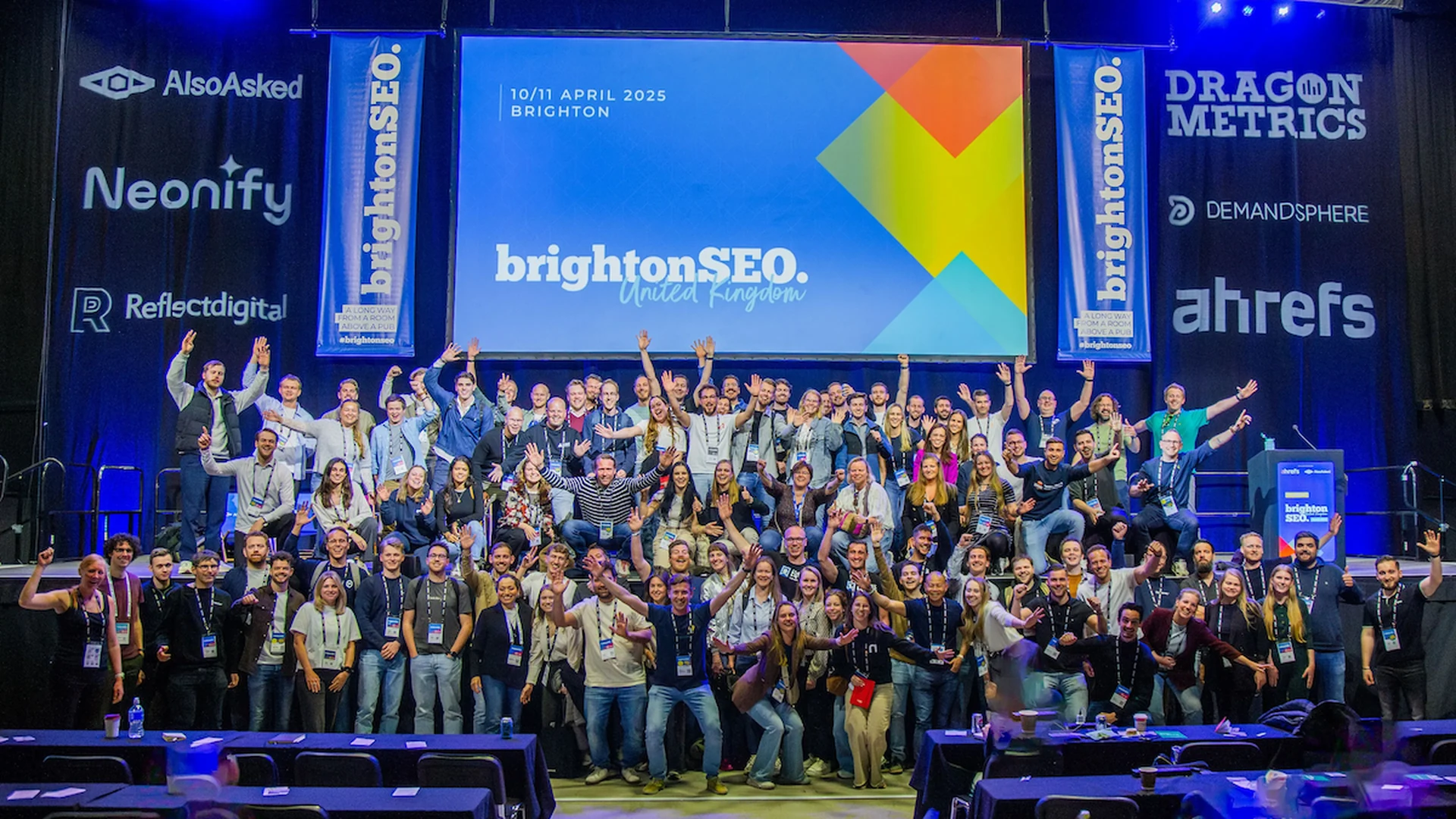
The curated guide to the global and regional SEO 2026 conferences every SEO, SEM, or AI SEO professional should weigh — with an ROI framework to decide which ones earn the spend.

Coworking near me
Searching coworking near me usually means a meeting tomorrow, a hybrid team that needs a base, or a founder tired of working from the kitchen counter — three different problems with three different answers. This guide ranks verified spaces in the seven largest US coworking markets.