
SEO for Gemini
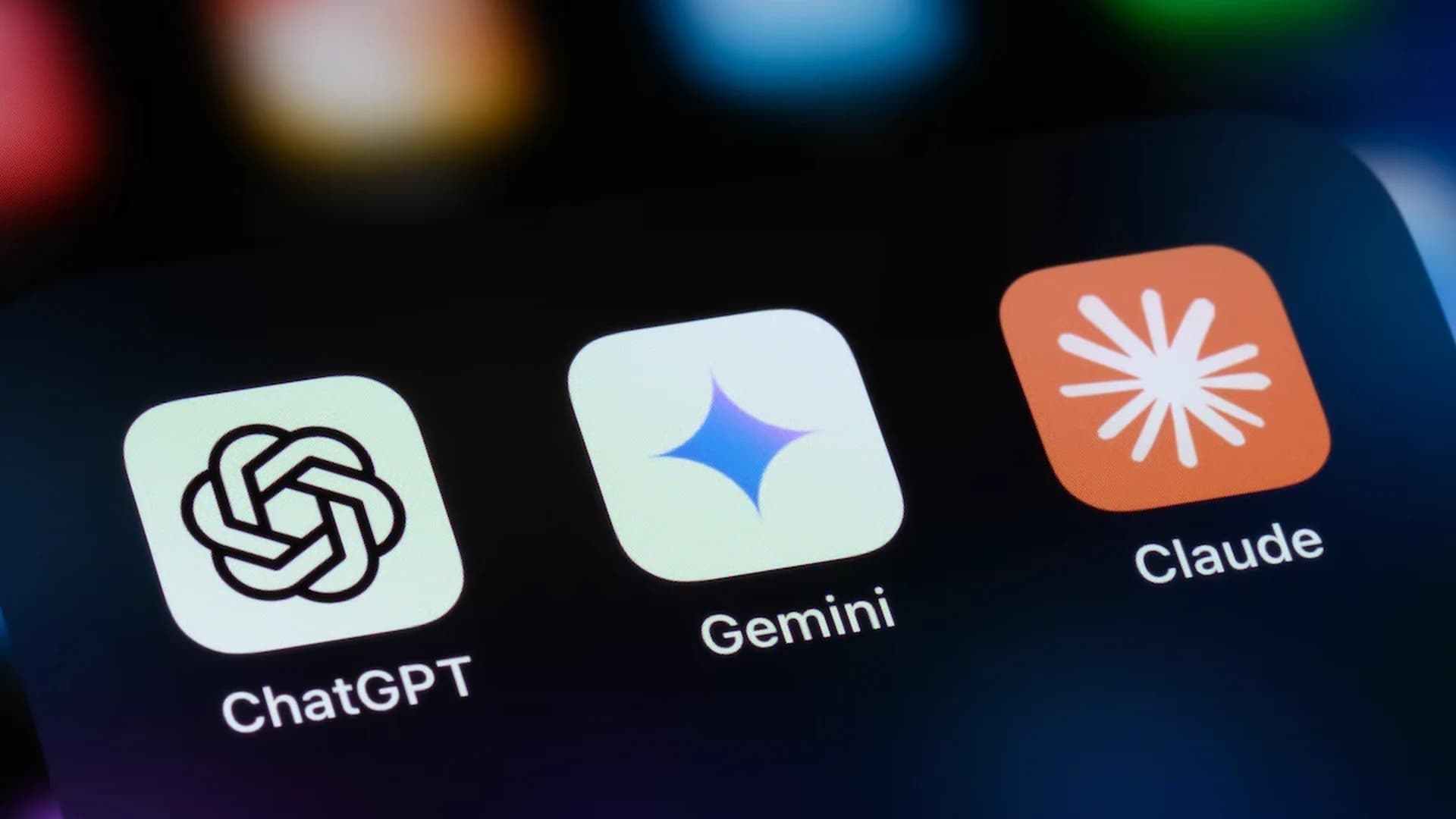
SEO for Gemini means optimizing your brand so Gemini — Google's AI integrated across Search, Workspace, and Android — interprets, cites, and recommends it.

Google is no longer just a search engine. It's an AI-powered answer engine. And Gemini — Google's AI integrated across Search, Workspace, and Android — is redefining the rules of digital positioning. The question is no longer only whether your site appears on Google's first page. The critical 2026 question is: is your content being cited by Gemini when a user asks a question?
At SEOTopSecret we've spent more than a year tracking Gemini's behavior inside our clients' search results. The conclusion is clear: brands that don't optimize for AI are losing visibility fast. For clients like Openbank (finance), Milkitmex and Dogelthy (ecommerce), and Tudepa.com (real estate), mentions in AI Overviews and the Gemini app have become as strategic a visibility channel as classic organic rankings.
From Google Search to Google Gemini: the paradigm shift
Gemini is not a product separate from Google Search. It's the AI layer that now processes, interprets, and answers queries directly inside the results page through AI Overviews, and also lives as a standalone conversational assistant in the Gemini app and on Android.
For millions of searches, users now get an AI-generated answer before they see traditional organic results. If your content isn't selected by Gemini as a source, you lose the click — even if you rank position 1. And if your site hasn't consolidated topical authority, you won't even appear in the source box attached to the answer.
“Traditional SEO optimizes for ten blue links. SEO for Gemini optimizes to be the source the AI cites inside a single answer.”
How Gemini selects and cites sources
Gemini doesn't cite just any page. It selects content that meets specific criteria derived from how Google trains and grounds its models: topical relevance, trust signals, extractable structure, and freshness. In practice, the highest-weight factors are:
- Clear, direct answers to the user's query, ideally in the first two paragraphs under each H2 or H3.
- Verifiable data — percentages, figures, comparisons, and sources with demonstrated authority.
- Structured content the AI can process easily: H2/H3, lists, tables, FAQs with schema.
- E-E-A-T signals: real author experience, demonstrable expertise, editorial authority, domain-level trust.
- Freshness: Gemini prioritizes updated content — publish and modified dates matter.
The difference from traditional SEO is that this isn't only about keywords and backlinks. It's about making your content the best possible source for an AI to cite as a reference for a specific question.
That is the practical focus of optimization for Gemini: making each section clear, structured, and well supported enough that it can be pulled directly into an AI-generated answer.
How SEO for Gemini works
Traditional SEO vs. SEO for Gemini
Positioning is no longer only about appearing in Google. It's also about being the source engines like Gemini can understand, trust, and cite. The two disciplines coexist — but the metrics, formats, and signals are not identical.
| Dimension | Traditional SEO | SEO for Gemini |
|---|---|---|
| Goal | Rank among the top 10 organic results | Get cited inside the AI-generated answer |
| On-page optimization | Keywords in title, H1, meta description | Extractable answers under each H2/H3, Q&A format |
| Authority signal | Link building and PageRank | Topical authority + proprietary data + entity consolidation |
| Key metric | SERP CTR, average position, organic traffic | AI Overviews mentions, cited pages, AI traffic in GSC |
| Role of schema | Rich results (stars, expandable FAQ) | Semantic context so the AI recognizes the content type |
| Freshness | Important but not critical | Critical — Gemini prioritizes updated content |
The factors Gemini uses to choose what content to show
Based on what we observe across our clients and on Google's public documentation, Gemini prioritizes six factors:
- Deep semantic relevance — not just the keyword, but the full topical context including related entities.
- Content structure — H2/H3s that answer sub-questions autonomously and citably.
- Specific data and figures — percentages, statistics, comparisons, proprietary benchmarks.
- Freshness — visible publish and last-updated dates.
- Domain topical authority — interconnected content clusters, not isolated articles.
- Technical signals — speed, Core Web Vitals, mobile rendering, zero crawl errors.
7 strategies to position your brand in Gemini
1. Structure your content to be cited, not just ranked
Every section of your content should be able to function as an independent answer. Gemini extracts fragments — it doesn't read full articles. If your H2 plus the next two paragraphs answer a question clearly and completely, your odds of being cited rise sharply. The operating rule: each H2 or H3 should be an implicit question, and the first 60–80 words of the block should answer it directly.
2. Answer specific questions with clarity
Conversational search is growing. Gemini answers questions like “how do I position my brand in AI search?” and needs sources that answer exactly that. Include real questions as H2 or H3 — pulled from “People Also Ask”, AlsoAsked, Reddit, niche forums — and answer them in the first 2–3 sentences of the paragraph. No preamble, no long intros.
3. Implement advanced schema markup
Schema (JSON-LD) tells Google exactly what your content is: an article, an FAQ, a how-to, a product. The more structured context you provide, the easier it is for Gemini to process you as a trusted source. The schemas with the highest impact for AI Overviews are Article, FAQPage, HowTo, Organization, and Product. Combine them in a single @graph that reflects the full page structure.
4. Build topical authority with content clusters
A single page won't position you in Gemini. You need to demonstrate that your site is a full authority on the topic. That means a cluster: a pillar page (e.g. “SEO for Gemini”) plus satellite articles covering related subtopics (AI Overviews, AEO, schema markup, E-E-A-T, llms.txt), all interlinked. If you publish one article on SEO for Gemini but have nothing on the surrounding ecosystem, Gemini doesn't see you as authoritative — it sees the competitor who covers the whole cluster.
5. Operationalize E-E-A-T
Gemini favors content from people and organizations with demonstrated experience. E-E-A-T isn't abstract — it's concrete signals you can ship this week:
- Experience: include proprietary data, case studies with real numbers, real screenshots, verifiable testimonials.
- Expertise: visible author byline with bio, credentials, links to LinkedIn and prior publications.
- Authority: editorial mentions on other niche sites, quality backlinks, consolidated brand entity presence.
- Trust: HTTPS, visible privacy policy, contact page with real details, clear about page.
6. Use proprietary data and original statistics
Gemini prioritizes sources with unique data. If your article cites the same stats everyone else does, there's no reason for Gemini to pick you. Across our clients we've seen that pages with proprietary data — internal benchmarks, user surveys, analysis of real campaigns — generate several times more AI Overviews mentions than pages with recycled generic information.
7. Nail technical excellence
If your site is slow, not mobile-friendly, or has crawl issues, Gemini won't cite you. The technical fundamentals remain the baseline:
- Core Web Vitals in green (LCP < 2.5s, INP < 200ms, CLS < 0.1).
- Correct mobile rendering — no hidden or JavaScript-blocked content.
- Up-to-date XML sitemap submitted to Search Console.
- Zero crawl errors in Search Console (404s, robots.txt blocks, redirect chains).
- Clean internal links with descriptive anchors.
Metrics to measure in your SEO for Gemini strategy
Mentions in AI answers
Platforms like SEOTopSecret and other AI-tracking tools let you monitor how often your brand or domain appears in answers generated by Gemini, ChatGPT, Perplexity, and Claude over time. This is the new equivalent of organic impressions. Define a query set of 30–100 representative questions for your niche and track them weekly.
Pages cited as sources
It's not enough to be mentioned. You need to know which specific pages are getting cited. That tells you what content works for Gemini and where to invest more. If a 3,000-word guide generates 5× more citations than your homepage, the editorial decision becomes obvious.
Traffic from AI Overviews
Google Search Console now lets you segment traffic coming from AI Overviews inside the performance report. Filter by search appearance and select the relevant surface. Monitor impressions, clicks, and CTR monthly — it's growing exponentially in most niches.
Common mistakes in SEO for Gemini
- Assuming traditional SEO is enough. It isn't. You can rank position 1 and still be invisible to Gemini if your content isn't structured to be cited.
- Skipping schema. Without structured markup, you force Gemini to guess what your content is. Don't give it reasons to pick someone else.
- Ignoring topical authority. A single article can't compete against a site with 20 interlinked pages on the same topic.
- Copying generic content. If your article says exactly what the top 10 Google results say, Gemini doesn't need to cite you. It needs a reason — proprietary data, unique perspective, real experience.
- Not measuring AI results. Without tracking AI Overviews mentions, you don't know if your strategy works. No measurement, no optimization.
The future of SEO is hybrid
It's not about choosing between Google, Gemini, or ChatGPT. The modern user can start their journey on any of the three. One day they search on Google. Another day they ask Gemini directly. Another day they open ChatGPT or Perplexity. In every case, the brand with the most solid, clearest, most trustworthy structure has the best chance of appearing.
At SEOTopSecret we optimize for how people search today — on Google, in Gemini, in ChatGPT, and across every touchpoint where demand is generated. If your brand isn't being cited by Gemini, you're losing traffic that already exists.
Pair this guide with our 2026 AI Overviews guide (how Google's generative answers work in depth), SEO for ChatGPT (the equivalent framework for OpenAI), and the 2026 SEO guide for the full framework covering both traditional and generative engines.
The message is clear: brands that want to lead in the coming years won't only need SEO for Google. They'll also need SEO for Gemini.
Frequently asked questions
Does SEO for Gemini replace traditional SEO?+
No. It complements and extends it. Traditional SEO remains the foundation — crawlability, site speed, schema, domain authority — because Gemini draws heavily on Google's index. Optimizing for Gemini adds its own layers: explicit Q&A structure, citable 2–3 sentence answers, entity consolidation, proprietary data. If you only optimize for ten blue links, you leave out the fastest-growing channel of 2026: AI-generated answers inside Google Search.
What's the difference between the Gemini app and AI Overviews?+
They're two distinct surfaces powered by the same model family. The Gemini app (gemini.google.com and Android) is a conversational assistant similar to ChatGPT, combining model knowledge with live browsing. AI Overviews are the generated answers that appear at the top of Google Search results for specific queries. The SEO signals that feed them overlap, but AI Overviews depends far more on the classic organic index and on domains with demonstrated topical authority.
How do I know if my content appears in Gemini's answers?+
Three methods. (1) Manual: run 30–50 representative queries for your niche in Google with AI Overviews enabled and inside the Gemini app, and log whether your domain appears in the cited sources. (2) Google Search Console: segment traffic coming from AI Overviews to see which pages earn impressions and clicks from that surface. (3) AI visibility platforms: SEOTopSecret and similar tools track brand mentions and cited URLs over time across Gemini, ChatGPT, Perplexity, and Claude.
What content works best for Gemini?+
Content that answers specific questions with clarity, verifiable data, and extractable structure. The formats that get cited most: guides with H2/H3s that answer sub-questions autonomously, comparison tables, articles with proprietary data or original statistics, and FAQs marked up with FAQPage schema. Gemini doesn't read full articles — it extracts fragments. If every section can answer a question in 2–3 sentences, your citation odds rise significantly.
How long does it take to see results in SEO for Gemini?+
It depends on your site's topical authority. Domains with a strong content cluster on a topic can appear in AI Overviews within weeks of publishing a well-structured piece. New sites or sites with scattered topical coverage need to build the cluster first — pillar page plus interlinked satellites — which typically takes 3 to 6 months. The good news: Gemini rewards freshness, so a well-structured updated article can outperform older pages with more backlinks but weak structure.
Does SEO for Gemini only work on Google?+
No. The practices that get you cited in Gemini — Q&A structure, schema markup, operational E-E-A-T, proprietary data, semantic clarity — are the same ones that make you citable in ChatGPT, Perplexity, and Claude. That's why at SEOTopSecret we run a single AEO/GEO framework that optimizes for all four major engines simultaneously. Same effort, multiplied surface area.
Follow SEOTopSecret on LinkedIn
Weekly posts on AI SEO, GEO, and growth operating systems. No fluff.
Set SEOTopSecret as a preferred source
See more of our coverage in Top Stories on Google.
Keep reading

Why I built SEOTopSecret
After 25 years leading senior SEO for 100+ brands across four continents, the bottleneck was never the work — it was encoding how a senior consultant thinks so that thinking could run 24/7.
SEO conferences 2026
The curated guide to the global and regional SEO 2026 conferences every SEO, SEM, or AI SEO professional should weigh — with an ROI framework to decide which ones earn the spend.

Coworking near me
Searching coworking near me usually means a meeting tomorrow, a hybrid team that needs a base, or a founder tired of working from the kitchen counter — three different problems with three different answers. This guide ranks verified spaces in the seven largest US coworking markets.