What is B2B Marketing

B2B marketing in 2026 is people selling to people inside organizations that decide by consensus — not companies selling to companies.

If you're still running B2B marketing like it's 2019 — generic brand campaigns, personality-free corporate content, email blasts to purchased lists — you're working from a broken playbook. The B2B of 2026 looks a lot more like B2C than most marketers want to admit: the buyer researches, compares, consults ChatGPT and Gemini, and walks into the first sales call already decided between 2 or 3 alternatives.
This guide covers what B2B marketing is in 2026, how it differs from B2C, the operational 5-step playbook that works today, and the channels where you actually win. No smoke, no empty jargon — just what moves pipeline.
What is B2B in marketing
B2B stands for Business to Business — marketing directed at companies that buy products or services to operate their own business. The technical definition is clear; the reality is more interesting: B2B marketing is not companies selling to companies. It's people selling to people who happen to make purchasing decisions inside an organization.
“Successful B2B treats every buyer as a human trying to do their job well, not a logo on a list of target accounts.”
This distinction matters because it changes everything downstream: content tone, the metrics that actually matter, the channels to show up on, the rhythm of the cycle. B2B marketing that works in 2026 is:
- Educational before promotional: the B2B buyer does 70% of their research before talking to sales. If your content doesn't teach something useful, you don't even make the short list.
- Trust-based: a B2B buyer doesn't hand you a $50K contract because your ad is pretty. They hand it over because they believe you know what you're doing and won't burn them in front of their boss.
- Multi-persona: you don't sell to “the company”. You sell to a CFO watching numbers, a technical director watching integration, and an end user watching usability. Three narratives, one sale.
- Measured in revenue, not clicks: activity metrics (impressions, CTR, sessions) are irrelevant if they don't connect to qualified pipeline and closed contracts.
The difference between B2B and B2C
B2B and B2C share marketing fundamentals — audience, message, channel, measurement — but execute in different worlds. These are the differences that most impact how you build your strategy:
| Dimension | B2B | B2C |
|---|---|---|
| Sales cycle | 3–12 months typical (longer in enterprise) | Minutes to days |
| Decision-makers | 4–7 people per purchase | 1–2 people |
| Average ticket | High ($5K–$500K+ ARR) | Low to mid ($10–$500 per purchase) |
| Decision basis | Logic + ROI + institutional trust | Emotion + convenience + price |
| LTV | High — justifies elevated CAC | Low to mid — demands tight CAC |
| Primary channels | LinkedIn, SEO, ABM, nurtured email, events | Instagram, TikTok, Google Ads, influencers, retail |
| Primary KPI | Qualified pipeline and revenue | Conversions and ROAS |
| Purchase frequency | Annual or multi-year per product | Weekly to monthly |
The strategic B2B marketing playbook
Successful B2B marketing in 2026 follows five operational steps — in exact order. Skipping one or doing them out of order explains why many B2B strategies don't get traction:
Step 1: Define your customer with surgical precision
Everything starts with the ICP — Ideal Customer Profile. Without a defined ICP, B2B marketing dilutes trying to serve everyone and converts no one. A well-built ICP answers:
- Firmographics: company size (employees, revenue), industry, geography, tech maturity.
- Trigger events: what happens inside the company when they need you (funding round, new VP, geographic expansion, regulatory audit).
- Buyer personas: the 4–7 decision-makers. For each: role, personal KPIs, typical objections, where they consume content.
- Anti-ICP: equally important. Who you do NOT sell to, even if they ask for a quote. Companies too small, industries without case studies, geographies without support.
Step 2: Attract your audience with high-value content (TOFU)
Top of Funnel. The buyer doesn't yet know they need your product — but knows they have a problem. Your content educates on the problem and positions you as an expert in the space:
- High-value blog articles: comprehensive guides on the problem, not on your product. Target high-intent informational queries (“how to calculate CAC”, “what is ABM”, “comparison between X and Y”).
- Active LinkedIn presence: the feed is the new SEO in B2B. Founder + team posts + technical content get better organic traction than any paid campaign.
- Niche SEO: chasing 40–80 very specific queries in your vertical is more profitable than trying to dominate generic keywords. Read the SEO guide for 2026 for the full operational framework.
- Podcasts and editorial appearances: guest spots on industry podcasts build verifiable authority and editorial backlinks.
Step 3: Build trust and nurture (MOFU)
Middle of Funnel. The buyer knows they have a problem and starts comparing solutions. This is where the sale is won or lost:
- Detailed case studies: not generic bullet points — cases with client names, before/after metrics, the step-by-step process, the objections they had. B2B buyers read case studies like audits.
- Nurtured email: sequences segmented by ICP and buyer stage. Content progresses from educational (TOFU) to comparative (MOFU) to transactional (BOFU).
- Webinars and interactive demos: 20–30 minute sessions that go beyond the sales pitch — showing the product in a real use case.
- Peer proof: video testimonials from clients similar to your ICP, reviews on G2, Capterra, or Product Hunt depending on industry.
Step 4: Facilitate the purchase decision (BOFU)
Bottom of Funnel. The buyer is almost decided and looking for final validation before signing. Any extra friction here kills the sale:
- Direct comparison pages: “You vs. Competitor” with an honest table. If you don't write it, Reddit does — and you control the narrative less.
- Transparent pricing: hidden pricing = friction. Public pricing filters poor fits early and accelerates qualified prospects. If your sale is complex, publish ranges and examples of similar companies.
- Consultation demos, not product demos: instead of showing features, show how your product solves THEIR specific problem. Before the demo, 5 discovery questions.
- Free consultation with real value: not a “let's get to know each other” call — a session where you deliver something actionable (audit, diagnostic, plan). If the prospect doesn't close, at least you took educational pipeline.
Step 5: Foster loyalty and expansion
In B2B, the recurring customer is worth 5–10x more than the initial one. Expansion (upsell, cross-sell, renewal) is where the real business is:
- Obsessive onboarding: the first 30 days determine retention for the next 3 years. Time-to-value measured in hours, not weeks.
- Structured Customer Success: QBRs (quarterly business reviews), value-generated reports, shared roadmap.
- Referral and advocacy program: satisfied customers are your best acquisition channel. Ask for testimonials, case studies, referrals with clear incentives.
- Expansion by product or seat: every renewal is an opportunity to raise ticket — more users, more modules, more geographies covered.
Key channels and strategies in B2B marketing
These are the three channels that consistently generate the highest returns in B2B for companies of any size in 2026:
1. LinkedIn: the B2B channel par excellence
LinkedIn stopped being just a professional network — it's the most effective discovery and trust engine for B2B. Two pillars:
- Organic from founder + team: daily posts from the CEO/founder, weekly from the technical/commercial team. Educational content on the problem they solve, not product pitches. Buyers trust a person more than a corporate logo.
- LinkedIn Ads with ultra-precise targeting: the only channel where you can hit by role + company + industry + geography simultaneously. High CPC but very favorable CPA when the ICP is well-defined.
2. Niche SEO to capture high intent
B2B SaaS SEO doesn't win on generic queries — it wins on niche queries only a real prospect would search, surfaced through disciplined keyword research. “Payroll software for companies with 50–200 employees in Mexico”, not “best payroll software”. The content formats that work:
- Comparisons and alternatives: “HubSpot vs. Salesforce”, “Monday alternatives for engineering teams”. High commercial intent, manageable competition.
- In-depth technical guides: 2,000–3,500 words on how to solve a specific problem. Citable in AI, rank well, position authority.
- Interactive calculators and templates: generate organic backlinks and convert better than pure text content.
3. Account-Based Marketing (ABM) for strategic accounts
For companies with mid-to-high ticket, ABM is the strategy that generates the most RPEP (revenue per employee). The logic is inverse to traditional marketing: instead of attracting many accounts and filtering, you choose the 50–200 accounts you most want and do hyper-personalized marketing to them:
- Curated Target List: marketing and sales decide together which accounts qualify. Firmographics + trigger events + cultural fit.
- Custom-made content: landing pages with the company name, case studies from their specific industry, demos with data from their context.
- Multichannel orchestration: LinkedIn Ads, email, display, physical direct mail, events — all coordinated toward the same 50–200 accounts.
The 5 most common B2B marketing mistakes
- Talking about the product instead of the problem. Features without business context don't sell in B2B. Every bullet must connect to a measurable outcome (time saved, revenue generated, risk mitigated).
- Measuring activity instead of revenue. 10,000 LinkedIn impressions that don't produce a single qualified meeting is smoke. Measure pipeline generated, deal velocity, and attributable revenue per channel.
- Wanting to “sell to everyone”. In B2B, being for everyone means being for no one. A narrow, well-served ICP generates more revenue than a broad, poorly-served one.
- Underestimating the sales cycle. If your ticket is $50K+ ARR and you expect to close in 2 weeks, your strategy is misaligned with reality. Plan for 3–9 month cycles.
- Ignoring expansion. Most B2B revenue in mature companies comes from existing customers. If your marketing only handles acquisition, you're leaving 60–70% of potential revenue on the table.
B2B marketing is a trust game
What changed between 2019 and 2026 wasn't the channel — it was the buyer's level of control. Today's B2B buyer can compare 10 vendors in an afternoon using ChatGPT, Reddit, and G2, and walk into the first sales call already knowing more about your competition than you do.
The only asset that survives this shift is trust — built over the long term with honest content, verifiable case studies, consistent presence in the channels where your buyer lives, and a team that truly understands the problem they solve. That trust isn't bought with ads; it's built through months or years of doing things well.
If your B2B strategy is stuck, start with the ICP — it's probably not as clear as you think. Then review which of the 5 playbook steps is weakest and attack it specifically.
Frequently asked questions
What is B2B marketing in 2026?+
B2B (Business to Business) marketing is the discipline of helping one company sell to another. In 2026 it stopped being about product and became about trust: buyers do 70% of their research before talking to sales, consult AI like ChatGPT to compare options, and decide by consensus across 4–7 people. Successful B2B marketing educates the market before the buyer has an urgent problem.
What's the main difference between B2B and B2C?+
Three critical differences: (1) the B2B sales cycle is much longer — 3 to 12 months typically, vs. minutes or hours in B2C; (2) B2B involves multiple decision-makers with different priorities (CEO looks at ROI, IT looks at security, end user looks at ease of use), while B2C is usually one person deciding; (3) B2B decisions are much more logical and data/ROI-driven, although emotion and trust still matter — just differently.
What are the most effective B2B marketing channels?+
In 2026, the three channels with the most consistent returns are: LinkedIn (organic + Ads) for its ability to target by role/industry/company, niche SEO to capture high-intent informational queries (comparisons, alternatives, “what is”), and account-based marketing (ABM) for specific target companies. Nurtured email from opt-in databases remains highly profitable. Google Ads and display have a tactical role, but are rarely the primary B2B channel.
How long does B2B marketing take to generate results?+
Depends on your product's sales cycle. For lower ticket ($5K–$25K ARR), first qualified leads typically appear in 2–4 months. For higher ticket ($50K+ ARR), the full cycle can run 6–12 months before the first signed contract. Operating rule: the first quarter you build audience and content, the second you start seeing qualified conversations, and from the third onward the predictable machine begins.
What is ICP and why is it so important in B2B?+
ICP (Ideal Customer Profile) is the detailed definition of the type of company that gets the most value from your product and that you can serve most efficiently. In B2B, ICP drives everything: what keywords to chase, what LinkedIn segments to activate, what accounts to prioritize in ABM, what case studies to show. Without a defined ICP, B2B marketing dilutes trying to serve everyone and converts no one.
Follow SEOTopSecret on LinkedIn
Weekly posts on AI SEO, GEO, and growth operating systems. No fluff.
Set SEOTopSecret as a preferred source
See more of our coverage in Top Stories on Google.
Keep reading

Why I built SEOTopSecret
After 25 years leading senior SEO for 100+ brands across four continents, the bottleneck was never the work — it was encoding how a senior consultant thinks so that thinking could run 24/7.
SEO conferences 2026
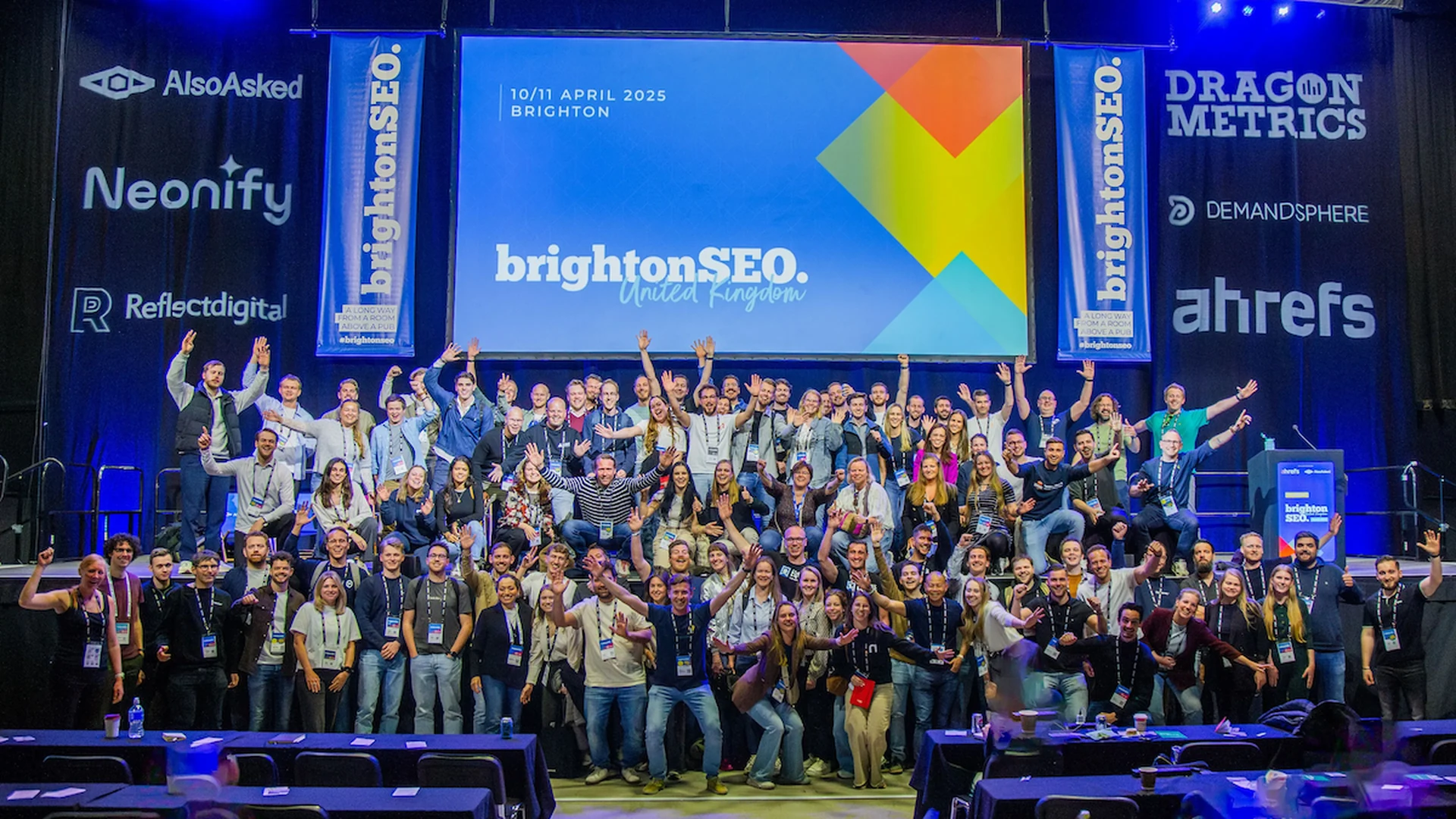
The curated guide to the global and regional SEO 2026 conferences every SEO, SEM, or AI SEO professional should weigh — with an ROI framework to decide which ones earn the spend.

Coworking near me
Searching coworking near me usually means a meeting tomorrow, a hybrid team that needs a base, or a founder tired of working from the kitchen counter — three different problems with three different answers. This guide ranks verified spaces in the seven largest US coworking markets.