
SEO ROI

The real formula for SEO ROI with a calculator covering 6/9/12-month ramp-up, organic CAC, payback, and a framework to defend the investment in any finance committee.

If your CFO asked this afternoon how much revenue SEO generated last quarter, could you answer with a number — or only with rankings, clicks, and impressions? The difference is the difference between a program that defends itself in the board and a budget that gets cut in the next round.
This guide gives you the exact SEO ROI formula, a calculator that handles the real (non-linear) ramp-up curve at 6, 9 and 12 months, payback in months, organic CAC, and the framework to defend the investment in any finance committee. Assumptions come from 100+ real programs executed by SEOTopSecret across SaaS, B2B, and e-commerce.
What is SEO ROI?
SEO ROI is the percentage financial return that organic search investment produces against its total annual cost. Unlike paid media ROI, SEO produces a compounding asset: every indexed page and every earned backlink keeps generating traffic and conversions months after the initial spend.
That changes how it is measured. SEO ROI should never be evaluated before 6 months — not because agencies say so, but because mathematically the incremental revenue has not materialised yet. Evaluating SEO at 90 days measures the slope of an exponential curve right before the inflection point.
SEO ROI calculator
Enter your real numbers (from GA4 and your CRM) and the calculator returns current and projected revenue, incremental revenue, annual ROI, payback in months, organic CAC, and the ramp-up curve at 6, 9 and 12 months. Default assumptions match a typical B2B SaaS: 12,000 annual organic sessions, 3% visit-to-lead, 25% close rate, and $3,500 average customer value.
Project revenue, payback, and organic CAC from your current traffic, conversion rate, and annual SEO spend.
SEO is non-linear: most of the incremental revenue lands between months 9 and 12. This is why 3-month pilots always look like they failed.
How to calculate SEO ROI
The formula has three steps. Each uses data you already have in GA4 and your CRM — no third-party estimations.
Step 1: calculate current organic revenue
Take annual organic traffic, multiply by visit-to-lead conversion rate, by close rate, and by average customer value. The result is the revenue your organic channel generates today — the baseline against which you measure every growth number.
Step 2: project organic revenue at 12 months
Apply the expected traffic growth rate (50% is aggressive but achievable for well-executed programs) to current traffic and repeat the revenue calculation with the same conversion rates. The difference between projected and current revenue is your incremental revenue — the number you actually attribute to your SEO investment.
Step 3: calculate ROI
ROI = ((Incremental revenue − Annual SEO spend) ÷ Annual SEO spend) × 100. A 300% ROI means every dollar invested returns its cost plus three more dollars. Negative ROI in the first 12 months is not always bad: it can mean the curve has not reached its inflection point, especially for new domains. Cross-check it against payback in months.
“SEO does not fail at 3 months. It gets mis-evaluated at 3 months.”
Why SEO wins ROI over the long run
On a 90-day horizon, Google Ads almost always wins. On an 18-month horizon, SEO wins in most B2B and e-commerce industries. The reason is structural: paid media is an operating expense — stop spending, stop receiving traffic the same day. SEO is an investment in assets that keep producing returns long after the initial spend. We unpack the trade-off in SEO vs paid.
- Mature organic CAC: 30% to 70% below paid CAC in most verified industries.
- Content lifespan: a well-positioned pillar article drives traffic for 3 to 7 years with minimal maintenance.
- Compounding: each new article reinforces the domain's topical authority, accelerating the ranking of the next ones.
- Higher intent: organic searches carry higher commercial intent than most paid display or social channels.
- AI citations: the content that ranks in Google is the same content ChatGPT, Gemini, and Perplexity cite — an extra channel at zero marginal cost.
This does not mean you should pick one over the other. The optimal blend is usually Ads to capture immediate bottom-of-funnel demand while SEO builds the 12-to-18-month moat — the rest of the benefits of SEO (authority, higher intent, AI citations) reinforce that case.
The ramp-up curve: why 3 months is not enough
SEO does not produce revenue linearly. Across 100+ programs measured by SEOTopSecret, the average pattern is consistent:
- Months 1-3: publication, indexation, first ranking signals. Incremental traffic: below 10% of the annual target.
- Month 6: content ranked in the top 10 for main keywords. Incremental traffic: ~30% of the annual target.
- Month 9: consolidated topical authority, earned backlinks compounding. Incremental traffic: ~60% of the annual target.
- Month 12: full maturation. Incremental traffic: 100% of the annual target.
- Months 13-24: compounding — traffic and revenue keep growing with low-cost maintenance.
That is why the calculator above shows ramp-up at 6, 9 and 12 months separately. If your CFO approves budget expecting 100% of the lift by month 6, the program gets cancelled right before the inflection point — and you lose all subsequent compounding.
5 mistakes that destroy SEO ROI
- Measuring ROI at 3 months. Mathematically impossible in most domains. Track quarterly ramp-up and annual ROI — do not confuse the two.
- Using traffic as the main KPI. Traffic without conversion is vanity. The real metric is incremental revenue, not sessions.
- Content without commercial intent. 500,000 monthly visits at 0.1% conversion rate generate less revenue than 10,000 visits at 4%. Intent is the multiplier.
- Broken attribution. Without clean UTMs and GA4 connected to your CRM, organic CAC is overstated and ROI understated.
- Pausing investment at the first bad month. SEO needs continuity. Pausing for 6 weeks erases 4 months of ranking momentum.
How to accelerate your SEO ROI
There are four levers to move the curve leftward — i.e., reach the inflection point before month 9.
- Prioritize bottom-of-funnel keywords in the first 3 months. "X for Y", "best X", "X vs Y", comparisons, "X pricing" — low volume, extremely high commercial intent. They rank fast and produce revenue from month 2.
- Attack topical authority before content volume. A cluster of 15 well-interlinked articles ranks faster than 50 scattered pieces. Topical authority accelerates every new piece.
- Optimize indexation speed. Manual URL Inspection, fresh sitemaps, IndexNow, and internal links from already-indexed pages with traffic. Fast indexation cuts 2-4 weeks off the cycle.
- Refresh existing content with prior equity. A position-8 page moved to position 3 triples the CTR. Cheaper than new content and produces incremental revenue in weeks, not months.
Execute the four in parallel and the 30% ramp-up at month 6 can reach 45-50%, with payback dropping to 5-7 months. That is the difference between an average program and one that becomes your company's #1 acquisition channel.
Frequently asked questions
What is an acceptable ROI for SEO?+
A healthy SEO ROI in B2B and SaaS sits between 300% and 700% annually from month 12 onwards. Below 200% usually signals poor traffic qualification, weak lead conversion rate, or investment too low to move the needle. Above 1,000% usually means you are underinvesting and leaving growth on the table. The number in isolation matters less than the combination of ROI, organic CAC below paid CAC, and payback under 9 months.
How long does it take to recover SEO investment?+
Typical payback for a well-executed program is 6 to 9 months when there is prior equity (domain with history, pages already ranking) and 9 to 14 months on new sites. The calculator in this guide estimates it automatically by dividing annual spend by monthly incremental revenue. If your payback lands above 12 months with realistic assumptions, the issue is not SEO — it is that your close rate or customer value are too low to justify the current investment.
How is SEO ROI calculated?+
Formula: ROI = ((Incremental revenue − Annual SEO spend) ÷ Annual SEO spend) × 100. Incremental revenue comes from multiplying projected organic traffic by the visit-to-lead conversion rate, by the close rate, by the average customer value, and then subtracting current organic revenue. Every input comes from GA4 (traffic and conversions) and your CRM (close rate and customer value) — never from standalone analytics dashboards or third-party traffic estimators.
Why does SEO take so long to deliver ROI?+
Because Google has to crawl, index, evaluate, and re-rank new content, and that loop rarely completes in under 8 weeks per URL. SEO is also non-linear: the curve is exponential. Month 6 usually produces only 30% of month 12’s incremental revenue, month 9 about 60%, and month 12 the full 100%. Most SEO pilots fail not because SEO does not work, but because they are evaluated at 3 months — a horizon where mathematically there is not enough signal yet.
Does SEO have a better ROI than Google Ads?+
Over a 3-month horizon, Google Ads almost always wins. Over 18 months, SEO wins in most B2B and e-commerce industries. The reason is asset nature: Ads stops producing the second you turn off the campaign; SEO keeps generating traffic and conversions months after you stop spending. Mature organic CAC is typically 30% to 70% below paid CAC, and that spread compounds every month. The right answer is not one or the other — it is combining both with distinct goals.
What assumptions does the SEO ROI calculator use?+
The calculator assumes a 30% / 60% / 100% ramp-up pattern at months 6, 9, and 12, which is the average observed across 100+ SEO programs SEOTopSecret has executed in SaaS, B2B, and e-commerce. It also assumes visit-to-lead and close rates hold constant versus current levels — i.e., incremental traffic converts at the same rate as base traffic. If your new content is better aligned with commercial intent, real ROI tends to exceed the projection.
Follow SEOTopSecret on LinkedIn
Weekly posts on AI SEO, GEO, and growth operating systems. No fluff.
Set SEOTopSecret as a preferred source
See more of our coverage in Top Stories on Google.
Keep reading

Why I built SEOTopSecret
After 25 years leading senior SEO for 100+ brands across four continents, the bottleneck was never the work — it was encoding how a senior consultant thinks so that thinking could run 24/7.
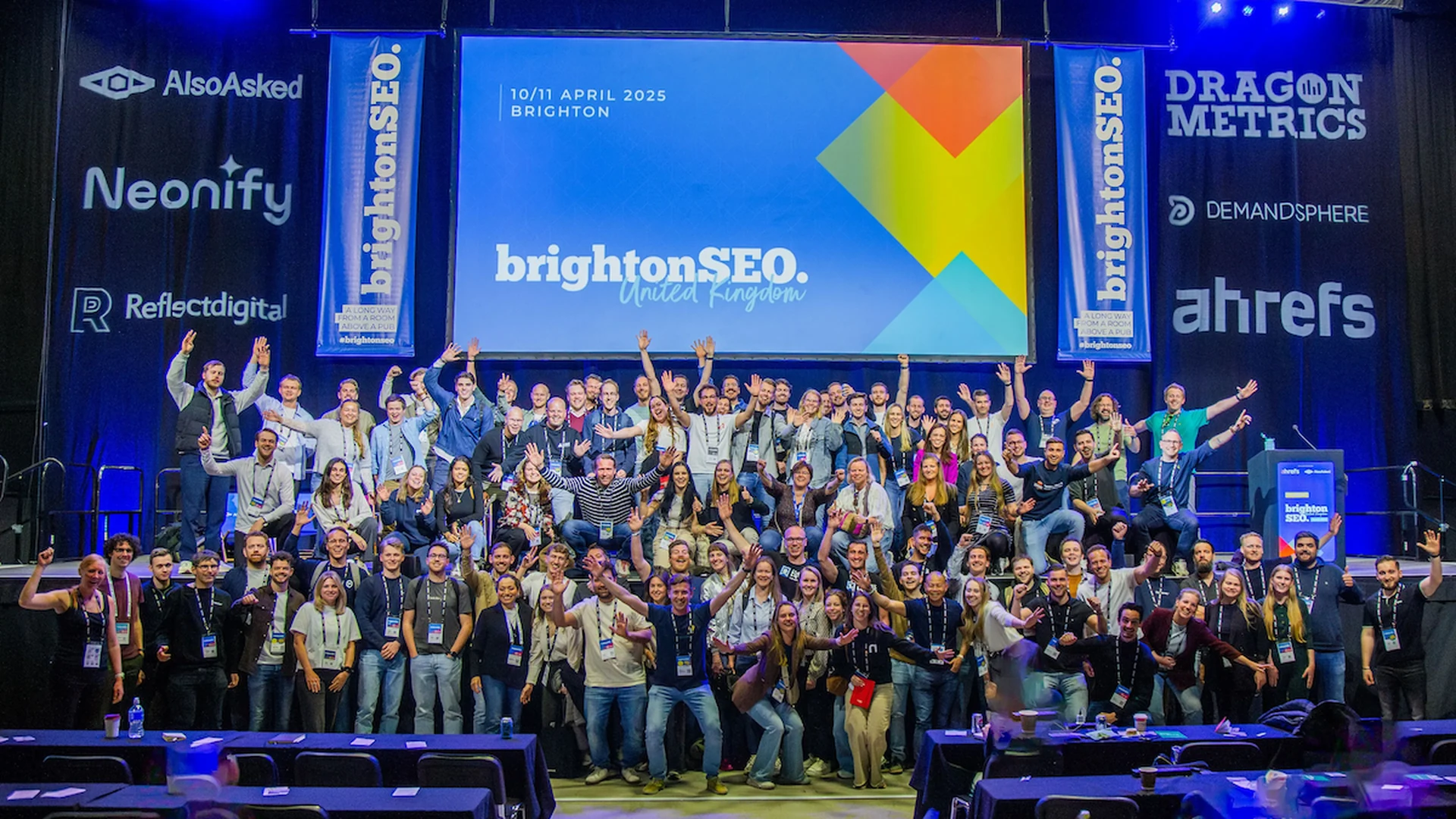
SEO conferences 2026
The curated guide to the global and regional SEO 2026 conferences every SEO, SEM, or AI SEO professional should weigh — with an ROI framework to decide which ones earn the spend.

Coworking near me
Searching coworking near me usually means a meeting tomorrow, a hybrid team that needs a base, or a founder tired of working from the kitchen counter — three different problems with three different answers. This guide ranks verified spaces in the seven largest US coworking markets.