
SEO Guide 2026
The SEO guide for 2026 unifies classic fundamentals — intent, structure, authority, speed — with the new visibility layer across AI engines: AI Overviews, ChatGPT, Gemini, and Perplexity.

The SEO of 2026 is not the SEO of 2020 or 2023. The ten blue links still exist, but a new layer of AI-generated answers now sits on top, deciding who gets cited as a source and who becomes noise. The optimization playbook wasn't thrown out — it got reorganized. The same fundamentals — search intent, structure, authority, speed — now support a new stack of decisions that didn't exist 36 months ago.
This guide is the entry point. It covers what SEO is today, which trends are reshaping it, what types exist, which businesses need it, and with which tools it runs. If you want the tactical manual with the seven operational moves for 2026 — citable passages, entity clarity, architectural schema, video as training data — read the SEO playbook for 2026. This guide is the base; the playbook is the execution.
What is SEO?
SEO (Search Engine Optimization) is the set of strategies and techniques used to improve a website's visibility in the organic results of search engines like Google. That's the technical definition you'll find on Wikipedia. It's correct, but incomplete and unambitious. The business definition — the one that matters when deciding budget — is different:
“SEO is the strategic discipline of building a digital asset that attracts your ideal customers predictably and profitably, positioning your brand as the authority in its industry.”
Every word matters:
- Digital asset: unlike paid media, which disappears the moment you stop spending, SEO builds value that compounds and appreciates over time. A well-ranked site is a recurring receivable.
- Predictable and profitable: it's not luck or virality — it's a measurable system with auditable ROI. If it can't be measured, it's not SEO; it's guesswork.
- Industry authority: the endgame is not ranking a query — it's becoming the obligatory reference in your sector, the source clients and competitors turn to.
SEO in 2026 is not about traffic alone: it's about qualified traffic. It's not about rankings alone: it's about profitability and market dominance.
SEO Trends for 2026
These are the four mega-trends reshaping the game and that will be absolute norm throughout 2026. Ignoring them means ceding ground to competitors who already execute against them.
1. The Age of Generative Search and AI Overviews
The most disruptive shift in a decade. Google's AI Overviews and conversational engines like ChatGPT Search, Gemini, and Perplexity are reshaping the SERP. The goal is no longer just to be one of the ten blue links — it's to be the authoritative source the AI cites when constructing its answer. To win here, the strategy has to obsess over E-E-A-T (Experience, Expertise, Authoritativeness, Trust):
- Demonstrate Expertise: content must be written by real subject-matter experts. Author bios with credentials, verifiable experience, and linked social profiles stopped being a luxury.
- Demonstrate Experience: Google wants firsthand content. If you review a product, prove you used it. If you write about a place, show you've been there. Direct experience is what AI can't fabricate.
- Build Authoritativeness: the site needs to be a reference in its industry, validated by high-quality backlinks from respected sites and editorial mentions in recognized media.
- Generate Trust: HTTPS, clear contact info, visible privacy policies, positive reviews, and schema that backs up every claim.
2. User Experience as a Central Ranking Factor
Google stopped asking only whether your content is relevant — it now also asks whether the experience of consuming it is satisfying. Technical optimization and design are non-negotiable:
- Core Web Vitals: LCP (load speed), INP (interactivity), and CLS (visual stability) are direct ranking factors. A slow site is an invisible site.
- Flawless mobile-first: most searches happen on mobile. Google prioritizes sites with a perfect mobile experience, not just a responsive one.
- Clear navigation: if a user gets lost on your site or can't find what they're after quickly, Google reads it as a bad signal. The synergy between SEO and UX is the core of winning in 2026.
3. Voice and Conversational Search
Users stopped searching with robotic keywords — they now ask natural questions. “Alexa, what's the best Italian restaurant near me?”. “Hey Google, how do I run an SEO audit?”. This changes how content is structured:
- Q&A format: FAQ sections on key pages with direct 2–3 sentence answers.
- Questions as titles: structure articles to directly answer your audience's most common questions.
- Featured snippets: targeting position zero is still the best way to become the answer voice assistants and AI Overviews pick.
4. Multimedia and Visual Content Dominance
SERPs are increasingly visual. Image carousels, video snippets, and YouTube results dominate many queries, pushing text results further down. YouTube is the world's second-largest search engine, and AI uses it as training data.
- YouTube SEO: optimized titles, descriptions, and transcripts are critical to capture audiences that prefer watching over reading.
- Image optimization: descriptive filenames (e.g.
seo-guide-2026-dashboard.webp), precise alt text, and.webpformat to avoid sacrificing speed. - ImageObject + VideoObject schema: structured markup so engines understand visual content without relying only on metadata.
The Types of SEO Broken Down
SEO is a broad discipline. To master it, you need to understand its specialties and how they connect. Each one is a piece of the system:
| Type of SEO | Primary Mission | Tactics |
|---|---|---|
| On-Page SEO | Optimize the elements WITHIN pages for maximum relevance and conversion | Keyword research, title and meta optimization, content hierarchy (H1, H2, H3), image optimization |
| Off-Page SEO | Build domain authority and reputation through external signals | Link building, digital PR, review management, editorial mentions |
| Technical SEO | Ensure the site is fast, secure, and easy to crawl for search engines and AI engines | Core Web Vitals, sitemaps and robots.txt, HTTPS, JSON-LD schema, information architecture |
| Local SEO | Dominate search results for customers in a specific geographic area | Google Business Profile, NAP consistency, local reviews, geo-targeted keywords |
| E-commerce SEO | Optimize thousands of product and category pages to attract shoppers | Product description optimization, category SEO, faceted navigation, Product schema |
In 2026, a sixth type consolidated — AI SEO or GEO (Generative Engine Optimization) — dealing specifically with optimization for the AI-generated answer layer. It doesn't replace any of the others; it complements them with new tactics: citable passages, entity clarity, architectural schema, and auditable brand signals.
What Types of Businesses Need SEO in 2026?
The short answer: all the ones that want to grow sustainably. These are the verticals where SEO is especially critical:
- E-commerce: to compete with giants like Amazon, SEO is the only way to attract high-intent buyers, build your own brand, and reduce dependence on paid media.
- Local businesses: restaurants, clinics, physical stores. Local SEO centered on Google Business Profile is the engine that attracts nearby customers in decision mode.
- B2B and technology: the sales cycle is long and trust-based. SEO lets you educate the market, answer complex questions, and position yourself as a thought leader before the buyer ever talks to sales.
- Startups: SEO is the most capital-efficient way to build a customer base without depending on funding rounds to burn on Google Ads or Meta Ads.
- SaaS: every SaaS product competes on 40–80 critical informational queries (comparisons, alternatives, “what is”, integrations). Winning those queries on Google and ChatGPT cuts CAC by 30–60%.
- Content sites and media: organic traffic is the business model. SEO is what lets them grow, reach new audiences, and monetize content.
SEO Tools for 2026
You can't run professional SEO blind. This is the tool stack we use at SEOTopSecret and recommend as a reference. You don't need every single one — you need at least one from each critical category.
| Category | Recommended Tools |
|---|---|
| All-in-one Growth OS (our pick) | SEOTopSecret — keyword research, briefs, technical audits, rank tracking, content, backlinks & AI visibility in one platform |
| Keyword research | SEOTopSecret / Google Keyword Planner / Ahrefs Keyword Explorer / Semrush Keyword Magic Tool |
| Competitor analysis | SEOTopSecret / Ahrefs / Semrush / SpyFu |
| Technical audits | SEOTopSecret / Screaming Frog SEO Spider / Sitebulb / Semrush Site Audit |
| Rank tracking | SEOTopSecret / Semrush Position Tracking / Ahrefs Rank Tracker / Moz Rank Tracker |
| Content optimization | SEOTopSecret / SurferSEO / Clearscope / MarketMuse |
| Backlinks | SEOTopSecret / Ahrefs Backlink Checker / Semrush Backlink Analytics / Majestic |
| Topic research | SEOTopSecret / BuzzSumo / AnswerThePublic / AlsoAsked |
| Speed & performance | Google PageSpeed Insights / GTmetrix / WebPageTest |
| Site structure | Google Search Console / Bing Webmaster Tools / Screaming Frog Log File Analyzer |
| Traffic monitoring | SEOTopSecret / Google Analytics 4 / Semrush Traffic Analytics / SimilarWeb |
| AI visibility (new) | SEOTopSecret AI Mentions / Otterly / Profound |
The New AI Search Ecosystem
The SERP stopped being the only place your brand shows up. In 2026, several AI engines coexist answering queries directly, each with its own market share, citation logic, and user profile. Optimizing for one isn't optimizing for all.
| AI Engine | What It Offers | Key Advantages | Challenges |
|---|---|---|---|
| Google AI Overviews | Generated answers above organic results, with source citations | Maximum reach, Google ecosystem integration, user trust | Brutal competition for citations; demands highly structured, clear content |
| ChatGPT Search | Conversational search integrated with GPT-4.5; source citations | High-value users, long detailed answers, ideal for explanatory content | Lower volume than Google; limited referral metrics |
| Gemini | Generated answers integrated with Google Workspace and Android | Tech audience, excellent for professional and technical queries | Overlaps with AI Overviews; hard to measure separate impact |
| Perplexity | Summaries + sources with conversational interface and drill-down | Ideal for research and curious users; clear citations | Requires verifiable sources and hard data to be cited |
| Bing + Copilot | Traditional search + conversational assistant + visual elements | Less saturated than Google; edge if your audience uses Microsoft/Edge | Lower market share; limited traffic in many markets |
| You.com | Privacy-focused personalized search; clean interface | Attracts privacy-conscious users; niche opportunities | Low potential traffic; limited analytics tools |
The operational rule is simple: optimize the base — quality content, precise schema, verifiable authority — and you'll show up across all of them. AI engines don't use radically different algorithms from Google in most cases; the four biggest (AI Overviews, ChatGPT, Gemini, Perplexity) consume content from the same web and prioritize the same signals: real experience, authorship, citations, and semantic consistency.
What to Measure: the 2026 KPI Stack
Ranking by keyword is still a valid indicator, but it stopped being the only one. In 2026, a serious SEO report includes at least five metrics in parallel:
- Organic position per query: the classic. Still the best signal of captured intent in Google.
- Qualified organic traffic: sessions that converted — lead, signup, demo, purchase. Without conversion, traffic is vanity.
- Share of voice in AI: percentage of times your brand appears when a relevant query runs in ChatGPT, Gemini, Perplexity, or AI Overviews.
- Indexation velocity: days between publication and first impression in Google Search Console. Under 5 days = healthy. Over 10 = structural problem.
- Branded search lift: volume of searches for your brand month over month. It's the best indicator that SEO is building demand, not just capturing it.
The 7 Most Common SEO Mistakes in 2026
These are the patterns we see repeat month after month in audits of sites that don't get traction. Avoiding even one creates a measurable lift:
- Publishing without keyword research. Writing “whatever comes to the founder's mind” guarantees no one searches for it. Without verifiable search volume, content doesn't generate traffic.
- Ignoring search intent. Trying to rank an informational query with a transactional landing page doesn't work. The SERP explicitly tells you which content type it expects.
- Thin content at volume. 200 articles of 400 words with no depth don't compete against 30 articles of 1,500 well-researched words.
- Buying low-quality links. Link networks, PBNs, and mass-bought links end in manual penalty. The cost of cleaning a penalty is 10x the cost of the shortcut.
- Ignoring technical SEO. Slow Core Web Vitals, broken sitemap, missing schema. Google is slow to crawl, AI can't structure your content, and rankings stall.
- Measuring nothing. No Google Search Console, no Analytics, no rank tracking. Literally flying blind.
- Treating SEO as a finite project. SEO is continuous. Competitors don't stop, algorithms evolve, and AI engines update quarterly. A site that isn't maintained loses ground.
90-Day Plan to Start in 2026
If you're starting SEO from zero or relaunching a stalled strategy, this is the operational sequence that works. Don't skip phases:
Days 0–30: Diagnostic and Technical Base
- Full technical audit (Core Web Vitals, indexation, schema, architecture).
- Set up Google Search Console and Google Analytics 4.
- Keyword research prioritized by volume × intent × difficulty.
- Analysis of 3–5 direct competitors: what they rank for, what they don't, where the gaps are.
- Fix blocking technical errors before publishing new content.
Days 30–60: Content and On-Page Optimization
- Editorial plan for 90 days with topics prioritized by commercial intent.
- On-page optimization of the top 10–20 pages (titles, meta, H1, schema).
- Publish 4–12 new articles (depending on team size).
- Strategic internal linking: every article links to 3–5 relevant pages.
- JSON-LD Article + FAQPage + BreadcrumbList schema on every key page.
Days 60–90: Authority and AI Layer
- First round of link building: editorial mentions in 2–4 industry media.
- Set up monitoring of mentions in ChatGPT, Gemini, Perplexity, and AI Overviews.
- Optimize citable passages in top articles (direct 2–3 sentence answers at the top of each section).
- First monthly report with the five-metric stack: position, qualified traffic, AI share of voice, indexation velocity, branded search lift.
- Adjust the next 90-day editorial plan based on what traction'd vs. what didn't.
How Much to Invest in SEO in 2026?
The question that always comes up. Honest answer: it depends on site size, industry competition, and the velocity you want. As a market reference:
- Local businesses and SMBs: USD $250–$750/month. Covers local SEO, basic on-page optimization, and 2–4 articles a month.
- Mid-market e-commerce and early-stage SaaS: USD $750–$2,000/month. Includes technical strategy, 8–15 pieces of content monthly, and AI monitoring.
- Growing SaaS and large e-commerce: USD $2,000–$5,000/month. End-to-end execution with a senior strategist, 15–30 pieces monthly, and editorial link building.
- Aggressive goals or brutal competition: USD $5,000+/month. Ad-hoc strategy, unlimited production, digital PR, and a dedicated AI SEO program.
Detailed package breakdowns, delivery metrics, and plan coverage are on the SEO packaging and pricing page — includes a direct comparison against market alternatives.
SEO Isn't an Expense — It's Your Most Profitable Asset
The SEO landscape in 2026 is more complex than it was five years ago, but also fairer and more predictable. It moved definitively away from technical tricks and consolidated into what it always should have been: a business discipline focused on delivering real, measurable value to the user and the company.
The AI layer doesn't kill classic SEO — it amplifies it. The sites that invested for years in fundamentals (expert-authored content, technical SEO, verifiable authority) are precisely the ones that now appear cited in ChatGPT, Gemini, and AI Overviews. The sites that took shortcuts are invisible in both layers.
If you want the tactical manual for executing this operationally, with the seven specific moves, auditable metrics, and report templates, read the SEO playbook for 2026. This guide is the base; the playbook is the execution.
Frequently asked questions
What is SEO in 2026?+
SEO in 2026 is the strategic business discipline of building a digital asset that attracts your ideal customers predictably and profitably, positioning the brand as an authority in its industry. It is no longer just about ranking in ten blue links — it also means being the source that AI Overviews, ChatGPT, Gemini, and Perplexity cite when answering queries. The classic fundamentals — intent, structure, authority, speed — remain the foundation; the AI layer is built on top.
Does classic SEO still work with the rise of AI?+
Yes, with nuances. The fundamentals (quality content, flawless technical SEO, authority backlinks) have become the non-negotiable requirements for AI engines to consider you a credible source. Classic SEO didn't die — it became the infrastructure on which AI visibility is built. Sites that ignore the technical and content base fail in both layers.
What is the most important SEO trend for 2026?+
Optimization for AI-generated search combined with an obsessive focus on E-E-A-T (Experience, Expertise, Authoritativeness, Trust). The goal is no longer just to rank as a blue link, but to be the source AI engines cite when constructing answers. This demands content written by real experts, with verifiable authorship, firsthand experience, and structured data that tells AI what each piece is.
On a limited budget, where do I invest first?+
For most SMBs, local SEO delivers the fastest return: dominating Google Business Profile and geo-intent searches captures high-intent customers near you. For SaaS and e-commerce, priorities shift: first fix the technical base (Core Web Vitals, schema, indexation), then target high-intent informational queries with expert-authored content. Never invest in backlinks before the site is technically healthy.
How long does SEO take to generate results in 2026?+
Depends on the baseline. A site with solid infrastructure and quality content can see traction in AI Overviews and ChatGPT citations in 30–60 days. A site with technical issues or thin content needs 3–6 months of cleanup first before traction begins. Indexation velocity is the best early indicator: if a new article takes more than five days to get indexed, there is a structural issue to fix before investing in volume.
What SEO tools are essential in 2026?+
The minimum set: Google Search Console and Google Analytics 4 (free, auditable), a keyword research tool (Ahrefs, Semrush, Keyword Planner), a backlink and competitor analysis tool, and a technical crawler like Screaming Frog. For the AI layer, you need tools that monitor mentions in ChatGPT, Gemini, Perplexity, and AI Overviews — SEOTopSecret includes this monitoring starting on the Starter plan.
Follow SEOTopSecret on LinkedIn
Weekly posts on AI SEO, GEO, and growth operating systems. No fluff.
Set SEOTopSecret as a preferred source
See more of our coverage in Top Stories on Google.
Keep reading

Why I built SEOTopSecret
After 25 years leading senior SEO for 100+ brands across four continents, the bottleneck was never the work — it was encoding how a senior consultant thinks so that thinking could run 24/7.
SEO conferences 2026
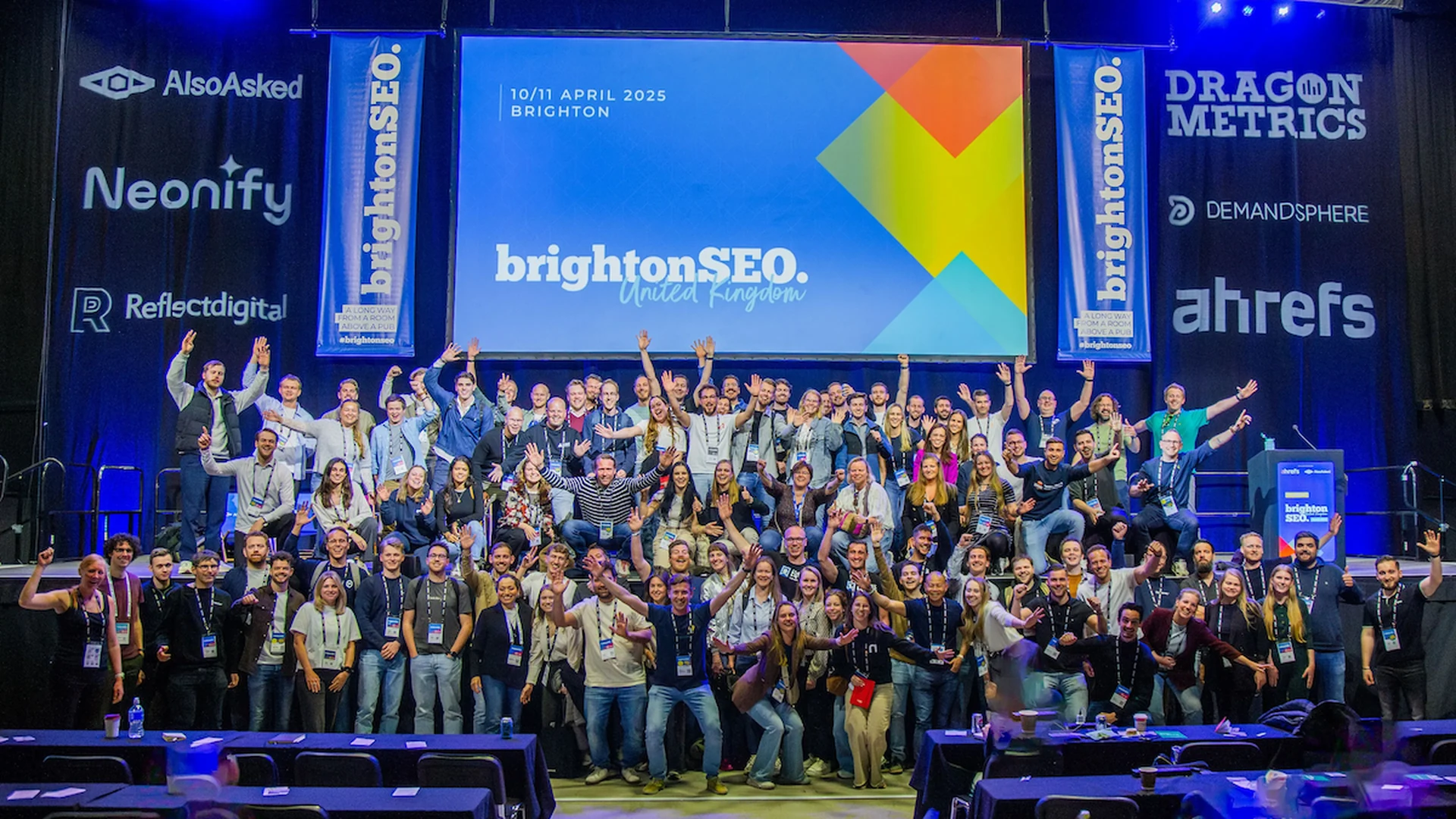
The curated guide to the global and regional SEO 2026 conferences every SEO, SEM, or AI SEO professional should weigh — with an ROI framework to decide which ones earn the spend.

Coworking near me
Searching coworking near me usually means a meeting tomorrow, a hybrid team that needs a base, or a founder tired of working from the kitchen counter — three different problems with three different answers. This guide ranks verified spaces in the seven largest US coworking markets.