
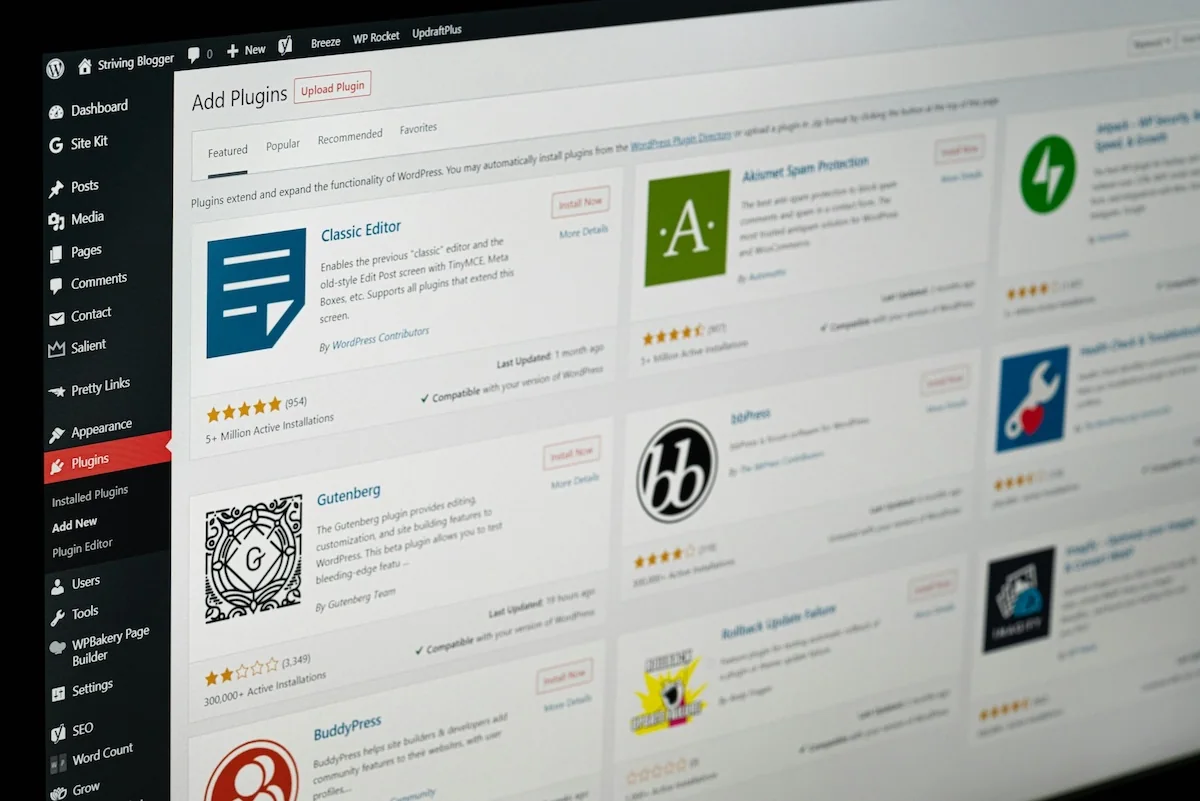
Bolting Yoast onto WordPress and calling it SEO stopped working years ago. Here is the stack Australian sites actually need in 2026 — and where the old plugin pile quietly costs you.

Open almost any Australian WordPress site and the SEO setup is the same: Yoast or Rank Math in the sidebar, a green light next to the focus keyword, and a dozen other plugins doing everything from redirects to related posts. It looks like SEO. It loads like a Sunday-night download on regional ADSL. And it has not been a serious organic-growth stack for years.
SEO services for WordPress in 2026 are not a plugin you install and forget. The plugin writes your title tag and ships a sitemap — useful, finished in an afternoon, and roughly 10% of the job. The other 90% — what to write, how to structure it for Google and AI engines, where you actually rank, and whether ChatGPT will cite you — lives entirely outside the plugin. This guide covers where the classic stack stops, the hidden cost the plugin pile adds to your Core Web Vitals, why your host matters more than your plugin for Australian visitors, and the stack that replaces all of it.
“Your SEO plugin is a field editor, not an SEO service. It fills in the form. It does not decide what the form should say, or whether anyone is searching for it.”
What the plugins do well — and where they stop
Credit where it is due. Yoast, Rank Math, and All in One SEO are mature, well-maintained tools that handle the on-page plumbing competently. They write and template title tags and meta descriptions, manage canonicals, generate XML sitemaps, handle basic Article and breadcrumb schema, and flag obvious on-page misses. Rank Math ships more schema types out of the box; Yoast has the cleaner editor and the better content-analysis nudges. Either is a reasonable choice.
The problem is not that they do their job badly. It is that their job is small, and the gap between “the plugin is green” and “the page ranks and gets cited” is where every real SEO outcome lives. Here is the honest line between the two.
| The job | SEO plugin | What it takes instead |
|---|---|---|
| Write title, meta, canonical, sitemap | Yes — this is what it is for | Nothing extra needed |
| Decide what topic to write | No | Keyword and demand research |
| Brief the article so it actually ranks | No — a green dot is not a brief | A content brief with intent, entities, structure |
| Tell you where you rank over time | No | Dedicated rank tracking |
| Show if ChatGPT or AI Overviews cite you | No | AI-engine visibility tracking |
| Generate complete, valid @graph schema | Partial — basic types only | A schema engine that fits every template |
| Produce the content itself | No | A content engine and an editor |
That green light next to your focus keyword measures keyword placement on a page you have already written. It says nothing about whether the topic has demand, whether the intent matches, whether competitors have covered it better, or whether the page will ever be seen by an AI engine. The plugin optimises the last 5% of a page’s journey and is silent on the first 95%.
The plugins are quietly wrecking your Core Web Vitals
Every plugin you activate is code that runs on your visitors’ devices, and most SEO and utility plugins are heavier than they look. They enqueue their own CSS and JavaScript on every page load, frequently render-blocking, and they rarely scope those assets to the pages that need them — your contact-form plugin loads its script on your blog posts, your social-share plugin loads on pages with no share buttons, and a plugin you trialled in 2024 and disabled but never deleted is often still leaving assets in the queue.
This shows up directly in the metrics Google uses to rank you. Render-blocking scripts delay Largest Contentful Paint (LCP) because the browser cannot paint the main content until it has fetched and parsed the blocking resources. Heavy main-thread JavaScript inflates Interaction to Next Paint (INP) — the metric that replaced First Input Delay — because every tap and click waits behind script execution. And uncleaned plugins add to total page weight and request count, which punishes visitors on mobile and on slower regional connections hardest.
The instinct, when Core Web Vitals slip, is to install a caching or optimisation plugin to fix the damage the other plugins caused — which adds another plugin to the stack. There is a better lever, and most WordPress owners reach for it last.
Hosting matters more than the plugin
Time to First Byte (TTFB) is the time between a request leaving the browser and the first byte of the response arriving. It is set almost entirely by your host and your server’s distance from the visitor — not by your SEO plugin — and it feeds directly into LCP. For an Australian audience, the single most common speed problem is a WordPress site served from a US or European data centre: every request crosses an ocean before any optimisation plugin even gets a say.
Serving Australian visitors from Australian (or Sydney-edge) infrastructure removes that latency tax at the source. Here is an honest read on the managed and AU-data-centre options worth considering.
- VentraIP — Australian-owned, Australian data centres (Sydney and Melbourne), local support. A sensible default for an AU-only audience that wants its data and support staying onshore.
- Crucial — Brisbane-based, AU data centres, managed WordPress plans tuned for local TTFB. Strong choice for small business and trades sites serving a single state or metro.
- Digital Pacific — long-running Australian host with Sydney data-centre options and managed WordPress tiers; reliable rather than flashy.
- Conetix — Australian managed-hosting specialist with a higher-touch support model; well suited to clinics, firms, and businesses that want a phone number, not a ticket queue.
- SiteGround — global managed host with a Sydney edge through Google Cloud; good caching and a clean control panel, with content served close to AU visitors.
- Kinsta and WP Engine — premium managed WordPress platforms that both offer Australian/Sydney regions on Google Cloud. More expensive, but the platform-level caching, staging, and CDN handle a lot of the Core Web Vitals work that owners otherwise try to solve with plugins.
The takeaway is not “buy the most expensive host.” It is that moving from a cheap, distant, oversold shared server to managed WordPress hosting with an Australian or Sydney-edge point of presence typically does more for your LCP than any optimisation plugin — and it does it without adding a single line of code to the queue.
The 2026 stack: WordPress publishes, software does the SEO
The fix is not to abandon WordPress. WordPress remains an excellent place to publish — open, flexible, and owned by you. The fix is to stop pretending a publishing platform plus a field-editor plugin is an SEO programme, and to move the brain of the operation into software built for it.
That is what SEOTopSecret does. It sits beside WordPress and runs the 90% the plugin never touched:
- Content briefs — research-backed briefs with verified search demand, intent, entities, and a heading structure built to rank and to be quoted, not a green dot on a page you already guessed at.
- Schema generation — complete, valid
@graphJSON-LD for every template, going well past the basic Article schema a plugin ships. The deeper walkthrough is in our schema markup guide. - Rank tracking — where you actually sit in the SERP over time, by keyword and market, so you manage to a position rather than a plugin’s opinion.
- AI visibility tracking — whether you are being cited across all five answer engines: ChatGPT, Gemini, Claude, Perplexity, and Google AI Overviews. This is the surface no SEO plugin even attempts to measure.
- One-click publishing — the finished, schema-attached article pushed straight back into WordPress, so the workflow loop closes without copy-paste.
A worked example: a Melbourne allied-health clinic on WordPress
Take a three-practitioner physiotherapy and allied-health clinic in Melbourne’s inner north, running WordPress on a cheap shared plan with Yoast and roughly fourteen other plugins. The site “does SEO” in the sense that the plugin is installed. What it actually has is a slow site on distant hosting, a blog of thin posts written to no brief, no idea where it ranks beyond the odd manual Google search, and zero visibility into whether anyone asking ChatGPT for “physio near Brunswick” ever sees its name.
The usual answer is an agency retainer on top of the plugin — a few thousand dollars a month for briefs delivered in slide decks, a quarterly rank report, and content the clinic still has to chase. The 2026 answer collapses that into one place:
- Hosting first — move to an Australian or Sydney-edge managed WordPress host so Melbourne visitors stop paying the trans-Pacific latency tax, and prune the plugin list from fourteen to the handful the site genuinely uses.
- Briefs in the portal — the clinic gets demand-backed briefs for the services and conditions its patients actually search, with the local intent and structure built in, instead of writing into a vacuum.
- Schema that matches the page — full MedicalClinic and practitioner schema generated and attached, so the engines can categorise the clinic correctly rather than treating it as undifferentiated text.
- Tracking that closes the loop — rank tracking shows movement on the suburb-level terms that matter, and AI-visibility tracking shows whether the clinic is named when patients ask the five engines for a recommendation.
- Publish back to WordPress — the finished article, schema attached, pushed live in one click. WordPress stays the home of the content; the clinic stops paying a retainer to manage the parts software now handles.
The same pattern fits a Sydney trades business chasing “emergency electrician inner west” or an Australian ecommerce brand on WooCommerce that needs Product schema, rank tracking, and AI visibility its plugin will never give it. The plugin-plus-agency-retainer stack becomes one portal that briefs, generates the schema, tracks the rankings, watches the AI engines, and publishes — with WordPress doing the one thing it has always been good at.
What to do this week, in order
None of this needs a re-platform or a six-month project. The sequence below is deliberately ordered — speed at the source first, then prune, then move the strategy off the plugin — because each step makes the next one cheaper.
- Run a field Core Web Vitals check. Pull your real LCP, INP, and CLS from the Chrome User Experience Report rather than a single lab test, so you are optimising against what your actual Australian visitors experience.
- Look up where you are hosted, and where. If your audience is Australian and your server is not, that distance is almost certainly your biggest LCP problem — and the cheapest one to fix by moving to an AU or Sydney-edge managed host.
- Audit and prune plugins. Open the active list, delete anything you are not using, and note which remaining plugins enqueue scripts site-wide. Fewer plugins, fewer requests, faster pages.
- Keep one SEO plugin, and only one. Pick Yoast, Rank Math, or All in One SEO for the on-page fields and remove any overlapping duplicates fighting over the same title tags.
- Move the strategy off the plugin. Brief, schema, rank tracking, and AI visibility belong in software, with the output published back into WordPress.
The short version
SEO services for WordPress in 2026 are not a plugin. Keep WordPress to publish and one plugin for the on-page fields. Move your site onto Australian or Sydney-edge managed hosting so your Core Web Vitals start from a fast first byte. And put the strategy, the schema, the rank tracking, the AI-engine visibility, and the content production into software built for it — then publish the result straight back into WordPress. See the plans to find the tier that fits your site.
Frequently asked questions
Do I still need an SEO plugin like Yoast or Rank Math on WordPress?+
You need something to write titles, meta descriptions, canonicals, and a sitemap — and Yoast, Rank Math, or All in One SEO all do that competently. What none of them do is strategy, rank tracking, content production, or AI-engine visibility. So you need the plugin for the plumbing, but the plumbing is the easy 10% of SEO. The plugin is a field editor, not an SEO service.
Are WordPress SEO plugins bad for Core Web Vitals?+
Many are. Plugins inject render-blocking CSS and JavaScript into every page, and most do not clean up after themselves — a plugin you used once but never removed still loads its assets site-wide. The more plugins you stack, the worse your Largest Contentful Paint and Interaction to Next Paint get. Audit your plugin list quarterly and delete anything you are not actively using.
Does hosting matter more than the SEO plugin for WordPress?+
For Core Web Vitals, usually yes. Time to First Byte is set by your host, not your plugin, and TTFB feeds directly into Largest Contentful Paint. An Australian audience served from a US data centre pays a latency tax on every request. Managed WordPress hosting with an Australian or Sydney-edge point of presence fixes the single biggest speed problem most local sites have.
Can WordPress content rank in ChatGPT and Google AI Overviews?+
Yes, but the SEO plugin does nothing to help it. AI engines — ChatGPT, Gemini, Claude, Perplexity, and Google AI Overviews — cite pages with clear definitions, valid structured data, and quotable, well-sourced claims. WordPress is a fine place to publish that content; the brief, the schema, and the AI-visibility tracking that get you cited live outside the plugin.
What does a modern WordPress SEO stack look like in 2026?+
Keep WordPress as the publishing layer and one SEO plugin for on-page fields. Move the brain — content briefs, schema generation, rank tracking, and AI-engine visibility across all five engines — into dedicated software that publishes back into WordPress in one click. The plugin handles the form fields; the software handles the strategy and the production.
Set SEOTopSecret as a preferred source
See more of our coverage in Top Stories on Google.
Keep reading

Why I built SEOTopSecret
After 25 years leading senior SEO for 100+ brands across four continents, the lesson stayed the same: the bottleneck was never the work — it was encoding how a senior consultant thinks so that thinking could run 24/7.
SEO conferences 2026
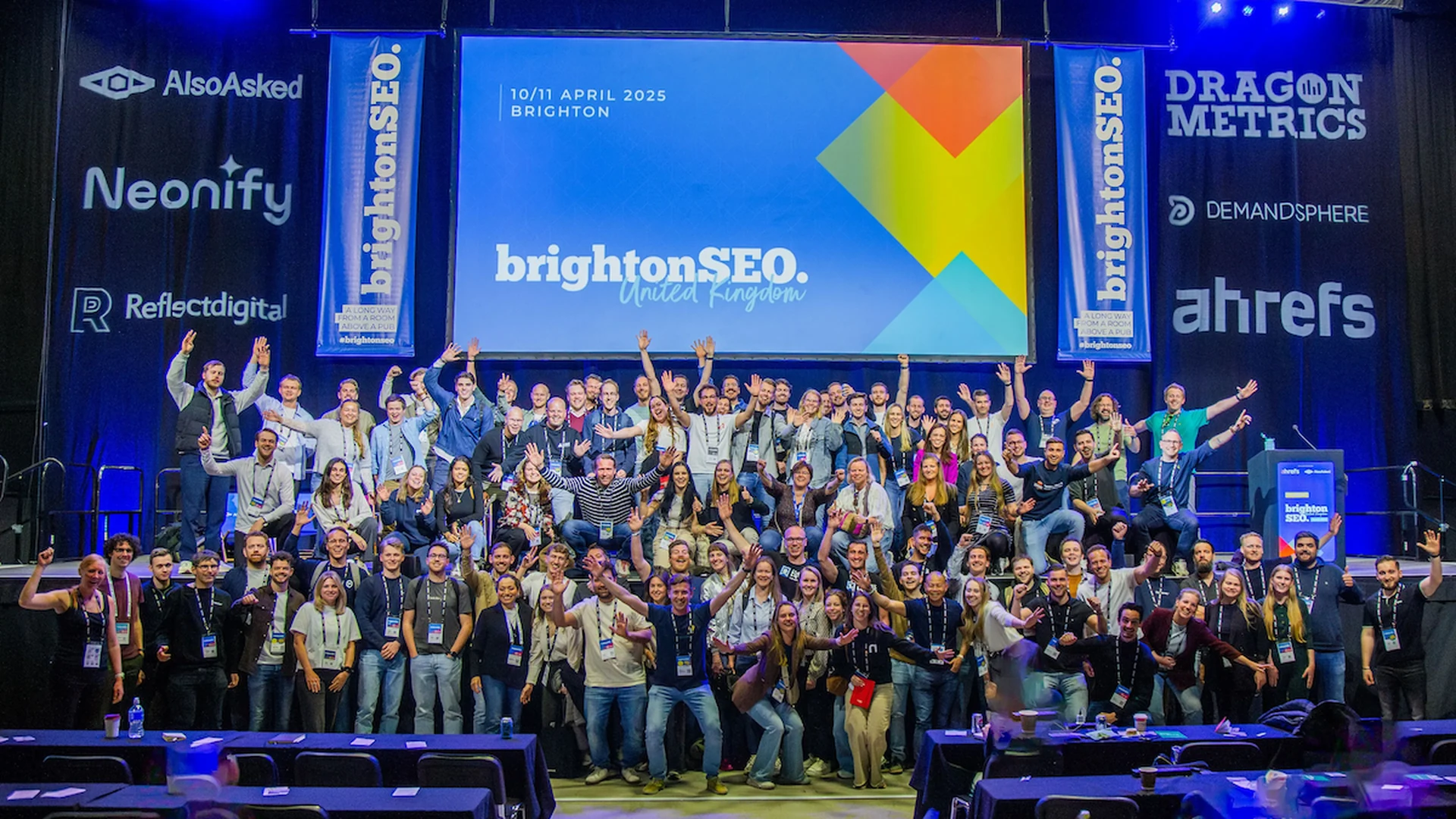
The curated guide to the global and regional SEO 2026 conferences worth attending — with an APAC and Australian lens, plus an ROI framework for each event.

Page Speed Insights
Google’s free Page Speed Insights tool grades your site on speed, accessibility and SEO — but the score is the easy part. Here’s what it actually measures, why it moves rankings and revenue for Australian sites, and how to turn a red report into a prioritised action plan.