
SEO for Australian SaaS

SEO for Australian SaaS is the operating playbook for B2B software companies founded, headquartered or targeting buyers in Australia — covering the three audience modes (AU-only, APAC-expanding, global-from-AU), the four organic pillars that actually move ARR, the KPIs that matter, and the mistakes we see every quarter from Sydney and Melbourne SaaS teams.

SEO for Australian SaaS is not a watered-down version of US SaaS SEO. It is a distinct game with its own buyer psychology, a tighter domestic TAM, and three forking strategic modes that determine almost every downstream decision. This guide is the operating playbook we use with B2B software clients in Sydney, Melbourne and Brisbane — the three audience modes you have to pick between, the four organic pillars that actually drive ARR, the technical foundations most AU SaaS teams get wrong, the KPIs a board will accept on a QBR slide, and the mistakes we see every quarter.
Why Australian SaaS SEO is a different game
Australia sits inside roughly 2% of global SaaS spend. That fact drives almost everything strange about SEO here. Keyword volumes are 10–30x smaller than equivalent US queries, which means a single well-built cluster can capture near-total domestic share of voice for a term — and conversely, a missed cluster is hard to rebuild once a competitor claims it. SERP depth is thinner: most head terms have 3–6 genuine domestic competitors, not the 40–60 that saturate US verticals. That is an opportunity, but only if you build for the AU buyer rather than publishing translated US content.
AU B2B buyers behave differently. They take longer to decide, they ask harder questions in the first sales call, and they discount marketing claims more aggressively than US buyers. Peer evidence carries more weight than brand claims — G2 reviews, Capterra, Australian podcasts and LinkedIn posts from domestic operators move more pipeline than a polished homepage video. And they filter hard on local signals: AUD pricing, an AU address, a .com.au or /au subfolder, and compliance language that references the Privacy Act 1988, APRA CPS 234, or the Australian Cyber Security Centre where relevant.
“A thin SERP is only an opportunity if you build for the Australian buyer. Translated US content loses in AU because AU buyers can smell it in the first paragraph.”
The three audience modes (pick one, stop trying to do all three)
Every Australian SaaS company sits inside one of three audience modes. The single most common strategic mistake we see is teams trying to optimise for all three at once — an AU homepage that also talks to US buyers, a blog that mixes AUD and USD pricing, a comparison page that hedges on which market it is written for. Pick one. Commit the next 12 months of SEO to it. Widen later.
AU-only SaaS — domestic buyers, AUD pricing, local compliance
The AU-only mode fits SaaS products with an explicit Australian wedge: local compliance (superannuation, payroll, medical, legal, real estate), local integrations (Xero, MYOB, Employment Hero), or a regulatory moat (TGA, ASIC, APRA). Domain: .com.au. Pricing: AUD with GST stated. Content: uses AU terminology throughout (superannuation not 401k, BAS not sales tax return, award wages not minimum wage). This mode is slower to scale to $50M ARR but produces the highest conversion rates, the lowest CAC, and the most defensible SERPs.
APAC-expanding SaaS — AU as the launchpad into Singapore, NZ and the Philippines
APAC-expanding mode treats Australia as beachhead, not endgame. Domain: .com with /au, /sg, /nz, /ph subfolders. Content: written in a neutral English that reads clean in AU, SG and NZ simultaneously — avoid aggressive colloquialisms and commit to either /au or /nz English but not a mixed register. The common mistake here is shipping identical content across three locale folders with only the currency swapped — that earns penalties in both Google and AI answer engines. Localise pricing, case studies, compliance language and phone numbers per folder even when the prose is shared.
Global-from-AU SaaS — headquartered here, competing in US / UK SERPs
Global-from-AU is the Canva / Atlassian / SafetyCulture / Culture Amp mode. Domain: .com with a light /au subfolder or no AU folder at all. Primary SERP battle is US and UK. Content: American English for the primary site, with an /au locale folder for domestic buyers who want local case studies and AUD. This mode needs the largest content operation (40–80 pieces per month at scale), the deepest technical foundations, and the longest runway before SEO produces pipeline — but it is the only mode that produces $100M+ ARR outcomes from Australia.
The four organic pillars that drive pipeline for AU SaaS
After mode, the next decision is pillar allocation. Across 40+ AU SaaS engagements we have run, four content pillars consistently produce the majority of pipeline. They are not equal in ROI — they compound on different time horizons. Here is the ranking and the economics behind each.
| Pillar | Time to first pipeline | Compounding horizon | ROI grade |
|---|---|---|---|
| Comparison and vs pages | 30–60 days | 6–12 months | A+ |
| Product-led content | 60–120 days | 12–24 months | A |
| Integration and partner SEO | 90–180 days | 18–36 months | A- |
| Buyer-intent keyword architecture | 120–240 days | 24–48 months | A+ (compounds most) |
Product-led content — the core commercial engine
Product-led content is the long-form centre of gravity: use-case pages, feature deep-dives, industry guides, and workflow tutorials that double as both SEO assets and sales enablement. For AU SaaS, the rule is to write product-led content that explicitly references the Australian workflow — if your product handles payroll, the tutorial covers STP Phase 2, not US Form W-2. This is the pillar that replaces your sales team’s first discovery call — when a prospect arrives having read three product-led pieces, the first sales meeting becomes a scoping call, not an education call.
Comparison and “vs” pages — the fastest-converting intent tier
Comparison pages are the single highest-converting content type in B2B SaaS. They rank for the highest-intent queries a buyer ever types (“competitor-x vs competitor-y”, “competitor-x alternatives”), and they meet the buyer at the moment of active evaluation. Most AU SaaS teams skip this pillar because it feels uncomfortable to write about competitors. That discomfort is the reason the SERP real estate is open — your competitors feel it too. Build the stack. Keep it factual. Update it every quarter.
Integration and partner SEO — the compound moat
Every integration your product ships with is a ranking opportunity for “[partner] + [your category]” queries. An AU payroll SaaS with 40 integrations has 40 potential integration landing pages, each ranking for a tail query their competitor forgot to claim. These pages compound slowly (12–18 months to peak) but become the hardest moat to dislodge because each new integration adds a new page without cannibalising the last.
Buyer-intent keyword architecture — the category claim
The category-claim pillar is the deep bet. Pick the head term that defines your category in Australia — “construction management software australia”, “australian payroll software”, “mental health software australia” — and build a topical cluster deep enough that Google cannot avoid citing you as the category authority. This is a 24–48 month commitment and it is the pillar that produces the defensible compounding returns. If you are going to invest in only one pillar beyond comparisons, invest here.
Technical foundations specific to Australian SaaS
Technical SEO for AU SaaS differs from generic SaaS technical SEO in four specific ways. Getting these right in the first 30 days saves six months of rework later.
- Hreflang for /au subfolders: if you have /au, /us, /uk, /sg or /nz locale folders, hreflang must be declared on every page in every locale, pointing to every sibling locale including x-default. The most common break is a missing x-default, which causes Google to serve the wrong locale to non-AU users.
- Core Web Vitals on AU hosting: if your CDN edge is US-only, LCP in Sydney is typically 1.5–2.5s worse than LCP in Dallas. Use a CDN with AU POPs (Cloudflare, Fastly, CloudFront all have Sydney and Melbourne edges). Run Chrome User Experience report segmented by AU separately from global — aggregate CWV hides the AU problem.
- Schema with Organization address in AU: Organization schema on the homepage and about page should include a PostalAddress with addressCountry: “AU”. Adding contactPoint for AU hours in AEST also helps in AI answer engines that pull structured contact data.
- JavaScript rendering for AU bots: if your site is heavily JS-rendered (React, Vue, Next.js client-only), verify that Googlebot renders correctly from AU IP ranges — we have seen 3 cases in the last year where CSR worked in US rendering tests but failed silently in AU due to geo-gated API calls.
Content localisation inside a single English-speaking market
The subtlest layer of AU SaaS SEO is localisation inside English. AU English is not a thin veneer over American English — it is a distinct register with specific lexical, tonal and structural choices that trained AU readers pick up on unconsciously. The rules:
- Spelling: organise, optimise, colour, behaviour, centre, catalogue, realise, analyse. Use British/AU spelling consistently. Never mix within a deliverable.
- Terminology: superannuation not 401(k), BAS not sales tax return, award wages not minimum wage, ABN not EIN, GST not sales tax, postcode not zip code, mobile not cell phone.
- Tone: AU B2B copy runs drier and more understated than US copy. Avoid superlatives (“world-class”, “best-in-class”, “revolutionary”) — they read as overselling. Specific numbers and named examples do the work instead.
- Currency and pricing: AUD first, USD secondary if you sell internationally. GST handling stated explicitly (“GST included” or “+GST”) rather than hidden.
- Examples: use AU company names in case studies and examples wherever possible — Atlassian, Canva, SafetyCulture, Culture Amp, Xero (NZ but reads AU), Employment Hero, Deputy, Simpro, MYOB.
The measurement stack — KPIs that a board actually cares about
Most AU SaaS SEO reporting dies on the wrong metrics. Sessions, bounce rate and average position are operational metrics, not board metrics. A board wants to see pipeline, CAC, payback period and ARR contribution. Here is the measurement stack that earns a line on a QBR slide.
| Layer | Metric | Source | Cadence |
|---|---|---|---|
| Traffic | Organic sessions (AU + target locales) | GA4 + GSC | Weekly |
| Quality | Qualified trial starts from organic | GA4 + CRM | Weekly |
| Pipeline | SQO from organic | CRM (HubSpot / Salesforce) | Monthly |
| Revenue | ARR contribution attributed to organic | CRM + finance | Monthly |
| Efficiency | CAC payback period for organic | CRM + finance | Quarterly |
| Visibility | Share of voice on category head terms | Ahrefs / Semrush | Monthly |
| AI visibility | Brand mentions in ChatGPT, Gemini, Perplexity | Manual + AI-tracking tools | Monthly |
Two metrics punch above their weight for AU SaaS specifically: share of voice on the category head term (proves you own the category claim), and brand mentions in AI answer engines (proves you are winning the research session that starts outside Google). Both are leading indicators of the next 12 months of pipeline.
Common mistakes we see every quarter
The same six mistakes turn up in AU SaaS engagements across every vertical we have worked in over the last four years. They are easy to fix if you spot them early; they are expensive to unwind at month 18.
- Picking all three audience modes at once. Pick one for the next 12 months. The discipline to say no to two modes is the single biggest determinant of SEO velocity.
- Skipping comparison pages because they feel uncomfortable. The discomfort is the moat. Write them. Update them quarterly.
- Publishing translated US content. AU buyers detect it within one paragraph. Rewrite; do not translate.
- Ignoring AI answer engines. 35% of technical-buyer research sessions now start in ChatGPT, Gemini or Perplexity. Not ranking in AI answers means being invisible to a third of your buyers.
- Hiring a content mill instead of a subject-matter operator. Generic SaaS content produced at volume loses to 50 well-researched pieces per year written by someone who understands the AU workflow.
- Reporting on sessions and bounce rate to the board.Board cares about pipeline, CAC payback and ARR. Report on those. Keep the session-level metrics for the growth team.
A 90-day execution sequence for an AU SaaS team
If you are starting from zero or rebooting an underperforming SEO program, here is the 90-day sequence we run with AU SaaS clients. It assumes one senior SEO lead, one strong content writer, and engineering access for 2–4 hours per week.
- Days 1–10: audience mode decision locked in writing with CEO and CMO. Technical audit completed. Core Web Vitals, hreflang, schema and AU-specific issues prioritised.
- Days 11–30: keyword architecture for the next 12 months mapped: 1 head-term pillar, 8–12 comparison pages, 20 product-led pieces, 15 integration pages. First 3 comparison pages shipped.
- Days 31–60: 6 more comparison pages, first product-led cluster live, homepage and pricing page rewritten for AU buyer signals, Organization + FAQ + Product schema shipped.
- Days 61–90: second product-led cluster, first 5 integration pages, category-claim pillar published, AI visibility baseline measured in ChatGPT / Gemini / Perplexity, monthly reporting cadence to board locked in.
By day 90, you have 9–10 comparison pages, 2 product-led clusters, 5 integration pages, a category pillar, a clean technical foundation, and a reporting cadence that answers the board’s pipeline question. First meaningful pipeline typically arrives 30–60 days after this sequence completes.
Frequently asked questions
Why is SEO for Australian SaaS different from generic B2B SaaS SEO?+
Australian SaaS SEO sits inside a smaller addressable market (roughly 2% of global SaaS spend) with a disproportionately high concentration of buyers in Sydney and Melbourne. That means keyword volumes are lower, but the buyer density is higher — a single ranking for a term like “payroll software australia” can move more pipeline than a US equivalent ranking at the same position. Australian buyers also filter heavily on local signals: AUD pricing, an .au or au subfolder, compliance with the Privacy Act 1988 and APRA CPS 234 where relevant, and an AU phone number. They research longer, ask harder questions in the first sales call, and trust peer-reviewed evidence (G2, Capterra, local case studies) more than US buyers. An SEO playbook that wins in Austin will not automatically win in Sydney — the intent tiers, the technical setup, and the content tone all need to adapt.
Do Australian SaaS companies need a .com.au domain, or is .com enough?+
It depends on your audience mode. If you sell primarily to Australian buyers, a .com.au signals local and tends to convert better in AU SERPs — Google uses ccTLD as a strong local ranking signal and AU buyers read .com.au as “built for us”. If you are global-from-AU (Canva, Atlassian, SafetyCulture), a .com with a clean /au/ or en-AU subfolder is the right call because your primary market is not Australia. If you are APAC-expanding, we usually recommend .com with locale subfolders (/au, /sg, /nz, /ph) rather than a stack of ccTLDs — a single consolidated domain accumulates authority faster. The wrong move is a .com.au that blocks international expansion later, or a .io that reads as a US startup when your ICP is an AU compliance buyer.
How long does SaaS SEO take to produce pipeline in Australia?+
First-touch organic leads typically arrive 90–120 days in for a greenfield AU SaaS with no existing authority. Meaningful pipeline — the sort a CFO will notice on a QBR slide — lands at the 6–9 month mark, and compounding starts around month 12. These timelines assume you are publishing at least four production-grade pieces per month, fixing the technical foundations in the first 30 days, and building a comparison-page stack in parallel. Australian SaaS has a small advantage here: the SERPs are thinner, so a well-built cluster ranks faster than it would in a saturated US vertical. The disadvantage is that the domestic TAM ceiling arrives earlier — which is why most scaling AU SaaS companies widen the audience mode to APAC or global by month 18.
What content should Australian SaaS teams prioritise first?+
Comparison and “vs” pages first, always. Buyer-intent keywords like “[competitor] vs [you]” and “[competitor] alternatives australia” sit at the bottom of the funnel and convert 3–5x better than top-of-funnel content. Most AU SaaS teams skip these because they feel uncomfortable writing about competitors — that discomfort is the exact reason the SERP real estate is available. After comparisons, build your product-led content: integration pages, use-case pages, and a deep category-claim pillar that owns the head term for your niche. Top-of-funnel educational content comes third, not first, because it monetises on a 9–12 month delay rather than a 30-day window.
Which on-page signals matter most for AU SaaS conversion?+
Four signals consistently move AU buyer trust: (1) AUD pricing visible on the pricing page with GST handling stated plainly, (2) a physical AU address in the footer and on contact pages (even a co-working address works), (3) local case studies above the fold on service pages — an AU buyer scanning for proof wants to see an AU logo, not a US one, (4) compliance badges that actually apply (ISO 27001, SOC 2, Privacy Act 1988 statement if you handle personal data). A fifth quieter signal: avoid Americanisms in copy. “Organize”, “optimize”, “color” and “check out our pricing” all read as foreign. AU buyers do not consciously notice “organise”, but they do notice “organize” — and it chips at trust on a subconscious level during a high-consideration purchase.
How does AI SEO (AEO/GEO) change the playbook for Australian SaaS?+
It changes three things. First, AI answer engines (ChatGPT, Gemini, Perplexity, Claude) synthesise from a wider citation pool than Google — so comparison pages, G2 reviews, Reddit threads and podcast transcripts all contribute to whether your brand gets mentioned in an AI answer. Second, Australian buyers increasingly start research in ChatGPT or Gemini rather than Google — roughly 35% of technical-buyer research sessions in 2026 start outside Google. Third, AI engines reward structured, claim-dense content: short declarative sentences, named entities, explicit comparisons, and schema. The practical move for AU SaaS is to add FAQ schema, Organization schema and Product schema to every major page, and to write opening paragraphs that answer the query in 40–60 words before the prose expands — that passage is what gets cited.
Follow SEOTopSecret on LinkedIn
Weekly posts on AI SEO, GEO and growth operating systems. No fluff.
Set SEOTopSecret as a preferred source
See more of our coverage in Top Stories on Google.
Keep reading

Why I built SEOTopSecret
After 25 years leading senior SEO for 100+ brands across four continents, the lesson stayed the same: the bottleneck was never the work — it was encoding how a senior consultant thinks so that thinking could run 24/7.
SEO conferences 2026
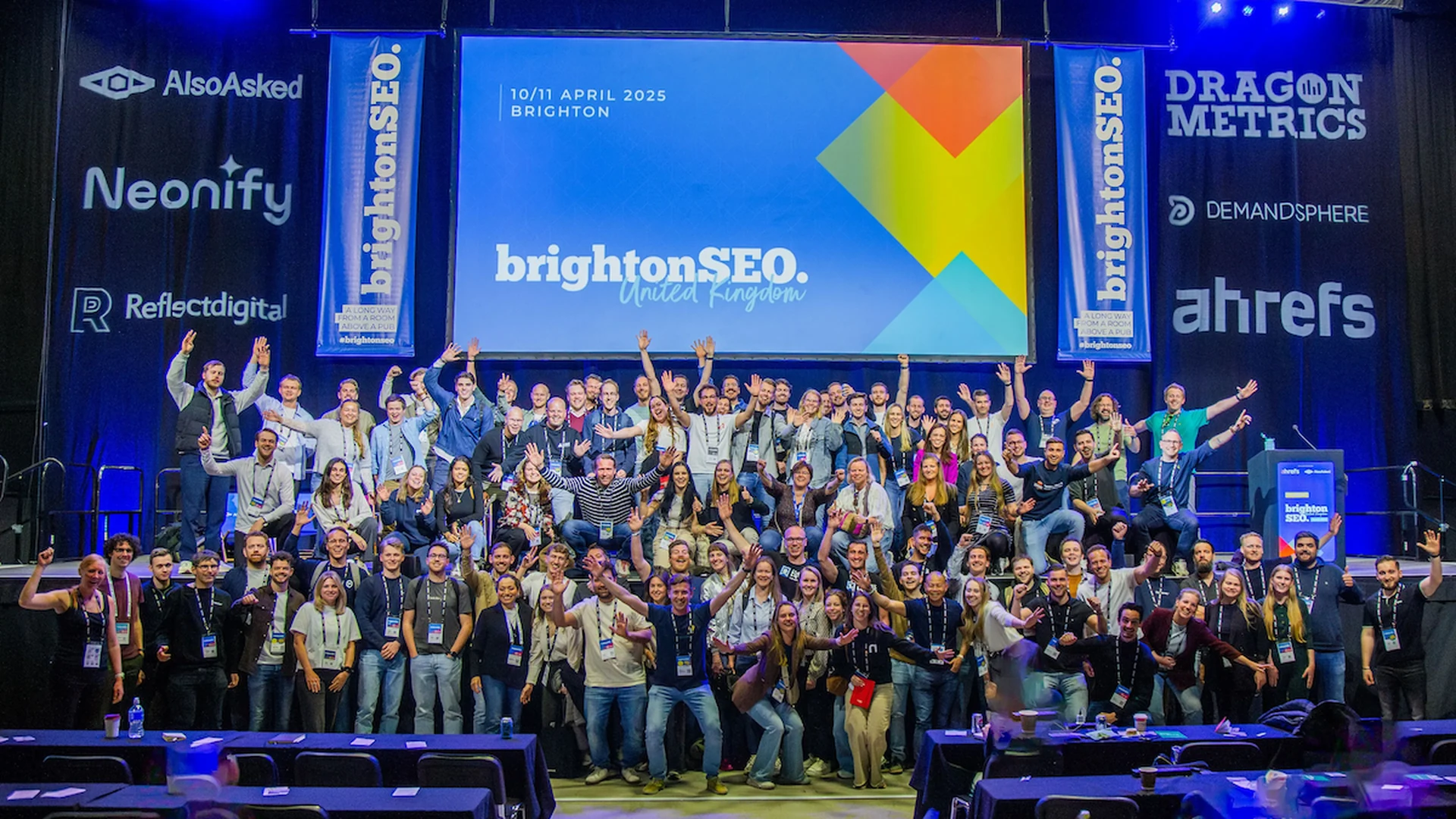
The curated guide to the global and regional SEO 2026 conferences worth attending — with an APAC and Australian lens, plus an ROI framework for each event.

Coworking near me
Searching coworking near me usually means a meeting tomorrow, a hybrid team that needs a base, or a founder tired of working from the kitchen bench — three different problems with three different answers. This guide ranks verified spaces in every Australian state and territory.