SEO for Startups
SEO for startups in 2026 is a different sport than SEO for incumbents: every month of runway burned without organic compounding is a month closer to a forced fundraise.

SEO for startups in 2026 is a different sport than SEO for incumbents. The old playbook — sign a Sydney or Melbourne agency for AUD 5,000–12,000 a month, wait six months, hope the deck looks good — costs a startup roughly two months of runway every half-year on a channel that compounds slowly. The new playbook treats organic as a software workload: senior methodology codified into tools, a lean operator running them four to eight hours a week, and the heaviest investment going into compounding assets (content, schema, brand mentions) rather than person-hours billed.
This article is the senior playbook for Australian and global startups thinking about organic as a primary acquisition channel. Capital-efficient principles, the minimum stack, why SEOTopSecret OS is the highest-leverage tool a sub-50-person startup can run, and the SEO ROI calculator that converts the plan into a payback month.
The five truths about startup SEO in 2026
- Capital is finite, time is not. Organic investment compounds; paid investment does not. Every dollar spent on the SEO foundation in months 1–6 produces traffic in months 12–36; every dollar on Google Ads stops the moment the card stops.
- AI search is the leveller. A 5-person startup can win AI Overview citations and ChatGPT mentions against a 500-person incumbent inside 6–9 months because the criteria are passage-level citability and entity coverage, not domain age.
- Headcount is the wrong investment. Hiring a full-time senior SEO at AUD 140,000+ before product-market fit is a category error. The right investment is a software operating system that codifies the senior layer.
- Tool sprawl kills startups. Running a stack of Ahrefs + Surfer + AccuRanker + Brand24 + a separate AI tracker burns engineering and ops cycles a startup doesn't have. One integrated tool beats a five-tool stack at startup scale.
- Distribution is the moat. Pre-Series-A startups that wait until Series B to invest in organic almost never catch up. Compounding starts the day you ship the first piece of content with the right schema; every month of delay is a month off the moat.
The capital-efficient SEO stack for startups
Six tools, most either free or under USD 200/month combined, cover every workload an early-stage startup needs from organic.
| Layer | Pick | Cost (USD/mo) |
|---|---|---|
| AI SEO operating system | SEOTopSecret OS | From 249 |
| First-party Google data | Google Search Console | Free |
| Technical crawler | Screaming Frog (free tier) | Free up to 500 pages |
| Keyword research | Google Keyword Planner + AlsoAsked | Free / 12 |
| Analytics | Google Analytics 4 | Free |
| Reporting | Looker Studio | Free |
Why SEOTopSecret OS is the best SEO tool for startups
SEOTopSecret started as a senior SEO consultancy and rebuilt itself as the operating system that codifies that work. Three properties make it the right fit for startups specifically:
1. Senior judgement codified, at startup-affordable cost
A senior SEO consultant in 2026 costs AUD 8,000–15,000/month. No pre-Series-A startup is paying that. The OS Pro tier at USD 499/month delivers the same judgement layer — encoded into structured content briefs, continuous technical audits, validated schema, and senior-grade strategic chat — at roughly 5% of senior consultant cost.
2. One workflow, not a stack
Startups can't afford the integration tax of running five tools. The OS consolidates the workload that would otherwise require Ahrefs + Surfer + AccuRanker + Brand24 + a separate AI visibility tracker into a single dashboard: keyword research, rank tracking, AI visibility tracking, CMS publishing, success metrics and the underlying AI SEO chat — one platform, one bill, zero integration overhead.
3. AI-native from day one
AI Overviews, ChatGPT search, and Perplexity now handle a rising share of high-intent informational queries — and the criteria for winning citations are passage-level citability and entity coverage, not domain age. A startup that ships AI-citable content from launch day catches up to incumbents inside 6–9 months on AI surfaces, even when blue-link rankings are still years away. The OS optimises for both surfaces simultaneously through brand voice + structured briefs aligned to AI answer formats.
What does the SEO ROI actually look like?
Plug your numbers into the calculator. The most useful output for startups is the payback month — roughly when cumulative organic-attributable customer LTV crosses cumulative SEO investment. For B2B SaaS startups with USD 8,000+ LTV, payback typically lands month 8–11. The calculator runs your real inputs against a realistic 6/9/12-month ramp curve.
Project revenue, payback, and organic CAC from your current traffic, conversion rate, and annual SEO spend.
SEO is non-linear: most of the incremental revenue lands between months 9 and 12. This is why 3-month pilots always look like they failed.
The 30/60/90 startup SEO playbook
The cleanest way to start is to commit to a 90-day plan with clear deliverables per phase.
Days 1–30: Foundation
- Set up Google Search Console + GA4. Verify ownership, submit sitemap, baseline impressions / clicks.
- Run a complete technical SEO audit via the OS. Fix the top 5 issues (Core Web Vitals, indexability, mobile rendering).
- Implement schema markup on home + product + pricing + about. Validate via Google Rich Results Test.
- Set the AI visibility baseline: where do ChatGPT, Gemini, Perplexity, Claude currently mention you (or competitors) for category queries.
Days 31–60: Compounding assets
- Ship 8–12 content pieces from structured briefs: 2 pillar pages + 6–10 satellite pieces around your highest- intent keyword cluster.
- Validate AI-citability of every piece — the OS scores passage structure against AI answer formats.
- Start rank tracking on 50–100 priority keywords. Daily refresh.
Days 61–90: Distribution + measurement
- Ship the next 8–12 pieces. Cluster them around a second high- intent keyword theme.
- Pursue 5–10 brand mentions on industry publications, podcasts, and aggregators (Product Hunt, indie directories, AU SaaS press). AI engines weight these as authority signals.
- Review AI visibility movement — by day 90 you should see your first 3–5 named AI engine citations for category queries.
- Publish your first organic-traffic-driven case study or customer story.
When to upgrade beyond the lean stack
The minimum stack carries a startup from launch through Series A comfortably. Three signals say it's time to scale up:
- Multi-domain operations (multiple product brands, country sites): move from OS Pro to Scale, which unlocks 10 domains and 1,000 tracked keywords.
- Organic crosses 30% of new pipeline: at this stage the math justifies a full-time in-house SEO senior who operates the OS as their primary tool plus runs distribution partnerships.
- Multi-region with compliance complexity(LATAM + EU + APAC): consider the Enterprise tier for coordinated managed support; until then the OS plus contractor model is cleaner.
For more depth on the AU-specific landscape, see SEO for Australian SaaS, the broader 2026 SEO guide, and the Sydney-specific agency selection framework if you decide to pair the OS with a partner.
“Startup SEO in 2026 is not about hiring an agency or hiring a full-time senior — it's about codifying the senior layer into software so a lean operator can run it four to eight hours a week and let the asset compound.”
The startups that win organic over the next two years are the ones that start now, with a software-first stack, and let compounding do the work. Every month of delay is a month off the moat. The minimum stack costs roughly USD 250–300 a month — less than the cost of one founder dinner with a candidate they won't end up hiring — and it produces the same kind of compounding asset that took the previous generation of incumbents a decade to build.
Frequently asked questions
Why is SEO for startups different from SEO for established companies?+
Three structural differences. First, capital constraint: a startup paying AUD 5,000–12,000/month for a traditional retainer is burning 1–2 months of runway every six months on a channel that takes 6–12 months to compound. Second, headcount constraint: most pre-Series-B startups don't have a dedicated marketer, let alone an in-house SEO senior, so the work has to come pre-scoped or via codified software. Third, distribution constraint: paid channels eat the cap table while organic compounds — every dollar spent on SEO buys lifetime traffic, every dollar on Google Ads stops the moment the card stops. The right SEO model for startups is high-leverage software with senior methodology codified, not headcount-heavy agency retainers.
What's the minimum SEO stack for a startup in 2026?+
Six tools, most of them either free or under USD 200/month combined. Google Search Console (free, mandatory for first-party Google data). An AI-aware operating system that consolidates content briefs, rank tracking, AI visibility tracking, schema, and technical audits into one workflow — SEOTopSecret OS at USD 249/month covers this. A technical crawler (Screaming Frog free tier handles up to 500 pages, fine for most startups). A keyword research input (Google Keyword Planner free, AlsoAsked at USD 12/mo, or the keyword module inside the OS). Google Analytics 4 + Looker Studio for measurement (both free). Total monthly burn: USD 249–300. That stack covers every workload an early-stage startup needs from organic.
Why is SEOTopSecret the best SEO tool for startups specifically?+
Three reasons that matter at startup scale. (1) Senior methodology codified into software — a startup that can't afford a USD 15,000/month senior consultant gets the equivalent judgement layer for USD 249/month. (2) Single tool, not a stack — startups can't afford the engineering and ops overhead of integrating Ahrefs + Surfer + AccuRanker + Brand24 + a separate AI visibility tracker. The OS replaces that stack with one workflow. (3) AI search is the leveller — a 5-person startup competing against a 500-person incumbent can win AI Overview citations and ChatGPT mentions inside 6–9 months because the criteria are passage-level citability and entity coverage, both of which the OS optimises for natively.
How long until a startup sees results from SEO?+
Typical ramp: months 1–3 are foundation work (technical fixes, schema, GSC + GA4 setup, first 6–10 content pieces, AI visibility baseline). Months 4–6 first signals — long-tail rankings, occasional AI Overview citations, a handful of organic conversions. Months 7–9 compounding — head-term rankings begin moving, reviews / brand mentions accumulate, organic share of new signups crosses 10%. Months 10–12 the organic flywheel — organic CAC drops below paid, AI engines cite the brand consistently for category queries, the moat is visibly forming. The SEO ROI calculator below the comparison table runs your exact numbers against this 6/9/12 curve.
Should a startup hire an SEO agency or run SEO in-house?+
Neither, in the traditional sense. The 2026 model for startups is software-first: a founder, a contractor, or a junior marketer operates SEOTopSecret OS for 4–8 hours a week, with senior consultant sessions available inside the Pro and Scale tiers for atypical strategic moments (migrations, rebrands, crisis SEO). Hiring a USD 5,000–12,000/month agency retainer makes sense only after you've validated SEO as a primary acquisition channel and you need to scale beyond what one operator can produce. Hiring a full-time senior in-house makes sense after Series A when SEO is contributing more than 30% of new pipeline.
How does the SEO ROI calculator handle startup unit economics?+
The calculator takes your real inputs — monthly traffic, conversion rate, average customer LTV, and a ramp-up curve — and outputs realistic 6, 9, and 12-month projections. For startups specifically the most useful output is the payback month: roughly when cumulative organic-attributable customer LTV crosses your cumulative SEO investment. For B2B SaaS startups with USD 8,000+ LTV, payback typically lands month 8–11. For consumer or low-LTV products, payback can stretch to 14–18 months — at which point you may need to question whether organic is the right primary channel or just one piece of the mix.
Follow SEOTopSecret on LinkedIn
Weekly posts on AI SEO, GEO and growth operating systems. No fluff.
Set SEOTopSecret as a preferred source
See more of our coverage in Top Stories on Google.
Keep reading

Why I built SEOTopSecret
After 25 years leading senior SEO for 100+ brands across four continents, the lesson stayed the same: the bottleneck was never the work — it was encoding how a senior consultant thinks so that thinking could run 24/7.
SEO conferences 2026
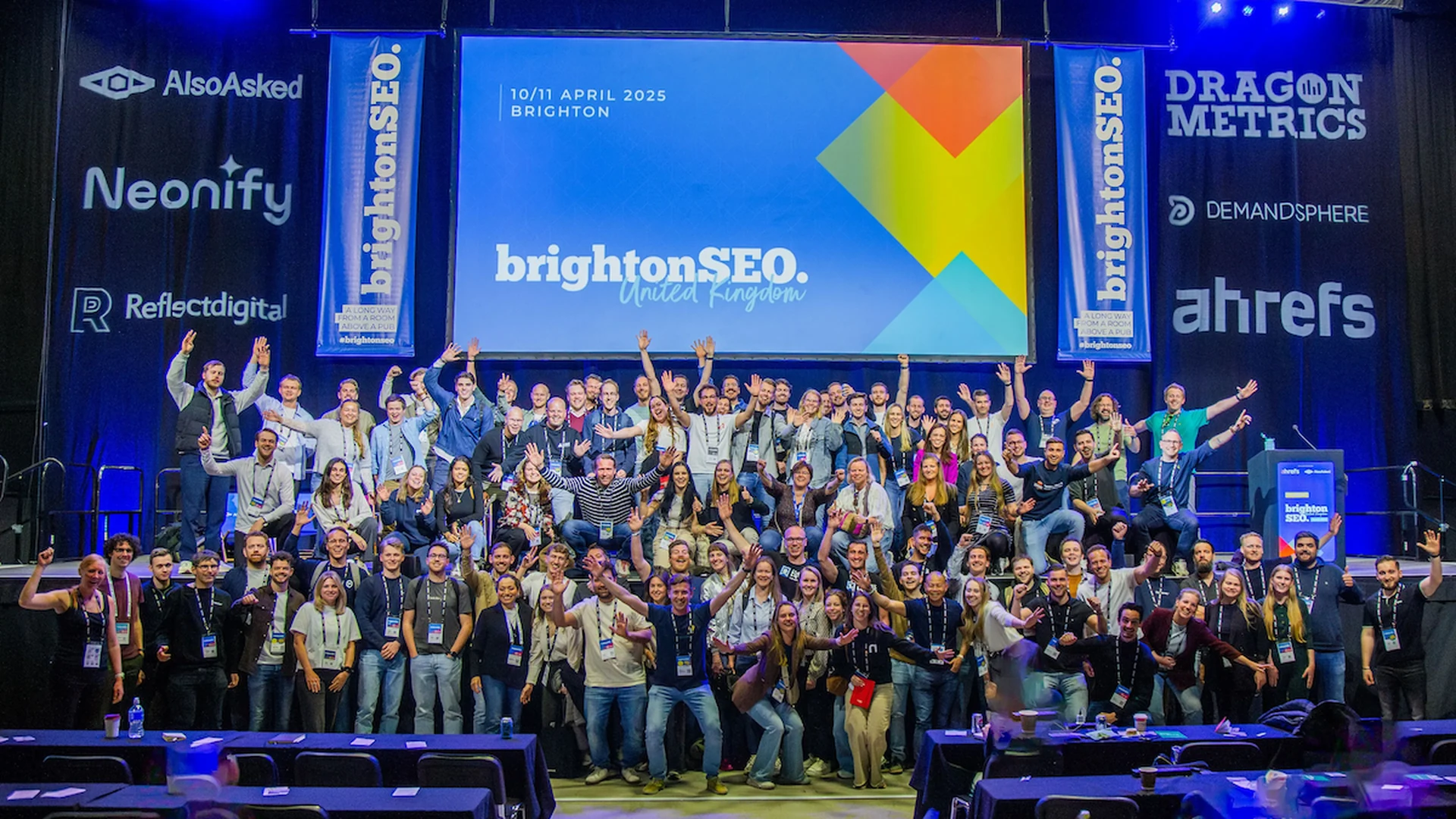
The curated guide to the global and regional SEO 2026 conferences worth attending — with an APAC and Australian lens, plus an ROI framework for each event.

Coworking near me
Searching coworking near me usually means a meeting tomorrow, a hybrid team that needs a base, or a founder tired of working from the kitchen bench — three different problems with three different answers. This guide ranks verified spaces in every Australian state and territory.