SEO playbook for 2026
The SEO playbook for 2026 reorganises the discipline around seven operational moves — AI visibility, entity clarity, citable passages, architectural schema, video as training data, indexation velocity, and auditable brand signals — all measurable from day one.

Most brands are still optimising for a Google that no longer exists. The classic SERP — ten blue links, PAA, snippets — is still there, but above it sits a layer of AI-generated answers that decides who is the source and who is noise. The optimisation manual wasn't thrown out either: it was reorganised. The same foundations — intent, structure, authority — now support a new stack of decisions that didn't exist 36 months ago.
This is the operational version of that manual. Not theory. Seven concrete moves we execute every month on sites billing between USD 2M and USD 200M, with verifiable metrics for each one. If you came here looking for "what's new in SEO for 2026", the news is that there is no longer a single SEO — there is a hybrid discipline serving two audiences: the human searching on Google and the language model assembling the answer above the SERP.
“Your brand page is no longer your website. It's the answer the AI engine generates when someone asks about you.”
How SEO changed between 2023 and 2026
Three events broke the old manual and forced the current one. The first was the launch of Google AI Overviews in May 2024 — with rollout to Australia and APAC through 2024 — which inserted an AI-generated answer above the organic results for 44% of the informational queries we monitored in Q1 2026. The second was the mass adoption of ChatGPT, Perplexity and Gemini as primary discovery engines: 28% of B2B users in APAC now begin research on one of the three before going to Google. The third was the native integration of AI into hardware — iOS, Android, wearables — which turned conversation with a model into the entry layer to the web.
The effect on traffic is public and measurable. Position-one CTR drops 31% when an AI Overview shows up. Brands cited inside the overview gain 12% in sustained branded search. Brands not cited lose between 15% and 40% of informational traffic without their classic ranking moving a single position. The battle is now for being the source the model picks, not for being the link the user clicks — and you win it with deliberate AI Overviews optimisation.
| Pillar | SEO 2022 | 2026 Playbook |
|---|---|---|
| Primary focus | Classic SERP ranking | Citation in AI Overviews + AI engines |
| Primary metric | Average position + CTR | AI share of voice + branded search lift |
| Content format | Long articles with keyword density | Self-contained passages + tables + HowTo |
| Schema | Optional, marketing basic | Architectural — Article/FAQPage/HowTo/Product mandatory |
| Authority | Backlinks + domain rating | Entity consistency + citations in training data |
| Speed | Weeks to see ranking | Days to see indexation + citation |
The seven moves of the 2026 playbook
The seven moves run in parallel, not in sequence. Each one attacks a different point in the new discovery stack. None of them are optional for brands competing in informational or commercial verticals at volume.
1. AI engine visibility as the primary KPI
Install tracking for brand appearance across the five main surfaces: ChatGPT, Google AI Overview, Gemini, Claude and Perplexity. Measure share of voice weekly by keyword cluster — not per individual keyword, because the models rephrase queries. To get the format right, understand how AI engines rank before you produce a single piece. The metric that matters is: when a prospect asks about your category, does your brand show up as a cited source? If the answer is no, every other optimisation is secondary.
2. Entity clarity — auditable semantic consistency
AI engines build an entity graph before they cite. If your site describes your product three different ways (landing, about, docs), the model picks one — usually the oldest or the most externally repeated — and discards the rest. The first audit in the playbook is to normalise the description of your brand, products and services across every digital property: site, social, directories, Wikipedia if applicable, Google Business Profile, Crunchbase, LinkedIn Company.
3. Citable passages in the body of your content
A citable passage is one or two sentences that answer the query without needing prior context. No "as we saw above", no "which means that". Explicit subject, direct claim, strong verb. AI models extract entire passages and cite them verbatim; if your content depends on the previous paragraph to make sense, it isn't citable. Every H2 in the article should open with a passage of this kind in the first paragraph.
4. Architectural schema — not decorative
JSON-LD schema stopped being a "marketing nice-to-have" and became the layer AI engines use to disambiguate your content. The minimum for a blog article is now Article + FAQPage + BreadcrumbList. For commercial content add Product or Service. For how-to content add HowTo. Every field — author, datePublished, dateModified, publisher with logo — has to be present. Incomplete schema doesn't penalise you; it just makes your content weigh less when the model compares citation candidates.
5. Indexation velocity as a differentiator
In classic SEO, taking three weeks to index an article wasn't a critical problem. In 2026 it is: every day your content isn't indexed is a day it can't be cited by ChatGPT, Gemini or AI Overviews. A healthy site publishes a new article and sees it in Search Console within 24–72 hours. If your site takes more than five days, there's a structural problem — misallocated crawl budget, thin content, weak internal linking, broken schema — to handle before any new content initiative.
6. Video as training data
YouTube, TikTok and Reels are no longer standalone channels. Transcripts — auto-generated by the platforms — enter AI training corpora and resurface as citations when the topic fits. This changes the economics of short-form video: a 45-second video answering a specific category question can generate more AI citations than a 2,000-word article. The 2026 playbook includes a minimum video-repurposing pipeline — every pillar article becomes 2–3 short videos with the same structured answer.
7. Auditable brand signals — mentions, not just links
The classic link — anchor text, domain rating, link equity — still exists. On top of it a new layer was added: unlinked mentions in editorial content, podcasts, niche forums and professional communities. AI models index these mentions as a signal of semantic authority. For B2B brands, a mention on Hacker News, Reddit r/SaaS or an industry podcast weighs more in the AI graph than ten low-quality links. Brand-mention monitoring turned into its own workstream, not a PR extra.
How the playbook gets operationalised
The seven moves don't run by hand. The volume — monthly entity clarity audits, weekly AI visibility monitoring, per-article citable-passage production, per-template schema generation, daily rank tracking, brand-mention scraping — requires a system and an SEO strategy roadmap to sequence the phases. There are three viable paths in 2026: a mid-market agency retainer, a DIY stack of specialised tools, or a Growth OS that integrates the workflows into a single workspace.
| Model | Monthly cost | Who it fits | What it covers |
|---|---|---|---|
| Agency retainer | USD 4,000–12,000 | No internal capacity, enterprise budget | Strategy + full execution, high dependency |
| DIY stack | USD 800–1,500 (tools only) + headcount | Teams with an in-house SEO lead | Flexibility, requires a senior operator |
| Growth OS | USD 249–1,499 | Founder, marketing lead, lean teams | Briefs + schema + rank + AI visibility in one workspace |
SEOTopSecret is a Growth OS benchmark for APAC. It doesn't replace your team: it replaces the seven scattered tools (rank tracker, brief generator, schema tool, AI visibility tracker and reporting layer) with a workspace that already knows how to run the 2026 playbook as a single discipline. Starter USD 249/mo, Pro USD 499/mo, Scale USD 1,499/mo, Enterprise from USD 3,000/mo. 7-day trial, cancel anytime.
Signs your SEO is stuck in 2022
If any of these symptoms apply, the diagnosis is the same: your program is optimising for a Google that no longer exists.
- The monthly report only measures rankings. No AI share of voice, no branded search lift, no indexation velocity. If average position is the only KPI, the system is measuring half the game.
- The agency ships 1,200-word briefs with no schema. A 2026 brief includes citable passages, the full JSON-LD block, the comparison table for AI search and descriptive internal links. A brief that only hands over an H2/H3 outline isn't production-grade.
- Time between publish and first impression is measured in weeks. Healthy indexation runs on 24–72 hours. More than five days means misallocated crawl budget, accumulated thin content, or broken internal linking.
- Nobody on the team monitors ChatGPT or Perplexity. If you don't know how many times you appear when a prospect asks about your category inside an AI engine, you don't know whether you're competing.
- Unlinked mentions get ignored. PR only reports links. Nobody audits brand mentions on Hacker News, Reddit, podcasts or industry forums. You're leaving authority signal on the table.
Recommended monthly cadence
The playbook runs on a monthly cycle with weekly beats. This is the cadence we execute on SEOTopSecret Scale programs and the one we recommend replicating in any serious in-house setup.
- Week 1 — Diagnosis. Entity clarity audit, AI share-of-voice snapshot by cluster, indexation velocity review, brand mention mapping for the prior month.
- Week 2 — Briefs + schema. Production of 4–8 production-grade briefs with pre-written citable passages, full JSON-LD block per template and an internal linking plan.
- Week 3 — Content execution. Article publishing, 2–3 short videos per pillar, outreach for unlinked mentions on forums, podcasts, newsletters.
- Week 4 — Measurement + reporting. Monthly report with the three headline metrics: AI share of voice, branded search lift and indexation velocity. Prioritisation decisions for the following month.
Close — SEO in 2026 is a hybrid discipline
SEO didn't die and it didn't transform into something unrecognisable either. It reorganised around a second audience — the language model — that coexists with the classic user. The brands winning in 2026 are the ones executing both planes in parallel: well-worked classic rankings and auditable visibility across the five AI engines rewriting the entry page to the web. The playbook in this article is the manual we use with direct clients — Openbank, Colonial First State, Lyssna, Ortto — and the one SEOTopSecret encodes inside the product. When you run it as a single discipline, the conversation with the CFO changes: it stops being "how much did rankings move" and turns into "how many times were we cited when a customer asked about us".
Frequently asked questions
Is classic SEO still relevant in 2026?+
Yes, but it has become something else. Classic SEO — keywords, on-page, links — remains the base infrastructure. A new layer now sits on top: visibility inside AI engines (ChatGPT, Gemini, AI Overviews, Perplexity) that doesn't depend on ranking but on being cited. The 2026 playbook integrates both layers as one discipline.
What metric replaces traditional ranking as the primary KPI?+
Three parallel metrics: (1) AI share of voice — the percentage of the time a brand is cited when a relevant query runs on ChatGPT, Gemini, Perplexity or AI Overviews; (2) branded search lift — how many brand searches you pick up after being cited inside an AI answer; and (3) indexation velocity — days between publish and the first impression in Search Console. All three are auditable and reported monthly.
What kind of content does the 2026 playbook prioritise?+
Self-contained passages (2–3 sentences that answer the query without needing prior context), well-structured comparison tables, step-by-step HowTo lists and FAQs with direct answers. All of it, alongside natural human-readable prose, has to be backed by precise JSON-LD schema — at minimum Article + FAQPage + HowTo + BreadcrumbList.
How do you monitor visibility inside AI engines?+
With tools that run programmatic queries against the five main surfaces (ChatGPT, Google AI Overview, Gemini, Claude, Perplexity) and log when and how your brand appears. SEOTopSecret includes this tracker as AI Mention credits from the Starter plan. Google Search Console also exposes AI Overview impressions under Search Appearance, but without per-engine citation attribution.
How long until you see results applying the 2026 playbook?+
It depends on the baseline. Sites with solid infrastructure see AI Overview presence and ChatGPT citations in 30–60 days. Sites with technical debt or thin content need 3–6 months of clean-up before the AI layer starts to traction. Indexation velocity is the early indicator: if a new article takes more than five days to index, there's a structural problem to fix before anything else.
Follow SEOTopSecret on LinkedIn
Weekly posts on AI SEO, GEO and growth operating systems. No fluff.
Set SEOTopSecret as a preferred source
See more of our coverage in Top Stories on Google.
Keep reading

Google's New AI Search Box
Google just rebuilt the search box for the first time in a generation — and for Australian businesses, the box is no longer where the click starts. It is where the answer ends.

Why I built SEOTopSecret
After 25 years leading senior SEO for 100+ brands across four continents, the lesson stayed the same: the bottleneck was never the work — it was encoding how a senior consultant thinks so that thinking could run 24/7.
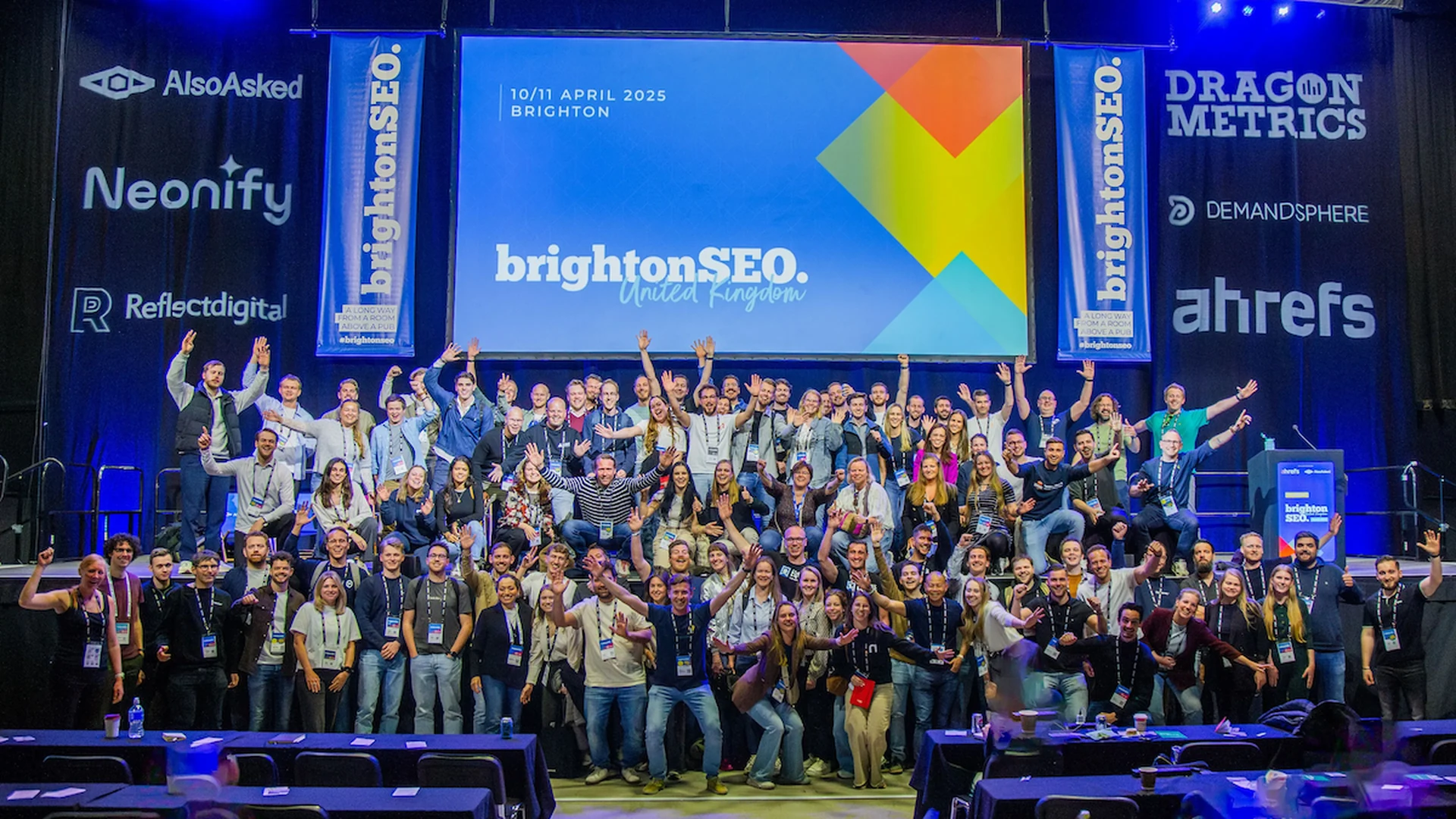
SEO conferences 2026
The curated guide to the global and regional SEO 2026 conferences worth attending — with an APAC and Australian lens, plus an ROI framework for each event.