
Academy
Cluster 08 / 08
International + Specialized
Hreflang, multi-region URL architecture, country-specific search engines, and the specialized verticals where SEO operates differently — e-commerce, SaaS, enterprise. The eighth and final pillar of the academy.

International SEO and specialized-vertical SEO sit in the same cluster because both extend the standard discipline into territory most teams never touch. International work adds the geographic and linguistic layer — hreflang, multi-region architecture, country-specific engines, regional link profiles. Specialized work adds vertical-specific patterns — e-commerce faceted navigation, SaaS comparison-page strategy, enterprise governance — that don't show up in the generic playbook.
This is the International + Specialized cluster — eight articles. The first five cover international: language targeting, URL architecture, translation discipline, link profile, and the engines beyond Google. The last three cover specialized verticals where the standard playbook has to be modified to win.
The compounding rule: both halves of this cluster reward technical discipline more than content volume. The teams that win international and specialized SEO are the ones with rigorous architecture, careful execution, and patience — none of these wins are fast, but the durability is the highest of any SEO discipline.
Articles in this cluster
Read in order, or jump to the chapter you need. Each article ends with a link to the next one.
- 01Chapter 01 of 08
Hreflang and language targeting
The protocol that tells search engines which language and region a page targets — what to implement, what breaks silently, and the audit that catches the 80% of multilingual sites running with broken hreflang.
9 min readRead chapter 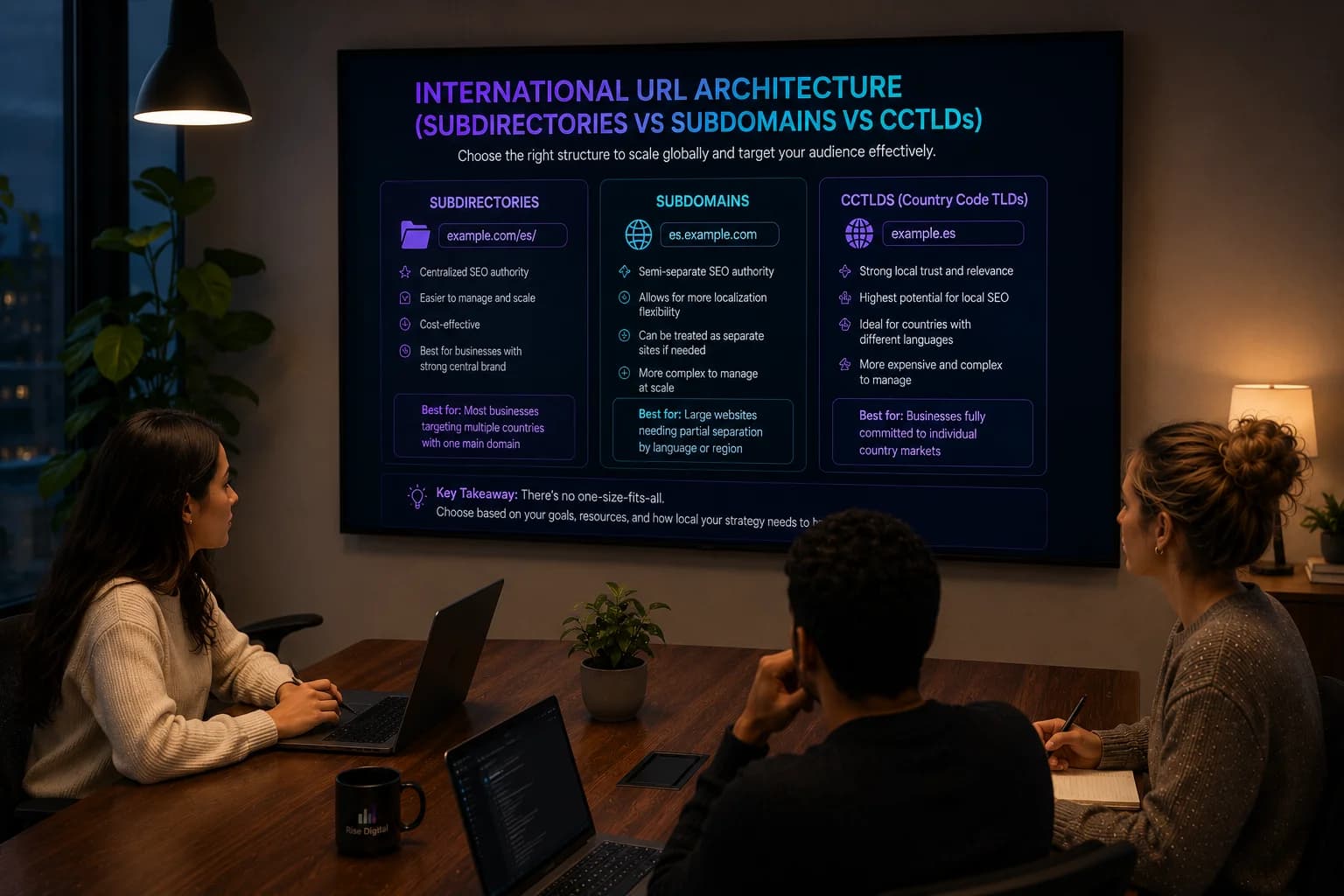 02Chapter 02 of 08
International URL architecture
Subdirectories, subdomains, or country-code top-level domains — the structural decision that shapes everything else in your international SEO program. The trade-offs nobody explains until it's too late to change.
8 min readRead chapter 03Chapter 03 of 08
Translation vs localization
Word-for-word translation produces content; localization produces ranking. The difference between the two is the gap between an international site that exists and one that wins — and most multilingual sites are stuck on the wrong side of it.
8 min readRead chapter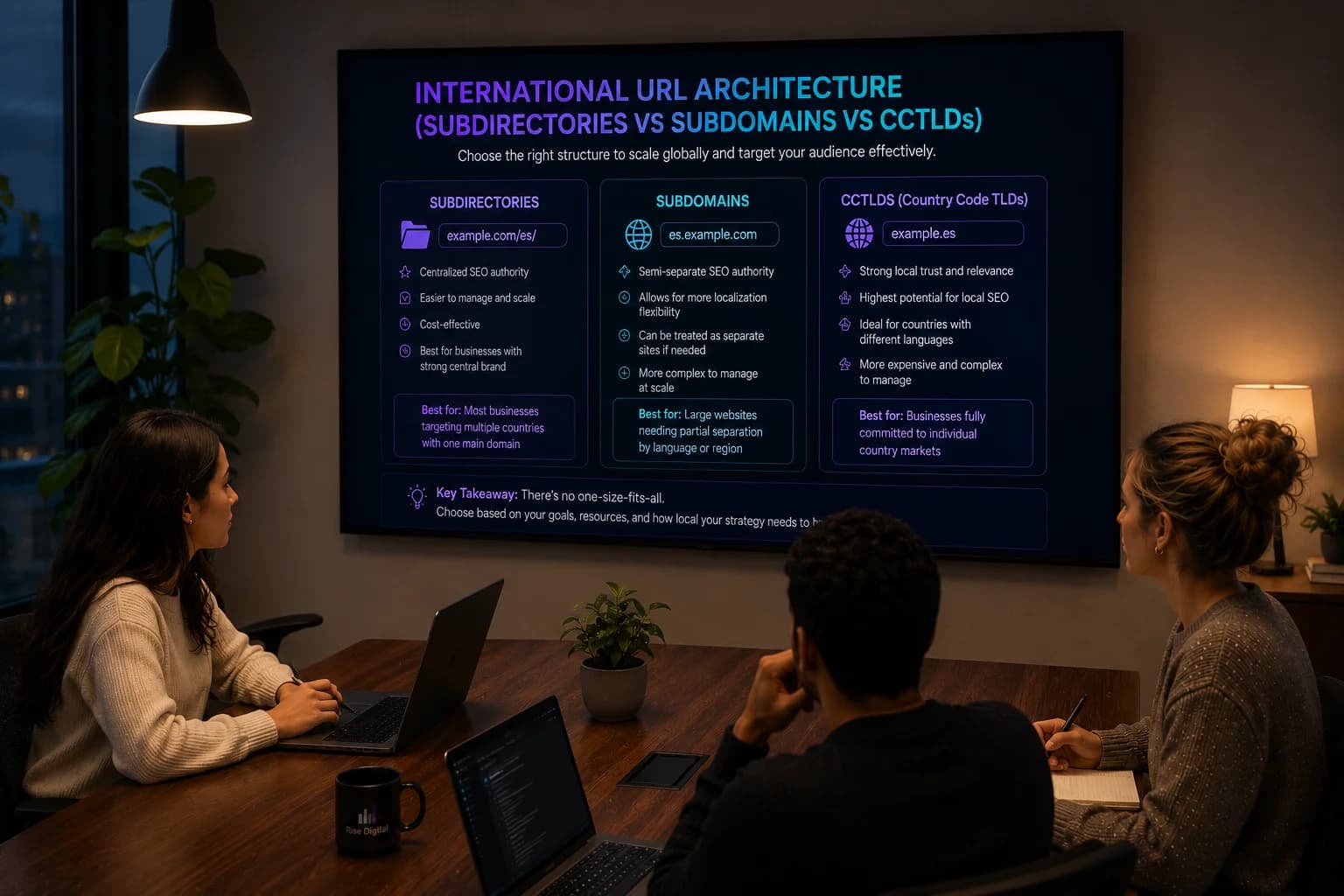 04Chapter 04 of 08
International link building
Why a perfectly localized site still doesn't rank in the target market without local backlinks — and the per-region link strategies that build the trust signal Google uses to verify a brand actually belongs in the country it's targeting.
8 min readRead chapter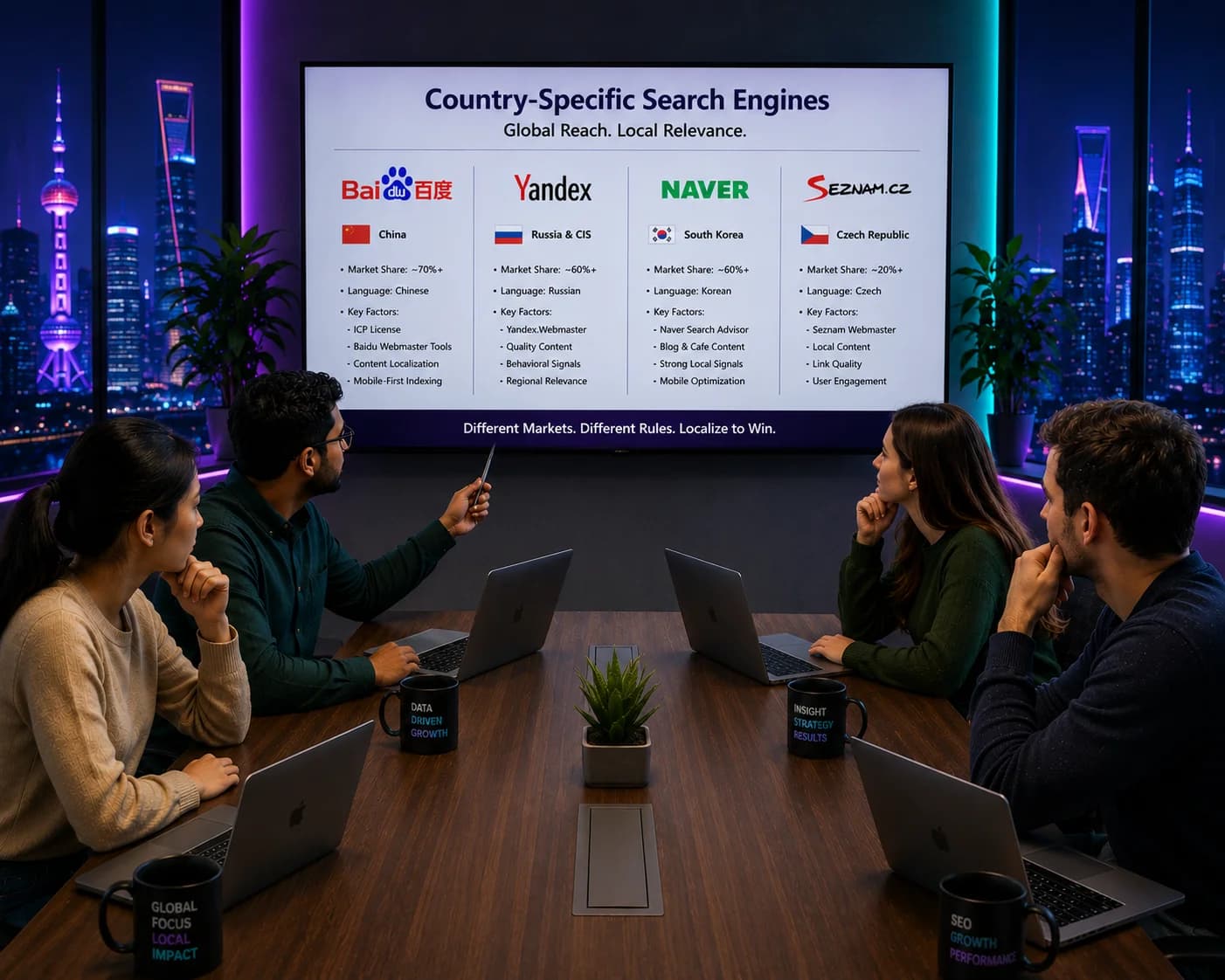 05Chapter 05 of 08
Country-specific search engines
Baidu in China, Yandex in Russia, Naver in South Korea, Seznam in Czechia — the markets where Google isn't dominant and the entirely separate optimization stacks each engine demands.
8 min readRead chapter 06Chapter 06 of 08
E-commerce SEO
Catalog scale, faceted navigation, out-of-stock dynamics, and the structural problems that don't show up on five-page brochure sites. Why standard SEO fails on a 50,000-SKU catalog and what to do instead.
9 min readRead chapter 07Chapter 07 of 08
B2B SaaS SEO
Comparison pages, alternatives content, integration pages, and the free-trial conversion path that shapes the entire content strategy. Why SaaS SEO is its own discipline and what to build first.
9 min readRead chapter 08Chapter 08 of 08
Enterprise SEO
Governance, technical scale, stakeholder dynamics, and the political-organizational problems that don't show up in SMB SEO. Why running SEO at a 10,000-employee company is a different discipline — and how to make it work.
9 min readRead chapter