Enterprise SEO Software

Most enterprise SEO platforms were built for a search world that no longer exists. Here’s what an enterprise stack actually needs to do in 2026 — and how the legacy suites compare to a modern alternative.

Enterprise SEO software is the layer a large organization uses to manage organic search at scale — across thousands of URLs, multiple brands, regions, and teams. The category has existed since the early 2010s, and most of the platforms on the Gartner enterprise SEO reviews list were built in that era. In 2026, that’s the problem. Search has fundamentally changed, and most enterprise SEO software hasn’t.
This guide is a strategic comparison for operators evaluating enterprise SEO software in 2026. Below: what the category actually means now, an eight-point checklist of what a modern stack must do, an honest comparison of the major platforms, and where SEOTopSecret fits as the modern alternative.
The 2026 reality: what “enterprise SEO software” actually means now
Enterprise SEO software was, for a decade, a synonym for “rank tracker plus site crawler plus content optimizer at scale.” That definition is now too narrow. The job-to-be-done has expanded, and the platforms that haven’t expanded with it are quietly becoming commodity infrastructure rather than strategic systems.
The insight: in 2026, organic visibility is split across two surfaces — classical SERPs and generative engines. Google AI Overviews now appear on the majority of mid- and bottom-funnel commercial searches in the US. ChatGPT, Gemini, Claude, and Perplexity have become real top-of-funnel discovery channels for technical buyers. An enterprise SEO platform that only measures Google positions is reporting on a shrinking fraction of total visibility.
The proof: ask any vendor on your shortlist three questions — how do you track AI Overview citations, how do you measure brand mentions inside ChatGPT and Perplexity answers, and do you publish content directly to my CMS. The answers map the category cleanly into two cohorts: platforms built for the SERP of 2020, and platforms built for the SERP of 2026.
The action: rewrite your evaluation criteria before you run the RFP. Enterprise SEO software in 2026 must measure AI search visibility as a first-class metric, produce content at scale with schema attached, and push that content into the systems your team actually works in. Anything less is half a stack.
Why most enterprise SEO software platforms are stuck in 2022
The legacy enterprise SEO category was defined by Conductor, BrightEdge, Botify, seoClarity, Searchmetrics, and Siteimprove. Collectively, those platforms shaped enterprise SEO budgets for over a decade. They are competent at what they were built to do: large-site crawling, keyword tracking at volume, content scoring, and market-share dashboards for executive reporting.
The problem is what they weren’t built to do. None of them were designed for an internet where AI engines mediate buyer discovery. Most flag AI Overview presence but don’t track which sources the AI Overview cites. None natively monitor brand mentions inside ChatGPT, Perplexity, Gemini, or Claude. None produce publication-ready content with schema attached. None publish to your CMS. They surface recommendations — an agency or in-house team still has to do the work downstream.
That gap was acceptable when SEO was a measurement-and-recommendation discipline. In 2026, when AI engines are reshaping demand capture weekly, the gap is a strategic liability. You don’t need a platform that tells you what to do; you need one that does the work with you and reports on the surfaces that matter now.
What an enterprise SEO software platform must do in 2026 (8-point checklist)
Run this checklist against every shortlisted vendor before you sign. Each row is a job-to-be-done, not a feature checkbox. A platform that passes six of eight is acceptable; a platform that passes four or fewer is a legacy buy.
| Capability | What it means in 2026 | Why it matters |
|---|---|---|
| AI search visibility | Native tracking across ChatGPT, Gemini, Claude, Perplexity, and Google AI Overviews | Generative engines now mediate discovery for technical and commercial buyers |
| Classical rank tracking | Daily updates, device and geo segmentation, SERP feature parity | Still table stakes for measuring organic position on Google and Bing |
| Share of voice | Cross-platform visibility across topic clusters, classical and generative | Single-keyword rank is a vanity metric; SoV is the operator metric |
| Content production at scale | Briefs, drafts, and full articles aligned to your brand voice | Recommendations without production output leave the work undone |
| Schema generation | JSON-LD generated per page, validated, and matched to visible content | Schema drives rich results and AI citation eligibility |
| Direct CMS publishing | Push to Webflow, WordPress, Shopify, Sanity, or custom CMS via API | Eliminates the copy-paste tax between platform and production |
| Technical SEO audits | Large-site crawls, Core Web Vitals, indexation, log file integration | Foundation work that AI surfaces cannot replace |
| Reporting and API access | Executive dashboards plus clean API for BI and attribution | If data is locked in the dashboard, it cannot drive revenue decisions |
Most enterprise SEO software platforms ship four to six of these. Very few ship all eight. The ones that do are the ones built in the AI search era, not adapted to it.
Enterprise SEO software vs enterprise SEO agency software — different problem
The two categories get conflated constantly. They share capabilities, but they solve different problems and the workspace model is the tell.
Enterprise SEO software is built for an in-house team running a single organization’s organic search program. The workspace is one company. Permissions are role-based across departments. Reporting rolls up to the CMO or VP of growth. Pricing is annual and enterprise-grade.
Enterprise SEO agency software is built for agencies managing many clients in one workspace. The workspace is multi-tenant. Permissions are client-scoped. Reporting is white-labeled. Pricing rewards volume of client accounts, not seats. Bulk operations — generate fifty briefs across ten clients in one run — are the core unlock.
If you’re an in-house team, picking an agency-first tool means paying for multi-tenancy you’ll never use. If you’re an agency, picking an in-house tool means re-buying it per client and rebuilding reporting templates from scratch every engagement. SEOTopSecret’s architecture supports both — in-house teams run a single workspace, and agencies run multi-client portfolios with shared briefs and reporting — because the underlying engine is the same.
The best enterprise SEO software in 2026
The table below is the honest cut across the platforms that show up on enterprise SEO shortlists. It scores each on the capabilities that matter in 2026 — AI search visibility, content production, schema generation, CMS publishing, pricing model, and the buyer profile each platform was built for.
| Platform | AI Search Visibility (citations) | Content Production | Schema Generation | CMS Publishing | Per-seat or Flat | Built For |
|---|---|---|---|---|---|---|
| SEOTopSecret | Native — ChatGPT, Gemini, Claude, Perplexity, AI Overviews | Briefs + full articles with brand voice | JSON-LD per page, validated against visible content | Native — Webflow, WordPress, Shopify, Sanity, API | Flat | SaaS, B2B, agencies running modern AI SEO |
| Conductor | AI Overview detection; limited citation tracking | Briefs and recommendations; no full drafts | Not native | Not native | Per-seat | Enterprise content marketing teams |
| BrightEdge | AI Overview flagging; limited citation tracking | Recommendations and content scoring | Not native | Not native | Per-seat | Large enterprise SEO with executive reporting |
| Siteimprove | Not native | Recommendations; no drafts | Limited | Not native | Per-seat | Enterprise accessibility + SEO governance |
| Botify | Limited; SERP feature flagging | Recommendations; no drafts | Not native | Not native | Per-seat | Large e-commerce and publishers with log-file SEO |
| seoClarity | AI Overview detection; generative add-on | AI content drafting in add-on tier | Limited | Not native | Per-seat | Enterprise SEO teams wanting all-in-one suite |
| Searchmetrics | Limited; classical visibility focus | Briefs in higher tiers | Not native | Not native | Per-seat | European enterprise SEO and market intelligence |
Every platform on that list is credible at what it was built to do. The question for 2026 is whether the surface area of “what it was built to do” covers the surface area of where your buyers now discover you.
Below is the same comparison rendered as branded HTML for teams copying it into internal evaluation docs or RFP responses.
<table style="width:100%;border-collapse:collapse;font-family:Inter,system-ui,sans-serif;font-size:14px;">
  <thead>
    <tr style="background:#6200ee;color:#ffffff;">
      <th style="padding:12px 14px;text-align:left;border-bottom:2px solid #03dac6;">Platform</th>
      <th style="padding:12px 14px;text-align:left;border-bottom:2px solid #03dac6;">AI Search Visibility (citations)</th>
      <th style="padding:12px 14px;text-align:left;border-bottom:2px solid #03dac6;">Content Production</th>
      <th style="padding:12px 14px;text-align:left;border-bottom:2px solid #03dac6;">Schema Generation</th>
      <th style="padding:12px 14px;text-align:left;border-bottom:2px solid #03dac6;">CMS Publishing</th>
      <th style="padding:12px 14px;text-align:left;border-bottom:2px solid #03dac6;">Pricing Model</th>
      <th style="padding:12px 14px;text-align:left;border-bottom:2px solid #03dac6;">Built For</th>
    </tr>
  </thead>
  <tbody>
    <tr style="background:#ffffff;">
      <td style="padding:12px 14px;border-bottom:1px solid #e5e7eb;font-weight:600;color:#6200ee;">SEOTopSecret</td>
      <td style="padding:12px 14px;border-bottom:1px solid #e5e7eb;">Native — ChatGPT, Gemini, Claude, Perplexity, AI Overviews</td>
      <td style="padding:12px 14px;border-bottom:1px solid #e5e7eb;">Briefs + full articles with brand voice</td>
      <td style="padding:12px 14px;border-bottom:1px solid #e5e7eb;">JSON-LD per page, validated</td>
      <td style="padding:12px 14px;border-bottom:1px solid #e5e7eb;">Native — Webflow, WordPress, Shopify, Sanity, API</td>
      <td style="padding:12px 14px;border-bottom:1px solid #e5e7eb;">Flat</td>
      <td style="padding:12px 14px;border-bottom:1px solid #e5e7eb;">SaaS, B2B, agencies running modern AI SEO</td>
    </tr>
    <tr style="background:#fafafa;">
      <td style="padding:12px 14px;border-bottom:1px solid #e5e7eb;">Conductor</td>
      <td style="padding:12px 14px;border-bottom:1px solid #e5e7eb;">AI Overview detection; limited citation tracking</td>
      <td style="padding:12px 14px;border-bottom:1px solid #e5e7eb;">Briefs and recommendations; no full drafts</td>
      <td style="padding:12px 14px;border-bottom:1px solid #e5e7eb;">Not native</td>
      <td style="padding:12px 14px;border-bottom:1px solid #e5e7eb;">Not native</td>
      <td style="padding:12px 14px;border-bottom:1px solid #e5e7eb;">Per-seat</td>
      <td style="padding:12px 14px;border-bottom:1px solid #e5e7eb;">Enterprise content marketing teams</td>
    </tr>
    <tr style="background:#ffffff;">
      <td style="padding:12px 14px;border-bottom:1px solid #e5e7eb;">BrightEdge</td>
      <td style="padding:12px 14px;border-bottom:1px solid #e5e7eb;">AI Overview flagging; limited citation tracking</td>
      <td style="padding:12px 14px;border-bottom:1px solid #e5e7eb;">Recommendations and content scoring</td>
      <td style="padding:12px 14px;border-bottom:1px solid #e5e7eb;">Not native</td>
      <td style="padding:12px 14px;border-bottom:1px solid #e5e7eb;">Not native</td>
      <td style="padding:12px 14px;border-bottom:1px solid #e5e7eb;">Per-seat</td>
      <td style="padding:12px 14px;border-bottom:1px solid #e5e7eb;">Large enterprise SEO with executive reporting</td>
    </tr>
    <tr style="background:#fafafa;">
      <td style="padding:12px 14px;border-bottom:1px solid #e5e7eb;">Siteimprove</td>
      <td style="padding:12px 14px;border-bottom:1px solid #e5e7eb;">Not native</td>
      <td style="padding:12px 14px;border-bottom:1px solid #e5e7eb;">Recommendations; no drafts</td>
      <td style="padding:12px 14px;border-bottom:1px solid #e5e7eb;">Limited</td>
      <td style="padding:12px 14px;border-bottom:1px solid #e5e7eb;">Not native</td>
      <td style="padding:12px 14px;border-bottom:1px solid #e5e7eb;">Per-seat</td>
      <td style="padding:12px 14px;border-bottom:1px solid #e5e7eb;">Enterprise accessibility + SEO governance</td>
    </tr>
    <tr style="background:#ffffff;">
      <td style="padding:12px 14px;border-bottom:1px solid #e5e7eb;">Botify</td>
      <td style="padding:12px 14px;border-bottom:1px solid #e5e7eb;">Limited; SERP feature flagging</td>
      <td style="padding:12px 14px;border-bottom:1px solid #e5e7eb;">Recommendations; no drafts</td>
      <td style="padding:12px 14px;border-bottom:1px solid #e5e7eb;">Not native</td>
      <td style="padding:12px 14px;border-bottom:1px solid #e5e7eb;">Not native</td>
      <td style="padding:12px 14px;border-bottom:1px solid #e5e7eb;">Per-seat</td>
      <td style="padding:12px 14px;border-bottom:1px solid #e5e7eb;">Large e-commerce and publishers with log-file SEO</td>
    </tr>
    <tr style="background:#fafafa;">
      <td style="padding:12px 14px;border-bottom:1px solid #e5e7eb;">seoClarity</td>
      <td style="padding:12px 14px;border-bottom:1px solid #e5e7eb;">AI Overview detection; generative add-on</td>
      <td style="padding:12px 14px;border-bottom:1px solid #e5e7eb;">AI content drafting in add-on tier</td>
      <td style="padding:12px 14px;border-bottom:1px solid #e5e7eb;">Limited</td>
      <td style="padding:12px 14px;border-bottom:1px solid #e5e7eb;">Not native</td>
      <td style="padding:12px 14px;border-bottom:1px solid #e5e7eb;">Per-seat</td>
      <td style="padding:12px 14px;border-bottom:1px solid #e5e7eb;">Enterprise SEO teams wanting all-in-one suite</td>
    </tr>
    <tr style="background:#ffffff;">
      <td style="padding:12px 14px;">Searchmetrics</td>
      <td style="padding:12px 14px;">Limited; classical visibility focus</td>
      <td style="padding:12px 14px;">Briefs in higher tiers</td>
      <td style="padding:12px 14px;">Not native</td>
      <td style="padding:12px 14px;">Not native</td>
      <td style="padding:12px 14px;">Per-seat</td>
      <td style="padding:12px 14px;">European enterprise SEO and market intelligence</td>
    </tr>
  </tbody>
</table>
How SEOTopSecret approaches enterprise SEO software
The insight: SEOTopSecret was built from the start to treat AI search and classical search as one visibility problem measured across different surfaces. That’s the architectural decision that separates a modern enterprise SEO platform from a legacy one retrofitted with an AI add-on.
The proof: the platform unifies five capabilities most enterprise SEO software ships as separate tools — or doesn’t ship at all. AI visibility tracking monitors brand citations across ChatGPT, Gemini, Claude, Perplexity, and Google AI Overviews as a first-class metric. Rank tracking covers classical positions with daily updates and includes AI citations alongside Google rank in a single visibility view. The content brief engine produces production-ready briefs at scale, each one shipping with target schema and brand voice already attached. The schema generator builds and validates JSON-LD against visible page content — so schema doesn’t drift from the rendered page, which is the most common reason rich results disappear after launch. And direct CMS publishing pushes finished articles into Webflow, WordPress, Shopify, Sanity, or any custom CMS through the API, eliminating the copy-paste tax that every other enterprise SEO platform on this list leaves to downstream teams.
The methodology underneath the platform is twenty-five years of senior SEO practice codified into a system — not a generic LLM wrapper around someone else’s ranking signals. That distinction shows up in the output: briefs that read like a senior strategist wrote them, schema that validates the first time, and content that gets indexed and cited in days rather than weeks.
The action: if your current enterprise SEO software can’t show you AI citations, can’t produce a publication-ready article, or can’t publish to your CMS, you’re running a 2020 stack against a 2026 problem. Run the eight-point checklist above against your current vendor first. If they pass four or fewer rows, evaluate SEOTopSecret side-by-side for two weeks before your next renewal. The gap shows up in the data, not in a sales deck.
Pricing reality: why per-seat enterprise SEO software is a margin trap
Enterprise SEO software has historically been sold on annual contracts, per-seat licensing, and implementation fees that bring first-year total cost of ownership well above sticker. Public Gartner and Forrester reviews of the major platforms consistently reference starting prices in the thirty-thousand to fifty-thousand range, with large rollouts crossing one hundred fifty thousand per year for multi-brand or multi-region deployments.
Per-seat pricing creates a predictable failure mode: SEO becomes rationed. The strategist gets a seat. The content lead gets a seat. The developer who actually needs to read the technical audit doesn’t get one because the marginal seat cost is too high. Adoption stalls, the platform becomes shelfware, and renewal becomes a procurement argument instead of a strategic one.
SEOTopSecret pricing
SEOTopSecret prices on output and capability, not on seats. Pricing is flat by tier: Starter at $249 per month, Pro at $499 per month, Scale at $1,499 per month, and Enterprise on custom terms for teams operating multi-brand, multi-region, or multi-language at high volume. Everyone on the team gets access. Adoption isn’t rationed by license count, and the platform stops being a procurement line and starts being an operating system.
For most teams currently spending forty to eighty thousand a year on a legacy enterprise SEO platform, Scale at $1,499 per month replaces the measurement layer entirely — and adds content production, schema, and CMS publishing the legacy platform never had. Full pricing is here.
Note: SEOTopSecret does not include outcome guarantees, SLA-style ranking promises, or revenue commitments. Anyone selling enterprise SEO software with those clauses attached is selling you risk transfer, not a platform.
Frequently asked questions
What is enterprise SEO software?+
Enterprise SEO software is a platform built to manage organic search at the scale of a large website — typically thousands of URLs, multiple brands or regions, and a team of operators. In 2026 the category has expanded beyond keyword tracking and crawl audits to include AI search visibility across ChatGPT, Gemini, Claude, Perplexity, and Google AI Overviews, scaled content production, schema generation, and direct CMS publishing.
What is the best enterprise SEO software in 2026?+
The best enterprise SEO software in 2026 is the one that measures the surfaces buyers actually use — classical SERPs and generative engines together. Conductor, BrightEdge, Botify, seoClarity, Searchmetrics, and Siteimprove remain credible on traditional enterprise SEO. SEOTopSecret is the modern alternative built natively for AI search visibility, content production, schema, and CMS publishing in one stack, at flat pricing rather than per-seat.
How much does enterprise SEO software cost?+
Legacy enterprise SEO platforms typically run between thirty thousand and one hundred fifty thousand dollars per year, sold on annual contracts with per-seat licensing and implementation fees. SEOTopSecret’s Scale plan is one thousand four hundred ninety-nine dollars per month — flat, no per-seat charges — with custom Enterprise pricing for teams operating multi-brand, multi-region, or multi-language at high volume.
What is the difference between enterprise SEO software and enterprise SEO agency software?+
Enterprise SEO software is built for in-house teams managing their own organic search program. Enterprise SEO agency software is built for agencies managing many client portfolios in one workspace — with client roles, white-label reporting, and bulk operations across accounts. The platforms overlap on capability but differ on workspace model, billing, and reporting.
Does enterprise SEO software measure AI Overviews and ChatGPT citations?+
Most legacy enterprise SEO platforms do not. They flag when an AI Overview appears in the SERP, but they do not track which sources the AI Overview cites, and they do not monitor brand mentions or citations inside ChatGPT, Perplexity, Gemini, or Claude. Native AI search visibility tracking across all five engines is the clearest 2026 differentiator and the metric SEOTopSecret was built around.
Set SEOTopSecret as a preferred source
See more of our coverage in Top Stories on Google.
Keep reading

Why I built SEOTopSecret
After 25 years leading senior SEO for 100+ brands across four continents, the bottleneck was never the work — it was encoding how a senior consultant thinks so that thinking could run 24/7.
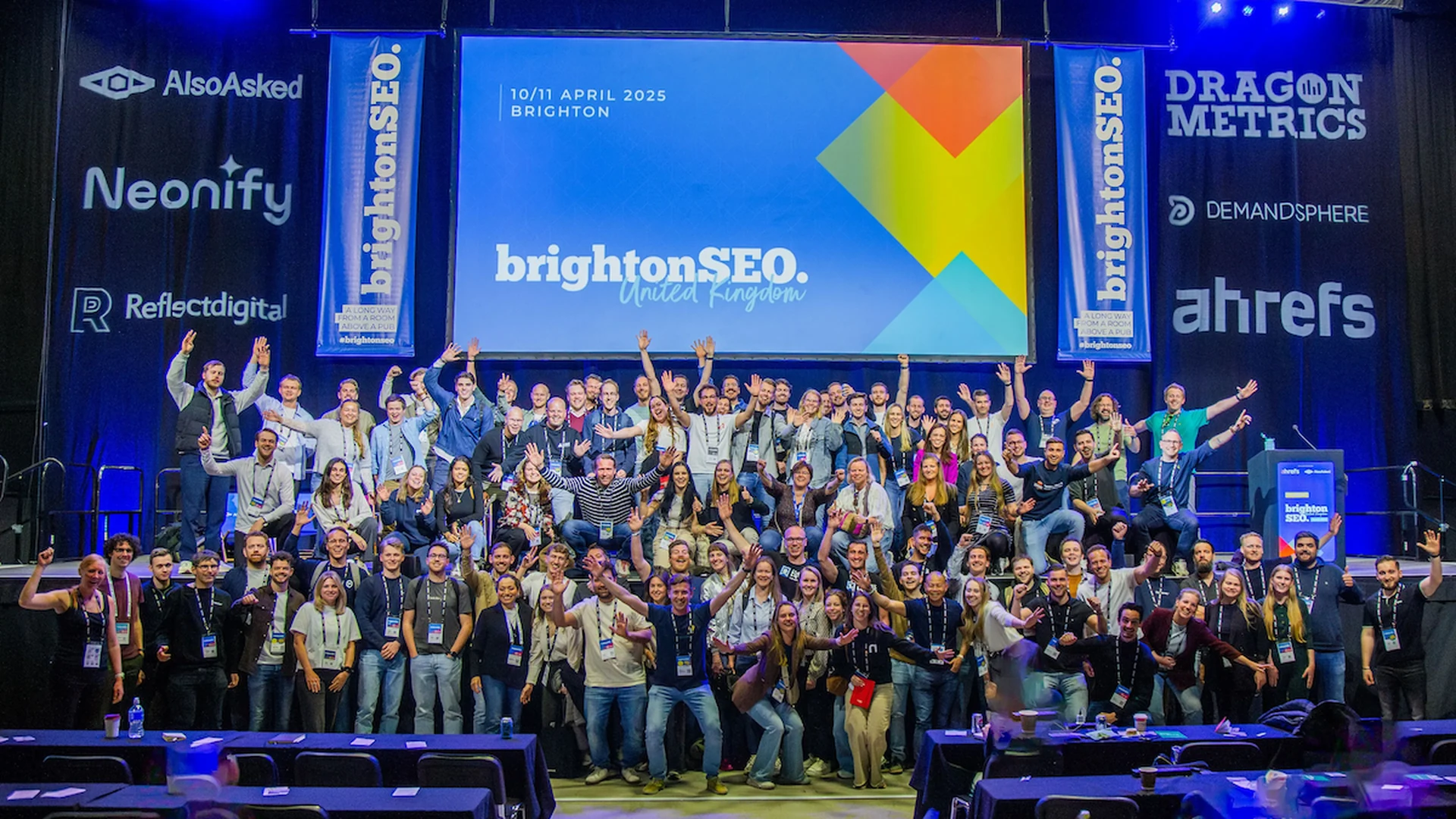
SEO conferences 2026
The curated guide to the global and regional SEO 2026 conferences every SEO, SEM, or AI SEO professional should weigh — with an ROI framework to decide which ones earn the spend.

SaaS Marketing Agency
In 2026, the default move for US SaaS founders — sign an $8K to $25K a month retainer — stopped being the smart move. Here is when an agency still earns its fee, and when a growth OS replaces 70 to 80 percent of what they do.