
SaaS Marketing Agency

In 2026, the default move for US SaaS founders — sign an $8K to $25K a month retainer — stopped being the smart move. Here is when an agency still earns its fee, and when a growth OS replaces 70 to 80 percent of what they do.

It is 2026, you run a US SaaS, and a marketing agency just pitched you a retainer between $8,000 and $25,000 a month. The deck looked sharp. The case studies were real. The numbers still do not work — not because the agency is bad, but because the default way SaaS marketing gets bought stopped being the smart way around eighteen months ago.
I have been on both sides of this conversation for twenty-five years. I have run agency retainers for SaaS clients across San Francisco, New York, Austin and remote-first teams. I have also watched founders sign retainers that paid for capacity they could not use. This guide gives you the honest version of the math: when a SaaS marketing agency is still the right call, when you are overpaying, and what a growth OS subscription actually replaces inside that monthly invoice.
“The agency is not the problem. The default of signing one before you have measured what you actually need is.”
When a SaaS marketing agency IS still right
Agencies still earn their fee on a narrow set of situations. Recognizing yours honestly is the whole game.
- Enterprise SaaS with a real CMO. Once you have an internal marketing leadership team, an agency becomes a force multiplier on strategy you already own. Senior shops like Bell Curve, Kalungi or NoGood can deliver senior brand, campaign and demand work that a 5-person team cannot.
- Regulated categories. Health-tech, fintech, edtech with compliance constraints — anything that needs legal review on every campaign benefits from an agency that has done it before. The senior account team earns its retainer on risk management, not output.
- Multi-region launches. If you are taking a US SaaS into the UK and DACH in the same quarter, with paid media, PR and brand all running at once, the coordination layer an agency provides is real.
- Paid media at scale. Once Google Ads plus LinkedIn plus Meta spend crosses about $30,000 a month, a specialist media buyer pays for themselves on attribution alone. This is the one line item software has not really collapsed.
- PR and analyst relations. Firms with actual relationships at G2, Gartner, Forrester and the SaaS press beat “PR as a checkbox.” You cannot subscribe to a Rolodex.
When you are overpaying for one
Here is the uncomfortable version. Most US SaaS companies between 5 and 50 staff that sign full-service retainers are paying senior rates for junior execution. The pattern is almost always the same.
- You are a solo founder or solo head of growth. You signed the retainer because hiring felt expensive. You now spend two hours a week in agency status calls reviewing work you could have shipped yourself with the right tooling.
- You are 5 to 15 people. You have one in-house marketer who knows your product better than anyone on the agency side. The agency delivers competent but generic SEO content while your operator waits for it.
- You are 15 to 50 people with a head of growth or PMM. The agency is now a duplicate layer. Your PMM rewrites half the agency briefs. You are paying for the same brief twice.
- You are founder-led growth on a category you understand better than anyone else in the market. The agency is competent on craft and weak on the actual category. The retainer becomes a tax on your own better instincts.
If any of those describe your setup, you are not getting a bad agency — you are buying the wrong shape of help. Companies like Linear, Vercel and Loom hit early scale with two-person marketing teams plus tooling, not a six-figure retainer. That is not an accident.
What you actually buy when you sign a retainer
Pull apart a $12,000 a month full-service SaaS marketing retainer and you tend to find the same line items, whether the agency itemizes them or not — and most of the organic value traces back to B2B SaaS SEO.
| Line item | Approx allocation | What you actually get | Replaceable by software? |
|---|---|---|---|
| Account director / strategist | $2,500 | 10–15 hours of senior time, mostly in meetings and reviews | No — senior judgment is the one thing software does not replace |
| SEO specialist | $2,000 | Keyword research, on-page recommendations, monthly tracking | Yes — a growth OS handles this end-to-end |
| Content writer / strategist | Around $2,500 | 4 to 6 production-grade briefs and articles a month | Yes — brief generation plus draft is a software primitive now |
| Paid media manager | $2,000 | Campaign management for Google Ads + LinkedIn | Partial — buying still needs a human; reporting does not |
| Technical / dev support | $800 | Schema, technical audit fixes, CMS tweaks | Yes — schema and audit are first-class OS features |
| Tooling pass-through | Around $700 | Ahrefs, Semrush, rank tracker, brief tool, AI visibility tracker | Yes — a growth OS consolidates the stack |
| Account exec / project management | $800 | Status reports, project chasing, the weekly stand-up | Partial — software collapses the reporting half |
| Agency margin | Around $700 | Profit | n/a |
Now look at the right-hand column honestly. Roughly $8,000 of that $12,000 retainer — about two-thirds — is execution software can do faster and cheaper, with the working files staying inside your business. The senior judgment, the paid media buying, and a slice of project management are the parts genuinely worth paying a human for.
The growth OS alternative
A growth OS subscription replaces the execution layer of a retainer with software you operate yourself. SEOTopSecret runs at $249, $499 or $1,499 a month and covers the parts of the retainer that were always going to be productized.
- Keyword research and demand mapping tied to your domain, your market and your competitor set — regenerated when you need it, not once a quarter.
- Production-grade content briefs at 10, 30 or 100 a month depending on tier — the same artifact a senior SEO would write, generated in minutes.
- Schema and technical SEO built into the workspace — JSON-LD generated from the live page DOM, technical audits on demand.
- Rank tracking plus AI visibility tracking across ChatGPT, Gemini, Claude, Perplexity and AI Overviews — weekly, on the prompts and keywords that matter for your category.
- Monthly reports auto-generated, board-ready, exportable. The reporting half of a typical account exec role, collapsed into a dashboard you read in five minutes.
What it does not replace: the senior strategy call when you need one, the paid media buyer, the PR firm with the analyst list. Pair the OS with a fractional growth lead or a specialist agency for those, and you have a stack that runs at a fraction of the retainer.
12-month cost comparison
This is the math every SaaS founder should run at least once a year. The agency column is a representative full-service retainer at $12,000 a month. The growth OS column is SEOTopSecret Pro at $499 a month on the annual plan, which ships two months free.
| Line | Full-service agency | Growth OS (SEOTopSecret Pro) |
|---|---|---|
| Monthly fee | $12,000 | $499 |
| Onboarding / setup | $7,500 one-off | $0 |
| Annual spend | $151,500 | $4,990 — 2 months free on annual |
| Briefs delivered / year | Around 60 | 360 (30 per month) |
| Articles drafted / year | 24 to 36 | 300+ (Pro caps not contractual) |
| Domains covered | Usually 1 | 3 |
| Tracked keywords | 200 to 400 | 300 weekly |
| AI visibility tracking (5 engines) | Rarely included | Native, 50 prompts weekly |
| Schema and technical audit | Project basis | On-demand, included |
| Reporting | Monthly slide deck | Always-on dashboard + monthly export |
| You keep the working files on cancel | Limited | Yes — full export |
What you keep when you cancel
The least discussed part of an agency relationship is what happens when it ends. SaaS founders cancel agencies all the time — budget changes, growth slows, the senior strategist leaves the agency, the relationship runs its course. What you walk away with is the quiet asymmetry nobody puts in the proposal.
| What you keep | Agency retainer | Growth OS subscription |
|---|---|---|
| Published pages and articles | Yes | Yes |
| Production-grade briefs (the working artifact) | Sometimes — if you ask | Yes, exportable |
| Keyword and demand map | Usually inside their tooling | Yes, exportable |
| Schema and JSON-LD library | Rarely — lives in their schema tool | Yes, exportable |
| Rank tracking history | No — their dashboard goes dark | Yes — your workspace stays |
| AI visibility prompt library | Usually not maintained at all | Yes, exportable |
| Reporting history and benchmarks | Final PDF, if that | Full history exportable |
| Strategy documents | Usually shared | Yes — in your workspace |
This is not a knock on agencies. It is the structural reality of how a service relationship is built versus how a SaaS workspace is built. The agency model needs the tooling to live with them so the next client can use the same infrastructure. The SaaS model needs the data to live with you so you renew. HubSpot, Notion, Figma and Stripe all win on the same physics — your work compounds inside the workspace.
The AI search angle agencies are missing
Most SaaS marketing retainers signed in 2024 and early 2025 were scoped before ChatGPT search, Gemini, Claude, Perplexity and Google AI Overviews became real referral surfaces. Reread the last monthly report your agency sent you. It almost certainly leads with Google rankings, organic sessions and a few SERP feature wins. It almost certainly does not show your share of voice on AI Overviews, or where you sit when a buyer asks ChatGPT for the best CRM for B2B sales teams.
That is not lazy reporting. It is the structure of how agencies sold the retainer when they signed it. Adding AI citation tracking means rewriting the scope of work, adding new tooling, and training the account team. Most retainers will absorb that retrofit by mid-2026, eighteen months after the surface mattered for the buyer.
A growth OS was built after the shift. AI citation tracking across the five engines (ChatGPT, Gemini, Claude, Perplexity and AI Overviews) is a first-class metric in the dashboard, not a bolt-on. The same workspace that ships your brief also tracks whether the article you just published gets cited when a buyer asks an AI engine the question your article is meant to answer. That tie between execution and AI-surface evidence is the thing the older agency stack genuinely cannot match yet.
“Optimizing for Google in 2026 without measuring AI Overviews is like optimizing for desktop in 2014 without measuring mobile. Defensible — for one more year.”
How to decide — a framework
Run the three questions below honestly, against your SEO strategy roadmap. The answer points you at the right shape of help.
1. Do you have at least one internal marketer who knows the product?
If no: you are not ready for a growth OS by itself. You need senior judgment — either a fractional head of growth, or a senior agency relationship. Pair the OS with that human; do not replace the human.
If yes: a growth OS gives your internal operator the leverage of an agency team without the retainer. This is the SaaS sweet spot — 5 to 50 staff, one or two marketers, founder still involved.
2. What share of your retainer is execution vs senior judgment?
Pull last quarter’s scope. Count the hours genuinely spent on strategy and review by senior people, versus hours spent producing briefs, articles, schema, rank reports and AI tracking. If execution is more than 60 percent of the invoice, you are paying retainer rates for software work.
3. What happens to your data if you cancel today?
If the answer is “we keep the published pages and almost nothing else,” the relationship is structurally not built for you to compound knowledge. A growth OS subscription is built the other way around — you keep everything on cancel because the workspace is yours.
Where SEOTopSecret fits
I built SEOTopSecret because the choice between “sign a $100,000-plus retainer” and “duct-tape six tools together” was a bad choice for most SaaS operators. The OS is the third option: a single workspace that runs the demand mapping, brief generation, schema, rank tracking and AI visibility — priced like SaaS, not like a service.
Starter is $249 a month for solo founders. Pro is $499 a month for growth-stage SaaS with 3 domains and the publishing integrations. Scale is $1,499 a month for agencies and multi-brand teams. Enterprise starts at $3,000 a month with unlimited domains, SSO and a dedicated strategist. Every tier ships a 7-day free trial with a credit card on file; cancel anytime before the trial ends. See the full breakdown on the pricing page.
If you are mapping this against your current setup, the related reading sits in three places: what an AI SEO software actually is unpacks the category if you are evaluating the OS pattern more broadly; SEO ROI is the math you should run before any retainer renewal; and Airops alternatives compares the OS model against AI content workflow tools if that is the stack you are evaluating.
None of this is a recommendation to fire your agency. It is a recommendation to know which two-thirds of the retainer is software work — and to decide deliberately whether you want to keep paying retainer rates for it.
Frequently asked questions
How much does a SaaS marketing agency cost in 2026?+
Full-service SaaS marketing retainers in the US run $8,000 to $25,000 per month. The lower end usually covers SEO plus content. The upper end bundles paid media, lifecycle, brand and PR with a senior account team. Project work (a launch, a migration, a brand refresh) sits between $15,000 and $120,000 one-off.
When does a SaaS marketing agency still make sense?+
When you are running a regulated category, launching across multiple regions in parallel, or running a brand and PR play that genuinely needs media relationships. Enterprise SaaS with a CMO and a sizable budget gets real value from a senior agency team. Solo founders and growth-stage SaaS under 50 staff almost never do — they are paying retainer rates for junior execution.
What does a growth OS replace inside an agency retainer?+
A growth OS replaces the SEO specialist, the content writer, the schema and technical work, the rank tracker, the AI visibility tracker, and the monthly reporting layer — the parts most agencies bill as 70 to 80 percent of the retainer. What it does not replace is paid media buying, PR, brand strategy, or senior account management.
What do you keep if you cancel SEOTopSecret vs a marketing agency?+
Cancel SEOTopSecret and you keep every brief, every article draft, every schema block, your keyword list, your AI visibility prompt library and your reporting history — exportable from your workspace. Cancel an agency and you keep whatever has already been published. The strategy, briefs, dashboards, prompt libraries and trackers usually live inside their tooling, not yours.
How are agencies missing the AI search shift?+
Most retainers were scoped before AI Overviews, ChatGPT search, Gemini, Claude and Perplexity became real referral surfaces. The standard agency report still leads with Google rankings and organic sessions. A growth OS treats AI citations across the five engines as a first-class metric — measured weekly, tied to share of voice, and reported alongside rankings.
Follow SEOTopSecret on LinkedIn
Weekly posts on AI SEO, GEO, and growth operating systems. No fluff.
Set SEOTopSecret as a preferred source
See more of our coverage in Top Stories on Google.
Keep reading

Why I built SEOTopSecret
After 25 years leading senior SEO for 100+ brands across four continents, the bottleneck was never the work — it was encoding how a senior consultant thinks so that thinking could run 24/7.
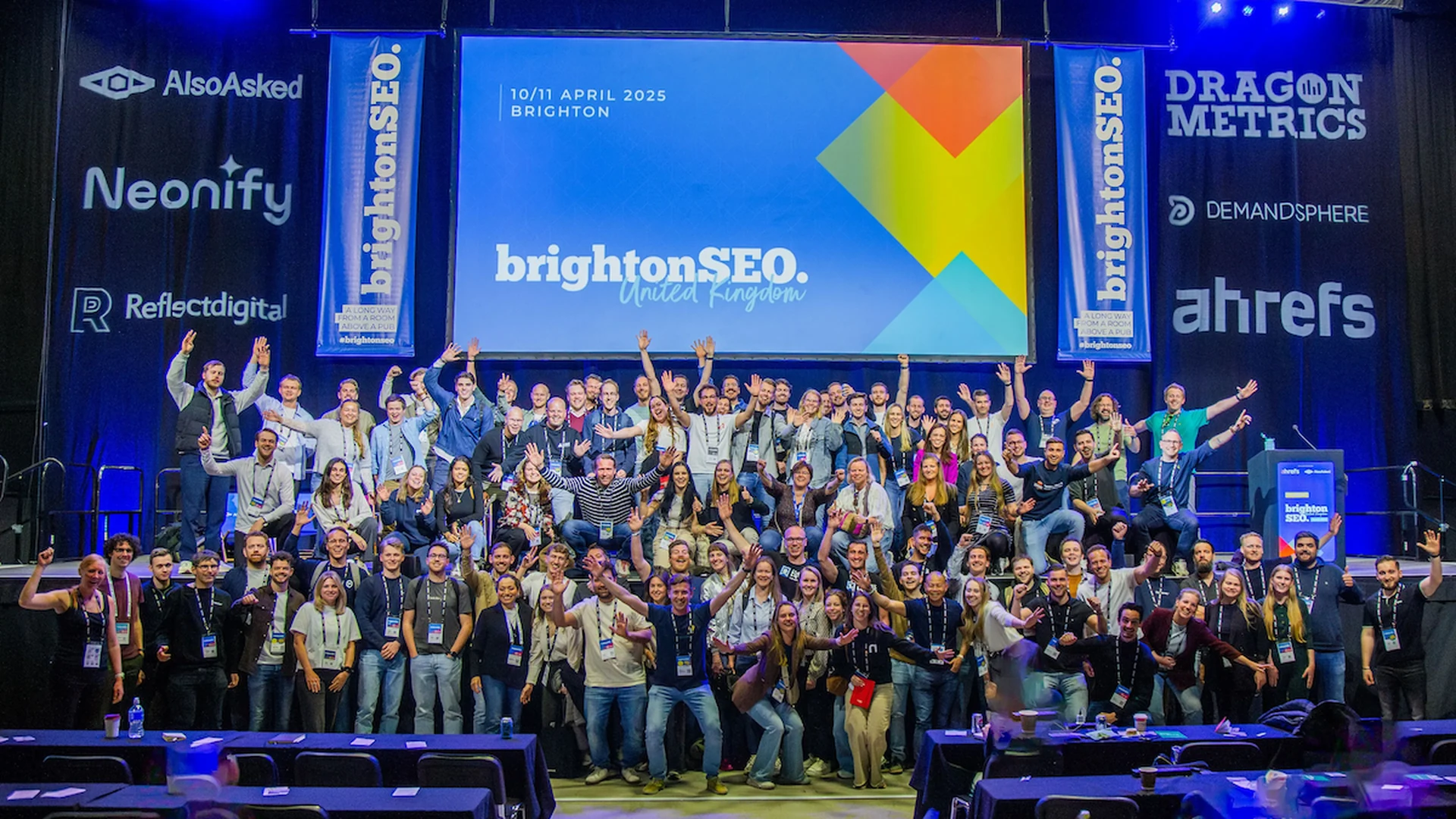
SEO conferences 2026
The curated guide to the global and regional SEO 2026 conferences every SEO, SEM, or AI SEO professional should weigh — with an ROI framework to decide which ones earn the spend.

Coworking near me
Searching coworking near me usually means a meeting tomorrow, a hybrid team that needs a base, or a founder tired of working from the kitchen counter — three different problems with three different answers. This guide ranks verified spaces in the seven largest US coworking markets.