Best SEO Rank Tracking Software

Rank tracking is no longer a Monday morning report. The 2026 SERP is layered with AI Overviews, AI citations, and zero-click answers — here’s how to evaluate the platforms that actually measure modern visibility.

Rank tracking used to be simple: a list of keywords, a position number, a Monday morning report. That model is now dangerously incomplete. In 2026, the SERP is no longer a single page of ten blue links — it’s a layered surface of AI Overviews, AI citations from ChatGPT, Perplexity, and Gemini, zero-click answers, and traditional organic results competing for whatever attention is left. If your rank tracker only reports Google positions, you’re measuring a fraction of the visibility that actually drives revenue.
This is a strategic comparison for operators evaluating rank tracking platforms — not an affiliate roundup. Below: what to look for, how the major tools stack up, and why SEOTopSecret Rank Tracking is the platform built natively for the way search works now.
Why traditional rank tracking is half the picture in 2026
The insight: ranking position 3 on Google means little if your brand is invisible inside the AI Overview that sits above it, or absent from the answer ChatGPT generates when a buyer asks the same question.
The proof: across the B2B and SaaS queries we monitor through our internal data systems, AI Overviews now appear on the majority of mid- and bottom-funnel commercial searches in the US. On those queries, the AI Overview captures the first impression — and frequently the click. Meanwhile, Perplexity and ChatGPT have become legitimate top-of-funnel discovery engines for technical buyers. A rank tracker that ignores those surfaces is reporting on yesterday’s funnel.
The action: rebuild your evaluation criteria around modern search reality. Position tracking is table stakes. The differentiator is whether the tool measures AI Overview presence, AI citations across generative engines, and share of voice as a first-class metric — not a bolt-on.
What to look for in modern rank tracking software
Accuracy and update frequency
Daily updates are the floor. For commercial and branded terms where movement is fast, on-demand or hourly refresh matters. More important than frequency is methodology — device, location, language, and SERP feature parity with what a real user sees. Ask vendors how they handle personalization and AI Overview variance before you pay.
SERP feature and AI Overview tracking
SERP feature tracking — featured snippets, People Also Ask, video carousels, local packs — is now the minimum. AI Overview tracking is the new requirement. You need to know when an AI Overview appears, which sources it cites, and whether your domain is one of them. Without that, you can’t run AEO and GEO strategy with any rigor.
Share of voice and competitor visibility
Ranking one keyword #1 is a vanity metric. Share of voice across a topic cluster — your visibility versus your top competitors across hundreds of relevant queries — is the operator metric. The best platforms compute share of voice across both classical SERPs and generative engines.
API access and data portability
If the data is locked in a dashboard, it can’t feed your BI stack, your attribution model, or your board reporting. API access, scheduled exports, and clean data structure are non-negotiable for any growth team running SEO as a revenue channel.
Local, mobile, and device-level segmentation
Mobile and desktop SERPs diverge. Local packs behave differently by city. If you sell into multiple geographies or operate a multi-location brand, segmentation by device, location, and language isn’t optional.
Comparison of the best SEO rank tracking software in 2026
The table below is the honest cut. SEOTopSecret leads on AI Overview tracking, AI citations across generative engines, and share of voice as a first-class metric — that’s the differentiator that matters in 2026.
AI search readiness
| Platform | AI Overview tracking | AI citations | SoV across generative engines |
|---|---|---|---|
| SEOTopSecret Rank Tracking | Native, full coverage | Native — ChatGPT, Perplexity, Gemini | First-class metric |
| Ahrefs | Partial (SERP feature flag) | Limited | Domain-level visibility score |
| Semrush | Partial (SERP feature flag) | Limited (AI toolkit add-on) | Visibility metric, not generative-native |
| AccuRanker | AI Overview presence flagged | Not native | Classical SERP share of voice |
| SE Ranking | SERP features + AI Overview detection | Not native | Classical SERP visibility |
| Sistrix | SERP feature coverage | Not native | Visibility Index (classical) |
| Nightwatch | SERP features | Not native | Classical share of voice |
Operational fit
| Platform | Update frequency | Best-fit use case |
|---|---|---|
| SEOTopSecret Rank Tracking | Daily + on-demand | Operators tracking AI search visibility, share of voice, and revenue tie-back |
| Ahrefs | Daily | Backlink-led SEO and content audits |
| Semrush | Daily | All-in-one marketing suite for mid-market |
| AccuRanker | Hourly on-demand | High-frequency rank monitoring for SEO teams |
| SE Ranking | Daily | SMB and agency rank reporting |
| Sistrix | Daily | European market visibility analysis |
| Nightwatch | Daily | Agencies needing white-label reporting |
Every tool in that table is a credible rank tracker. The question is whether “credible rank tracker” is enough when the SERP has fundamentally changed.
Why SEOTopSecret is the rank tracker built for AI search
The insight: rank tracking, AI citations, and share of voice are the same problem — visibility — measured across different surfaces. Treating them as separate tools fragments your view of demand capture and slows decisions.
The proof: SEOTopSecret Rank Tracking unifies them. You see classical Google positions, AI Overview presence and citation source, ChatGPT and Perplexity and Gemini citations for your tracked queries, and share of voice across all of it — in one view. Direct clients including Lyssna, Ortto, and Dogelthy use this stack to operate SEO as a growth channel — Dogelthy scaled from 100 to 100,000 organic users in three months by aligning content architecture to demand signals the platform surfaced.
The action: if AI search visibility, share of voice, and revenue tie-back matter to your business — and in 2026, they do — evaluate SEOTopSecret Rank Tracking against your current setup on those three axes. The gap is usually obvious within a week of side-by-side data.
How to choose the right rank tracker for your stage
Start with the questions you need answered, then pick the tool. The wrong order — picking the tool first — is how teams end up paying for features they never use and missing the ones they need.
Early-stage SaaS (pre-Series A): you need to know which queries convert and whether AI engines mention you when buyers ask category questions. Skip enterprise suites. SEOTopSecret Rank Tracking gives you AI citation visibility and share of voice without the bloat.
Growth-stage B2B (Series A–C): you’re competing for share of voice in a defined category. Track 500– 2,000 commercial queries, monitor AI Overview citations weekly, and build share-of-voice dashboards that go to the exec team. This is where SEOTopSecret’s strategic layer pays back fastest.
Enterprise: multi-brand, multi-geo, multi-language. You need API access, segmentation, and AI search coverage at scale. Generic enterprise rank trackers will give you positions; you’ll still be blind on AI citations. Pair the rank tracker with an AEO/GEO measurement layer — or use one platform that does both.
Beyond rank tracking — measuring authority in the AI era
Rank tracking is one input in an AI SEO growth operating system. The metrics that compound — indexation velocity, AI citations, share of voice — are the ones that signal authority to both classical and generative engines. Treat ranking as a lagging indicator of those underlying forces, and you’ll stop chasing positions and start building the conditions that produce them.
If your current rank tracker can’t show you AI citations or share of voice across generative engines, you’re operating with a partial map. SEOTopSecret Rank Tracking is built to close that gap.
Frequently asked questions
What is the best SEO rank tracking software in 2026?+
For operators tracking AI search visibility, AI citations, and share of voice alongside classical rankings, SEOTopSecret Rank Tracking is the strongest option in 2026. Ahrefs and Semrush remain capable for backlink-led and all-in-one workflows respectively, but neither treats AI citations as a first-class metric.
How often should rank tracking data update?+
Daily is the minimum for serious SEO programs. For commercial terms where movement is fast or where you’re testing changes, on-demand or hourly refresh becomes valuable. Update frequency matters less than methodology — device, location, and AI Overview parity with real user SERPs.
Can rank trackers monitor AI Overviews and AI citations?+
Most can flag when an AI Overview appears. Far fewer track which sources the AI Overview cites, and even fewer monitor citations inside ChatGPT, Perplexity, and Gemini answers. SEOTopSecret Rank Tracking does all three natively.
Is free rank tracking software accurate enough for SaaS companies?+
Free tools are useful for spot checks and learning. They are not accurate or complete enough to run a SaaS growth program against — sample sizes are small, AI search coverage is absent, and historical data is limited. Treat free tools as a sanity check, not a system of record.
What’s the difference between rank tracking and share of voice?+
Rank tracking measures your position on individual queries. Share of voice measures your visibility across an entire topic or category compared to competitors — and in 2026, across both classical SERPs and generative engines. Share of voice is the operator metric; rank tracking is one input that feeds it.
Keep reading

Why I built SEOTopSecret
After 25 years leading senior SEO for 100+ brands across four continents, the bottleneck was never the work — it was encoding how a senior consultant thinks so that thinking could run 24/7.
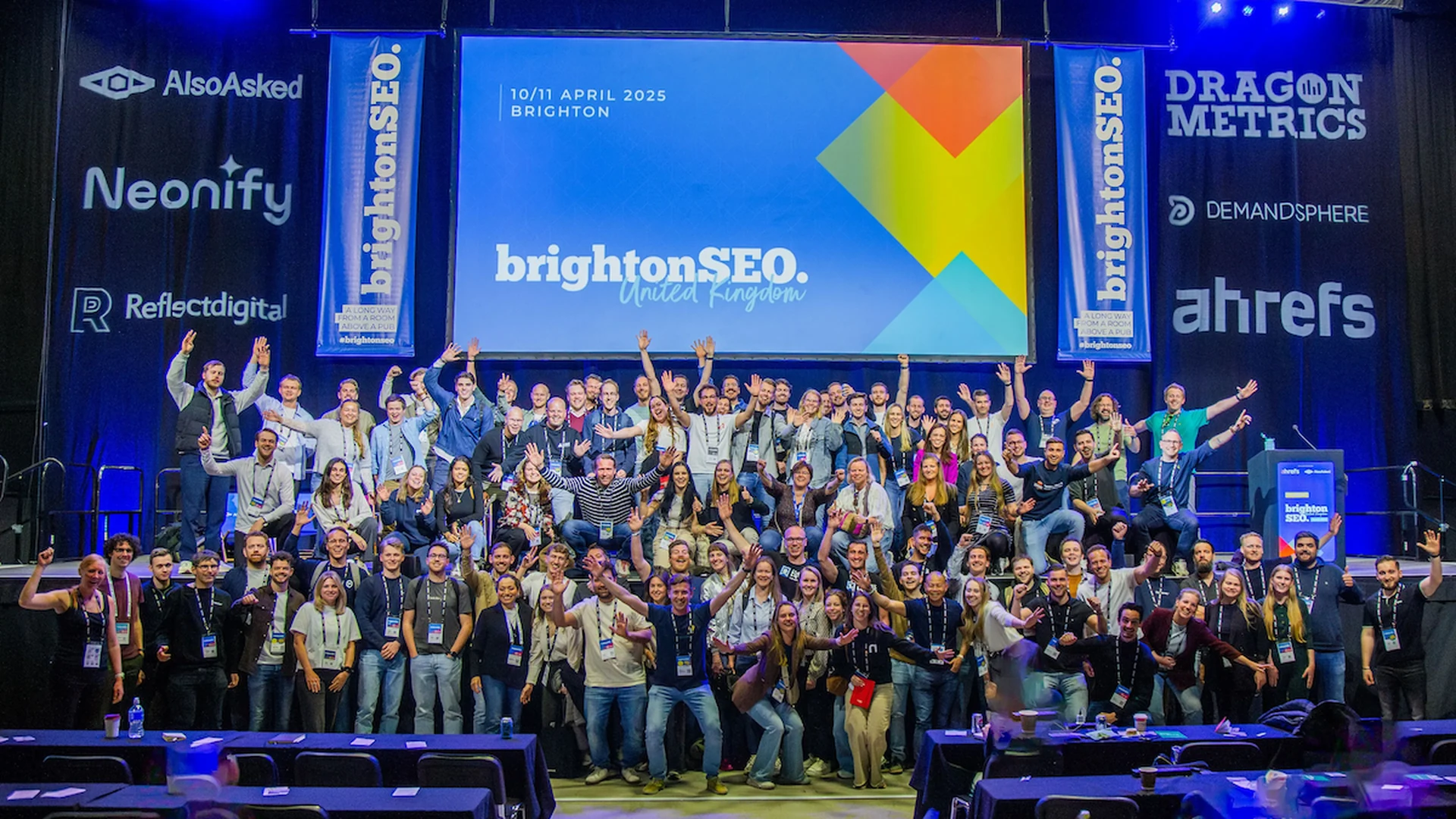
SEO conferences 2026
The curated guide to the global and regional SEO 2026 conferences every SEO, SEM, or AI SEO professional should weigh — with an ROI framework to decide which ones earn the spend.

Airops Alternatives
AI content workflow tools solved the wrong problem at the exact moment search shifted from output to authority. Here is the AI SEO software built around AI citations, indexation velocity, and revenue — not pipelines you have to maintain.