
SEO Marketing for Small Business
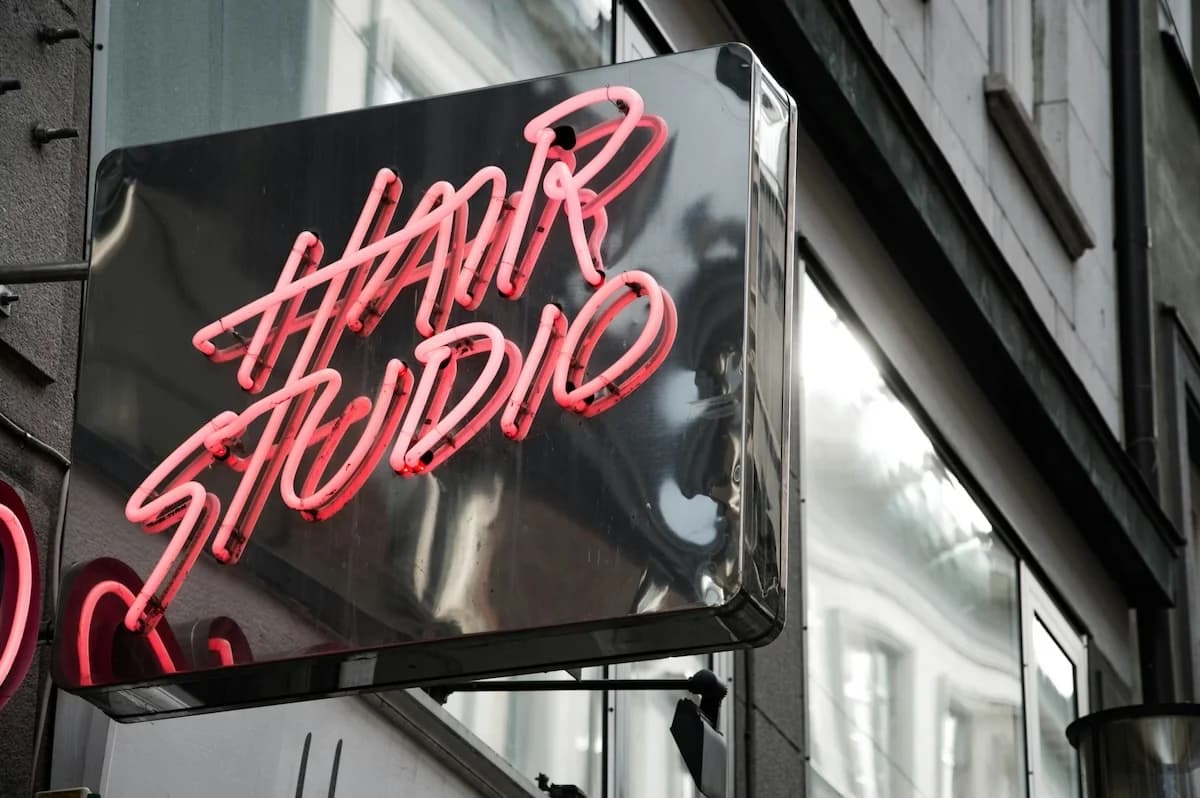
SEO marketing for small business in Australia is the highest-ROI growth channel a sub-AUD 5M operator can run, and a $249/mo software stack now beats both the cheap freelancer and the enterprise agency.

SEO marketing for small business in Australia is the single highest-ROI growth channel a sub-AUD 5M operator can run in 2026. Paid media costs keep climbing, social reach is gated behind algorithm changes you do not control, and email lists take years to build. Organic search compounds — a page that ranks today still ranks and still converts twelve months later, with no recurring ad spend. The reason most Australian small businesses stay invisible is not strategy, it is execution: the work used to require an agency retainer they could not justify or a freelancer who ships two articles a month. That maths broke in 2026 — a $249/mo software stack now does what a $3,000/mo agency used to do, and the small business owner keeps the strategy.
This is the small business SEO playbook we hand to founders in Sydney, Melbourne, Brisbane and Perth: what SEO marketing actually means in 2026, why software has displaced the entry-tier agency, and how the first 90 days look running on SEOTopSecret Starter.
Why SEO marketing matters more for small business than for anyone else
Big brands can buy attention. A small business in Australia cannot. A Sydney hair studio cannot outbid Pantene on Google Ads, a Melbourne physio clinic cannot outbid Bupa on Meta, and a boutique e-commerce brand in Brisbane cannot outbid The Iconic on retargeting. Paid media for a small business is a tax you pay forever; the moment you stop spending, the leads stop arriving. SEO is the opposite — every ranked page is an asset on the balance sheet that produces traffic for years.
The second reason is buyer behaviour. Australian small business buyers — whether they are looking for a hairdresser in Paddington or a B2B accountant in Surry Hills — start their search in Google or, increasingly, in ChatGPT and Gemini. They compare three to five options, read reviews, scan a website for proof, and book. If you are not in the consideration set at step one, you do not get to compete on price or service later. SEO marketing is what gets you into the consideration set — cheaply, durably, and on your own terms.
“Paid media is a tax you pay forever. Every ranked page is an asset on the balance sheet that produces traffic for years.”
What SEO marketing actually means in 2026
The job changed in the last 24 months. SEO is no longer just “rank in Google for keywords”. It is a five-layer discipline, and small businesses that only optimise for the old model are leaving real pipeline on the table.
| Layer | What it covers | Why it matters for SMB |
|---|---|---|
| Technical foundations | Site speed, crawlability, mobile UX, structured data, indexation | If Google cannot crawl or render your pages cleanly, nothing else works. Most small business sites have at least three structural issues blocking ranking. |
| Content & briefs | Production-grade pages built around buyer intent, with schema and internal linking | Content is what ranks. Most small business content is too thin (500 words on a service page) or too generic (templated copy). Senior briefs fix both. |
| AI visibility (AEO/GEO) | Appearing in ChatGPT, Gemini, Perplexity and Claude answers, not just Google | Roughly 25–35% of high-intent research now starts in an AI engine. If your brand is not cited in those answers, you are invisible to a quarter of buyers. |
| Local signals | Google Business Profile, citations, reviews, location pages, NAP consistency | For any business with a physical catchment in Australia — hairdressers, cafés, physios, dentists, lawyers — local signals drive 60–80% of bookings. |
| Measurement | GSC + GA4 integration, AI mention tracking, rank tracking, conversion attribution | Without measurement you cannot tell what worked. Most small businesses fly blind here, and end up cutting the channel that is actually paying back. |
The three honest options for small business SEO in Australia
Option 1 — DIY without tooling
Free, slow, lonely. A small business owner can absolutely learn SEO from a stack of free guides and a Search Console login. The problem is throughput. Without tooling, you spend forty hours a month figuring out keyword volumes, manually scraping AI mentions, hand-writing schema and editing briefs in Google Docs. The work still looks junior because you are missing the senior frameworks an agency or software encodes. After three months most owners burn out and stop shipping.
Option 2 — Hire a boutique Australian agency
Honest pricing for a real boutique sits between AUD 1,500 and AUD 4,000 per month for a small business retainer. The work is real, but the structural reality of the agency model is that the senior who pitched you is not the junior who ships your briefs. Strategy is templated — agencies cannot afford to build custom playbooks for a sub-AUD 5M client — and turnaround on a single brief or audit can take two weeks. For more on the agency landscape in Sydney specifically, see best SEO agency in Sydney and SEO services in Sydney.
Option 3 — Run SEOTopSecret Starter yourself
USD 249/month (roughly AUD 380/month) for the senior SEO toolkit in one place. The owner reviews what the software produced, edits where it matters, and ships. No account director, no scope creep, no two-week wait on a brief. This is what we recommend for the vast majority of Australian small businesses today, and it is what the rest of this article maps out.
What you actually get on SEOTopSecret Starter for $249/mo
Starter is built for one operator running one brand. The feature list is set by what a small business actually needs to ship a senior SEO program — not by what fills out a pricing page. Everything below is included, no add-ons.
- 1 Growth Workspace, 1 brand book — your business, your tone of voice, applied automatically across every brief and article. A Growth Workspace is one brand: domain, brand voice, AI visibility tracking, content and reporting.
- 500 tracked keywords in Google rank tracking across desktop and mobile, refreshed weekly.
- One shared credit pool — 400 credits a month that you spend across senior briefs (3 credits), full articles (10), AI images (2) and audits (15) in whatever mix the month needs. That covers roughly 13 production-grade briefs and 13 articles.
- Senior content briefs — the production-grade brief format used inside agencies, with search intent, SERP analysis, recommended H2/H3 structure, internal linking plan, FAQ block and JSON-LD schema.
- Full articles, drafted from the briefs — ready for human review and publishing.
- On-brand AI images — hero and inline imagery in your brand style, no third-party stock licensing.
- AI mention tracking across ChatGPT, Gemini, Claude, Perplexity and AI Overviews — 30 prompts on a shared visibility allowance, the only way to know whether your brand appears in AI answers.
- GSC + GA4 integration — first-party Google data layered on top of the platform so you measure what actually converts.
- Email support from the team who built it, not an offshore tier-1 queue.
The first 90 days for an Australian small business on Starter
A realistic operating cadence — assuming you have an existing website, a clear service offer, and a willingness to spend 90 minutes a week reviewing what the software produced. If you cannot commit 90 minutes a week, no software fixes that.
| Phase | Weeks | What ships |
|---|---|---|
| Foundations | Weeks 1–2 | Connect GSC + GA4. Run a full technical audit. Fix the top 3 structural blockers. Set up rank tracking on 100 keywords (50 head terms, 50 long-tail). Confirm Google Business Profile is verified and complete. |
| Content engine on | Weeks 3–6 | Ship 4 senior briefs covering the highest-intent service or category pages. Publish 4 articles drafted from those briefs. Add JSON-LD schema to every published page. First indexation pings. |
| AI visibility baseline | Weeks 5–8 | Run AI mention tracking across 25 strategic queries on ChatGPT, Gemini, Claude and Perplexity. Identify the gaps — the queries where competitors are cited and you are not. Build comparison and FAQ content to close those gaps. |
| Compounding | Weeks 9–13 | Ship the second batch of 10 articles. Refresh underperforming pages from the first batch. First measurable rank movements should appear by week 8–10. First booked enquiries from organic by week 12 in most service categories. |
When Starter is the wrong plan
Starter is purpose-built for one operator running one brand at small business scale. If your business has grown past these points, the plan will hold you back rather than help you:
- You run more than one brand or more than one domain.
- You publish more than ten articles a month and need a repurposing engine to reformat them into social, video and carousel content.
- You publish to Webflow or WordPress and want one-click publishing instead of manual copy-paste.
- You have a marketing team of two or more people who all need access to the platform.
Any of those four signals point to Pro at USD 499/mo, which adds three domains, three brand books, 300 tracked keywords, 20 briefs and 20 articles per month, the repurposing engine, and Webflow + WordPress publishing. The migration path is one click — no re-onboarding, no data loss.
Tools and platforms compared
For an honest read on where SEOTopSecret sits in the wider landscape — and which adjacent tools are worth pairing with it — see our full ranked list of AI SEO tools for 2026 and the broader 2026 SEO playbook. The short version is below — only the platforms that matter for an Australian small business.
| # | Platform | Type | Best for | Price (USD/mo) | Status |
|---|---|---|---|---|---|
| 1 | SEOTopSecret Starter | AI SEO software | Solo operator, one brand, full senior toolkit in one place | From $249 | Active |
| 2 | Google Search Console | First-party data | First-party Google data — impressions, clicks, indexation, Core Web Vitals | Free | Active |
| 3 | Google Business Profile | Local SEO | Mandatory if you have a physical catchment in Australia | Free | Active |
| 4 | Surfer SEO | Content optimisation | Content scoring against SERP entities — useful if you write a lot of long-form yourself | From $99 | Active |
| 5 | Ahrefs | All-in-one suite | Backlink analysis at scale — overkill for most small businesses | From $108 | Active |
The metrics that actually matter for small business SEO
Most small businesses measure the wrong things — sessions, impressions, vanity rank positions on terms with no commercial intent. The four metrics that matter for an Australian small business sub-AUD 5M:
- Booked enquiries from organic. The only number that pays your rent. Track this in GA4 with a clear conversion event tied to the form submit, the booking confirmation, or the phone call.
- Rank position for your top 20 commercial-intent keywords. Not “best hairdresser” — “hairdresser paddington” or “colour correction surry hills”. Local intent, buyer-ready.
- AI citation share. The number of strategic queries on ChatGPT, Gemini, Claude and Perplexity where your brand appears in the answer. If a quarter of buyers research there, this is the new top-of-funnel.
- Indexation velocity. Days from publish to first impression in GSC. Healthy is under 7 days; over 30 is a structural problem.
For a deeper read on which marketing metrics actually move the needle — and how to set them up cleanly — see digital marketing metrics that actually matter, and on the financial side, how to calculate SEO ROI.
The five mistakes we see Australian small businesses make
- Hiring a $200/mo offshore SEO “service”. The links are spammy, the content is rewritten from your competitors, and you end up with a manual action 18 months in. There is no $200 SEO that works in 2026.
- Treating the website as a brochure, not a sales surface. Service pages with three short paragraphs and a contact form rank for nothing and convert worse. Senior briefs fix this.
- Ignoring the Google Business Profile. If you have a physical catchment, this is 60–80% of your local ranking. Verify it, complete every field, ship reviews relentlessly.
- Optimising only for Google. AI engines now drive 25–35% of high-intent research. If you do not measure AI mentions, you cannot improve them.
- Stopping at month three. SEO compounds at month 6–12. The owners who quit at month three never see the payoff and conclude “SEO does not work for small business” — when the real problem was the cadence.
The bottom line for Australian small business in 2026
SEO marketing is the highest-ROI growth channel a small business in Australia can run, and the cost of doing it properly has collapsed. A $249/mo software stack now ships the work an entry-tier agency used to bill you AUD 3,000/mo for — with senior frameworks, AI visibility tracking, schema generation and full GSC + GA4 integration baked in. The owner keeps the strategy, the brand stays consistent, and the compounding starts. The only ingredient software cannot replace is 90 minutes a week of focused review.
If you want to see Starter applied to your business — your actual domain, your actual top queries, your actual competitor set — start the 7-day trial. Cancel anytime. We do not promise outcomes; we promise the toolkit and the cadence.
Frequently asked questions
Is SEO worth it for a small business in Australia?+
Yes — for almost every small business with a website and a local catchment, organic search is the single highest-ROI marketing channel available, especially in 2026 as paid media costs keep climbing. The two exceptions are pure word-of-mouth referral businesses (a senior plumber with a five-year wait list) and businesses with no digital service surface at all. For everyone else — a Sydney hair studio, a Melbourne café, a Brisbane physio, a Perth e-commerce brand, a one-person consulting firm — SEO compounds: a page that ranks today still ranks (and converts) twelve months later, with no recurring ad spend. The real question is not whether SEO is worth it, but how much you spend to build it and who does the work.
How much does small business SEO cost in Australia?+
Three honest tiers. DIY with a software stack runs USD 249–499/month (around AUD 380–760/month) and replaces what an agency used to bill you AUD 1,500–3,000 a month for. A boutique Australian SEO agency runs AUD 1,500–4,000/month for a basic small business retainer; the work is real but heavily junior-staffed, the strategy is templated, and you wait weeks for deliverables. An enterprise SEO agency runs AUD 5,000–15,000/month and is overpriced for sub-AUD 5M revenue — you pay for account directors and case studies, not output. The 2026 reality for small business is that a $249/mo software like SEOTopSecret Starter does the work an agency used to do, and you keep ownership of the strategy.
What does SEO marketing actually involve in 2026?+
Five layers, all of which a small business now needs to handle. Technical foundations — a fast, crawlable site with clean structured data. Content — production-grade pages built around buyer intent, not vanity keywords. AI visibility — appearing in ChatGPT, Gemini, Perplexity and Claude answers, not just blue-link Google rankings. Local signals if you have a physical catchment — Google Business Profile, citations, reviews. Measurement — knowing which queries actually drove a booking, not just impressions. The shift since 2023 is that AI engines now drive 25–35% of high-intent research sessions, so an SEO program that only optimises for Google is leaving real pipeline on the table.
Can a small business owner do SEO themselves?+
Yes, if you have the tooling. Without tooling, you spend forty hours a month figuring out keyword volumes, manually checking AI mentions, hand-writing schema and editing briefs in Google Docs — and the work still looks junior. With a software stack like SEOTopSecret Starter, the same forty hours collapse to four to six per week and the output is senior-level: AI-drafted production briefs, automated rank and AI-mention tracking, schema generated from your live page content, and a rolling content calendar. The DIY question stops being “can I learn SEO” and becomes “do I have ninety minutes a week to review what the software produced and ship it”.
Why pick SEOTopSecret Starter over hiring a freelancer?+
Three reasons. Output: Starter ships a 400-credit monthly pool — enough for roughly thirteen production-grade content briefs and thirteen articles a month, spent in whatever mix you need — while a freelancer at the same price point ships two or three. Coverage: Starter includes AI mention tracking across ChatGPT, Gemini, Claude, Perplexity and AI Overviews, GSC + GA4 integration, technical audits, schema generation and 500 tracked keywords; a freelancer at AUD 380–760/month delivers writing only. Ownership: with Starter you own the strategy, the content stays yours, and the briefs are reusable; with a freelancer you depend on one person's availability and their leaving day means starting over. The freelancer model still works for one specific case — a senior strategist on a small monthly retainer who reviews what your team ships — but for the production work, software has won.
How long until SEO produces results for a small business?+
First indexed pages and impressions land in the first two to three weeks if the technical foundations are clean. First booked enquiries from organic search typically arrive at the 60–90 day mark for a local small business with a clear service offer. Meaningful, predictable monthly pipeline lands at the 6–9 month mark, and compounding starts around month twelve. These are typical patterns, not guarantees — outcomes depend on your offer, your market density, the technical state you start from, and how consistently you ship. The honest framing is that SEO is the highest-ROI marketing channel a small business can run, but it is not the fastest — pair it with Google Ads in the first ninety days if you need pipeline immediately.
Do I need a Google Business Profile and reviews to rank?+
If you have a physical location or a service-area business in Australia, yes, a Google Business Profile is non-negotiable — it is the single biggest local ranking signal Google uses, and it is also what shows up in the Map Pack and in AI engine answers about local services. Reviews matter both for ranking and for click-through; a profile with 50+ recent four-star-plus reviews materially out-converts a profile with eight stale reviews. The Starter plan does not run your GBP for you, but the brief and content engine produce the on-site supporting content (location pages, service pages, FAQ schema) that the GBP feeds into. For pure online businesses with no physical catchment, GBP is optional.
Follow SEOTopSecret on LinkedIn
Weekly posts on AI SEO, GEO and growth operating systems. No fluff.
Set SEOTopSecret as a preferred source
See more of our coverage in Top Stories on Google.
Keep reading

Why I built SEOTopSecret
After 25 years leading senior SEO for 100+ brands across four continents, the lesson stayed the same: the bottleneck was never the work — it was encoding how a senior consultant thinks so that thinking could run 24/7.
SEO conferences 2026
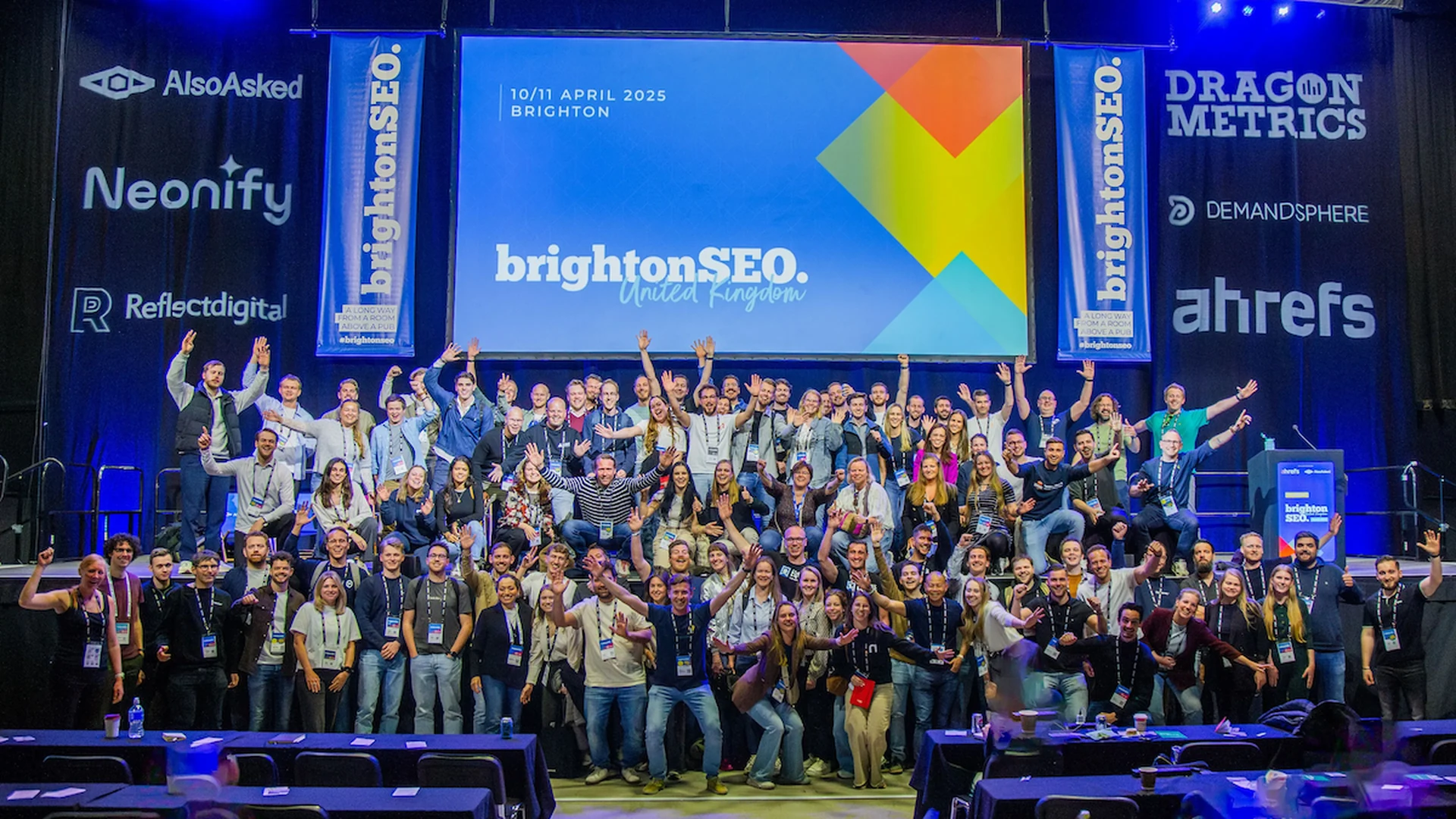
The curated guide to the global and regional SEO 2026 conferences worth attending — with an APAC and Australian lens, plus an ROI framework for each event.

Coworking near me
Searching coworking near me usually means a meeting tomorrow, a hybrid team that needs a base, or a founder tired of working from the kitchen bench — three different problems with three different answers. This guide ranks verified spaces in every Australian state and territory.