
AI SEO Tools

AI SEO tools are reshaping how brands capture demand in AI Overviews, ChatGPT and Perplexity — see which platforms drive citations, rankings and revenue.

The SEO tooling category split in two over the last 18 months. On one side: legacy suites still optimising for ten blue links. On the other: a new generation of AI-powered platforms built for a search environment where ChatGPT, Perplexity and Google AI Overviews answer the question before the user ever clicks. If you’re a founder, growth lead or in-house SEO manager evaluating which platform to put your budget behind, the wrong choice doesn’t just slow you down — it makes you invisible in the surfaces where demand is now captured.
This is an operator’s view of the AI SEO tools landscape: what they actually do, how they compare and where the line sits between tooling and strategy.
Why the AI SEO tooling category was rewritten in 18 months
AI Overviews are now the top of the funnel. According to Google Search Central documentation, generative results draw from indexed content, structured data and entity relationships — not just classical ranking signals. That single shift broke the assumption underneath every legacy SEO suite: that a top-three position equals demand capture. It doesn’t anymore. A page can rank #2, get cited zero times in AI Overviews and lose share of voice to a competitor sitting at position #8 whose content is structured for extraction.
The proof is in the citation logs. Across our internal data systems, we see B2B SaaS categories where 40–60% of informational query volume now resolves inside an AI answer surface before a click occurs. Tools built before 2023 weren’t designed to measure that. They track rankings, backlinks and on-page scores — useful, but incomplete. The new category of AI SEO tools is built around a different question: is your brand being cited where the answer is formed?
That is the lens this guide uses.
What an AI SEO tool actually does in 2026
A modern AI SEO platform spans four functional categories. Most tools cover one or two well — very few cover all four, and that gap is where most operator frustration lives.
Content intelligence and demand capture
This is the AI-powered layer that maps query clusters, intent shifts and entity coverage gaps against your site. It tells you which topics to build, which to consolidate and which competitor pages are dominating share of voice. Strong tools in this category surface non-obvious demand signals — questions being asked inside AI engines that don’t yet appear in classical keyword databases. Weak tools just rewrap a keyword list with a chatbot.
Technical SEO and indexation velocity
Indexation velocity — how fast new and updated content gets crawled, indexed and surfaced — is the single most under-measured metric in legacy suites. AI-powered platforms instrument log files, sitemaps, GSC data and rendered DOM diffs to flag crawl budget waste, render-blocking issues and JavaScript indexation failures in near real time. For SaaS sites with thousands of programmatic pages, this is where the largest scalable gains live.
AI citation and answer engine tracking
This is the newest and most strategically critical category. The right platform tracks whether your brand is cited inside ChatGPT, Perplexity, Gemini and Google AI Overviews — across hundreds of monitored prompts — and surfaces which content assets earn those citations. This is the foundation of AI citations tracking and answer engine optimisation (AEO).
Competitive share of voice
The final layer measures share of voice across both classical SERPs and AI surfaces. Who is being cited, how often and in which prompt clusters? This is how you turn AI search from a black box into an evidence-driven competitive map.
The AI SEO tools landscape — ranked
Nine platforms that earn a line item in a 2026 stack — the AI SEO specialists first, the all-in-one suites next. Pricing is the published starting tier in USD; teams above ten seats almost always negotiate a custom plan.
| # | Tool | Category | Best for | Price (USD/mo) | Status |
|---|---|---|---|---|---|
| 1 | SEOTopSecret OS | AI SEO | Full SEO operating system: AI mention tracking, briefs, audits, schema, rank tracking | From $249 | Active |
| 2 | Surfer SEO | AI SEO | Content scoring against SERP entities; AI editor | From $99 | Active |
| 3 | Clearscope | AI SEO | Premium content optimisation, term coverage, readability scoring | From $189 | Active |
| 4 | MarketMuse | AI SEO | Topic modelling and content briefs aligned to AI answer formats | From $149 | Active |
| 5 | Frase | AI SEO | AI-driven SERP analysis, briefs and content drafts | From $45 | Active |
| 6 | Profound | AI SEO | LLM mention monitoring across ChatGPT, Gemini, Perplexity, Claude | From $499 | Active |
| 7 | ProductRank.ai | AI SEO | Brand visibility inside LLM answers across query sets | Custom | Active |
| 8 | Ahrefs | All-in-one | Backlink data, keyword research, site audit, competitor analysis | From $108 | Active |
| 9 | Semrush | All-in-one | Keyword research, SERP tracking, content optimisation, paid search overlap | From $140 | Active |
The pattern is clear: most platforms are specialists. Content tools don’t track citations. Citation trackers don’t fix indexation. Generalist suites cover breadth but lag on AI surfaces. The operator question becomes — do you stack three or four tools, or invest in a growth operating system that ties them together with strategy?
How to evaluate an AI SEO tool — operator’s framework
Five criteria separate platforms that move the needle from those that look good in a demo.
- Data integrity. Where is the data sourced, how often is it refreshed and how is AI citation data validated? Ask for methodology — not marketing copy.
- AI search coverage. Does the platform monitor ChatGPT, Perplexity, Gemini and Google AI Overviews? Single-engine coverage is no longer sufficient.
- Workflow integration. Does it plug into GSC, GA4, your CMS and your BI stack? A tool that lives in a silo creates reporting friction, not clarity.
- Evidence of outcomes. Ask for verified client outcomes — not testimonial reels. Indexation velocity gains, citation lift, ranking movement, all with timestamps.
- Total cost of ownership. Licence fee is the smallest line. Add implementation, training, ongoing analyst time, and the cost of not having a strategist interpret what the tool surfaces.
A tool that scores high on all five is rare. Most operators end up either stacking specialists or partnering with a team that operates the stack on their behalf.
Where AI SEO tools end and strategy begins
Here is the uncomfortable truth: tooling is instrumentation, not strategy. A dashboard tells you indexation velocity dropped 30% — it does not tell you which 4,000 pages to consolidate, which schema templates to ship or how to rebuild your internal link graph to recover crawl efficiency. That decision layer is where outcomes are produced.
Proof: when Dogelthy scaled from 100 to 100,000 organic users in three months, the tools surfaced the signal — content gaps, indexation bottlenecks, AI citation opportunities. The outcome came from the system wrapped around the tools: a content architecture aligned to demand, a technical foundation built for indexation velocity and an AEO programme tied to verified citation lift.
Action: before you sign a new annual licence, audit what you’re actually missing. If it’s data, buy a tool. If it’s decisions, you need a system. Pair your stack with a growth operating system that turns the data into compounding market share — that is where revenue is built. For deeper context on how the search surface itself has shifted, see how AI Overviews changed search and our indexation velocity playbook.
Frequently asked questions
What is the difference between an AI SEO tool and a traditional SEO platform?+
Traditional platforms optimise for classical SERPs — rankings, backlinks, on-page scores. AI SEO tools add measurement and optimisation for generative surfaces like AI Overviews, ChatGPT and Perplexity, where citations and entity coverage matter more than position. The strongest platforms cover both worlds.
Can AI SEO tools track citations in ChatGPT and Perplexity?+
Yes — purpose-built AEO and GEO platforms monitor branded and unbranded prompts across ChatGPT, Perplexity, Gemini and Google AI Overviews, then attribute citations back to specific content assets. Coverage and refresh frequency vary widely, so validate methodology before committing.
Do AI SEO tools replace human SEO strategy?+
No. Tools surface signals — strategists turn signals into decisions. The platforms that produce the largest gains are operated by teams who understand demand capture, content architecture and indexation velocity. Without that layer, even the strongest tool generates dashboards instead of revenue.
Which AI SEO tool is best for a B2B SaaS company?+
The right answer depends on your bottleneck. If content velocity is the gap, prioritise content intelligence platforms. If you're invisible in AI surfaces, prioritise citation tracking. Most B2B SaaS operators end up needing all four functional categories — which is why a growth operating system often outperforms a single tool.
How do AI SEO tools measure share of voice in AI Overviews?+
They monitor a defined set of high-intent prompts across AI engines, log which domains are cited in each response and aggregate citation frequency over time. The output is a share-of-voice score per topic cluster — directly comparable to classical SERP share of voice, and increasingly the more important metric.
Follow SEOTopSecret on LinkedIn
Weekly posts on AI SEO, GEO and growth operating systems. No fluff.
Set SEOTopSecret as a preferred source
See more of our coverage in Top Stories on Google.
Keep reading

Why I built SEOTopSecret
After 25 years leading senior SEO for 100+ brands across four continents, the lesson stayed the same: the bottleneck was never the work — it was encoding how a senior consultant thinks so that thinking could run 24/7.
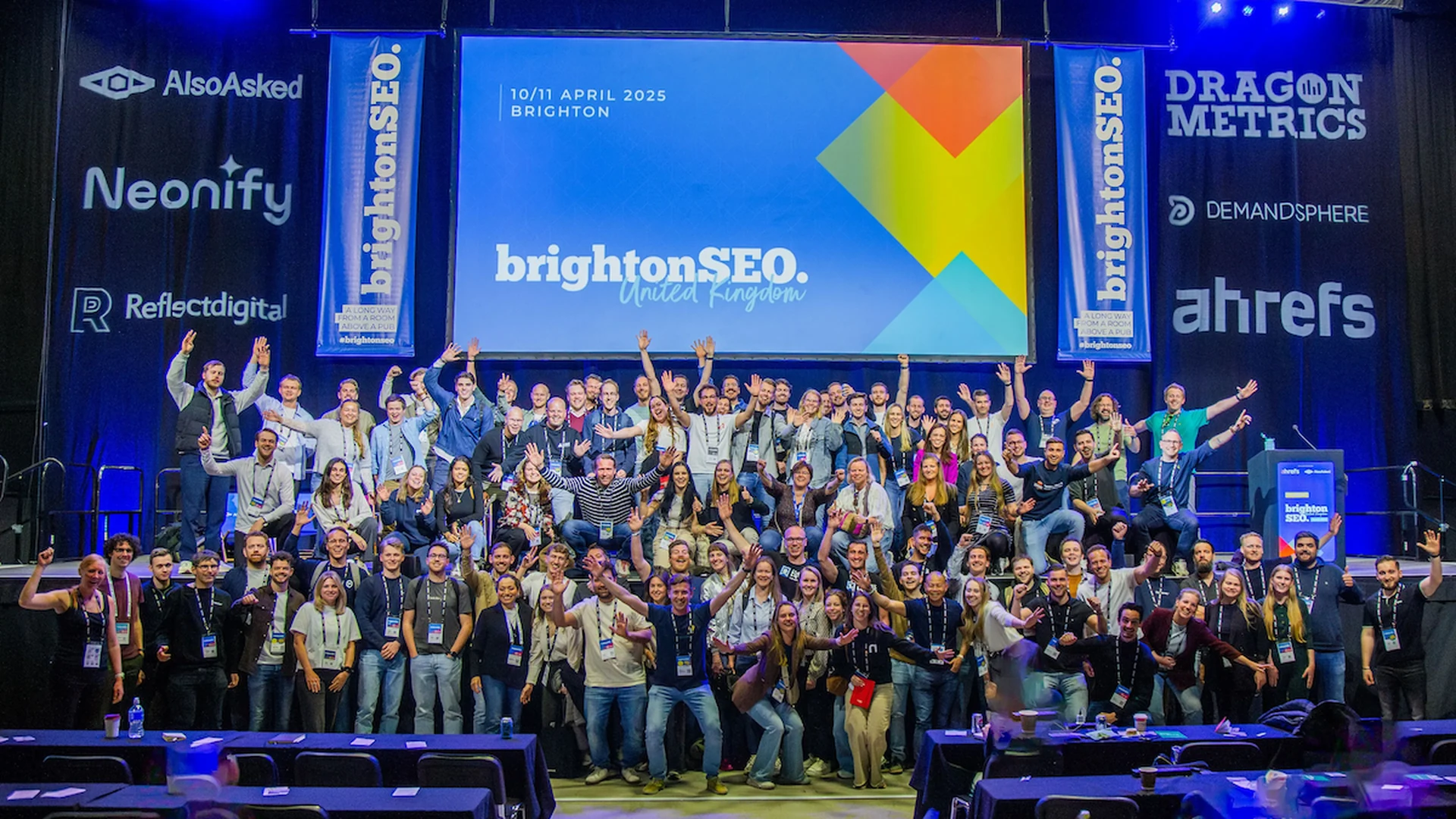
SEO conferences 2026
The curated guide to the global and regional SEO 2026 conferences worth attending — with an APAC and Australian lens, plus an ROI framework for each event.

Coworking near me
Searching coworking near me usually means a meeting tomorrow, a hybrid team that needs a base, or a founder tired of working from the kitchen bench — three different problems with three different answers. This guide ranks verified spaces in every Australian state and territory.