
SEO for Financial Services

Financial SEO has never been more contested, more regulated, or more strategically valuable than it is in 2026 — the old money-page playbook is gone and a tighter, evidence-led operating model has taken its place.

Financial SEO has never been more contested, more regulated, or more strategically valuable than it is right now. In 2026, every commercial query a buyer types — “best high-yield savings,” “compare business loans,” “top wealth platforms” — is intercepted by an AI Overview, a forum result, or a vertical aggregator before a single brand link gets a click. The old playbook of ranking a money page on a transactional keyword and waiting for the form fill is gone. What replaced it is a tighter, evidence-led operating model — and the brands building it now are taking market share from incumbents who still think in terms of blog posts and backlinks.
Why financial SEO broke in 2026 — and what replaced it
Insight. AI Overviews now intercept the majority of top-of-funnel financial queries before users ever scroll to organic results. YMYL classification has tightened — Google’s quality systems demand verifiable expertise on anything touching money, health, or major life decisions. And compliance review cycles, which already slowed content velocity, now collide with an AI search layer that rewards freshness, citations, and structured answers.
Proof. Run a live search on “best business checking account” or “how to compare term life insurance.” The AI Overview answers the question, cites three to five sources, and pushes the first traditional organic listing well below the fold. Reddit, NerdWallet, and Investopedia appear in the citation set far more often than the actual financial brand offering the product. The user’s intent is satisfied before your money page is even seen.
Action. Audit every commercial keyword you currently rank for against AI Overview presence. Map which money pages are still earning clicks versus being summarized away. The pages being summarized need restructuring — not deletion — into citation-ready answer blocks. This is the foundation of any modern AI SEO growth operating system, and where AI visibility tracking becomes the operator’s scoreboard for whether the rebuild is working.
The four pillars of SEO for financial services
A durable financial SEO program in 2026 rests on four pillars. Miss any one and the whole structure leaks authority.
Author-led E-E-A-T architecture
Google’s YMYL bar now demands real, licensed, named experts — not ghostwritten content farms. Every money page and advisory article needs a bylined author with verifiable credentials, Person schema, and sameAs links to LinkedIn and any regulatory profile (FINRA BrokerCheck, SEC IAPD, state licensing boards where applicable). Anonymous “editorial team” bylines are a liability.
Compliance-safe content velocity
The brands shipping the most YMYL content aren’t the ones with the largest legal teams — they’re the ones with pre-approved modular components, claim libraries, and templated disclosures that pass review in days instead of months. Compliance throughput is now a primary SEO input, not an afterthought.
AI citation engineering (AEO + GEO)
Answer engine optimization and generative engine optimization are how you get quoted by ChatGPT, Perplexity, and Google AI Overviews. That means schema-marked Q&A blocks, statistic-led intros, definitional clarity, and original data the engines can attribute to your brand. The schema generator handles the technical structure; the editorial work — original stats, credentialed authors, claim libraries — handles the citation strategy.
Conversion-aligned topical clusters
Financial buyers don’t research in a vacuum — they research at pre-funded moments: rate-shopping, vendor evaluation, regulatory triggers, life events. Topical clusters that map to those moments capture demand at the point of intent. Generic “what is APR” content does not.
The 2026 YMYL bar — what Google now requires
The YMYL standard is no longer a suggestion. Google’s search quality guidance makes clear that pages affecting financial decisions are held to the highest evidence threshold. Here is the working checklist we apply on every financial engagement.
| Signal | Required for financial YMYL in 2026 |
|---|---|
| Author entity schema with credentials | Yes — Person schema + sameAs to LinkedIn and regulatory licenses |
| Original data or proprietary research | Yes — at least one unique stat per money page |
| Citation of primary regulatory sources | Yes — SEC, FINRA, CFPB, FDIC where applicable |
| Recency timestamp + last-reviewed date | Yes — visible to user and present in schema |
| Disclosure and editorial policy page | Yes — linked from every YMYL article |
If a money page fails on two or more of these signals, it is structurally disadvantaged regardless of backlink profile or content depth. Fix the signals first, then scale.
AI search is the new top of the funnel for finance
Financial buyers — especially B2B buyers evaluating fintech vendors, treasury platforms, or wealth tech — now use Perplexity and ChatGPT for shortlist generation before they ever open Google. By the time a prospect lands on your site, they’ve already seen an AI-generated comparison that either included you or didn’t.
The tactical response is specific: structured Q&A blocks at the top of advisory content, statistic-led intros (“In 2026, 47% of mid-market CFOs report…”), schema-marked author entities, and FAQPage + HowTo combinations layered onto educational pages. The goal is not to rank on Perplexity — there is no ranking. The goal is to be the source the model quotes. That requires content engineered for extraction, not just consumption — and content briefs built around that extraction model are how the editorial team ships at compliance-safe velocity.
A 90-day execution roadmap for in-house teams
A realistic financial SEO transformation runs in three phases. The timelines below assume a mid-sized in-house team with executive buy-in and a working compliance partner.
| Phase | Days | Focus | Key outputs |
|---|---|---|---|
| 1 | 1–30 | Technical and YMYL audit, AI citation baseline, compliance workflow design | Audit report, citation tracker, modular content components |
| 2 | 31–60 | Author entity buildout, money-page templating, topical cluster launch | Live Person schema, refactored money pages, first cluster published |
| 3 | 61–90 | Link earning through original data, AI citation monitoring, conversion path optimization | Original research asset, citation movement evidence, funnel instrumentation |
This is a framework, not a guarantee. Domain authority, compliance throughput, and content velocity all shift the curve. What stays constant is the sequence — audit, build, prove.
How SEOTopSecret operates in regulated financial verticals
SEOTopSecret is built as a growth operating system for brands in high-stakes verticals — financial services chief among them. We are AI-native, evidence-based, and report on indexation velocity, ranking movement, share of voice, and AI citations as the working evidence layer. We do not promise positions or traffic figures; we track them and prove the work.
Two current engagements anchor the financial vertical. Openbank Mexico partnered with SEOTopSecret to rebuild its topical architecture and AI citation strategy and recently crossed its first 100,000 organic users in under a year of partnership — evidence-tracked, not promised, and not replicable on a fixed timeline. Colonial First State in Australia is currently transforming its full SEO strategy and on-site experience across the website, from information architecture to YMYL author entities and AI-era money pages. Both are live, direct engagements.
If your team is rebuilding for the AI search era, see how the success metrics layer reports indexation velocity, AI citation movement, and share of voice — or compare implementation effort against your current setup on pricing.
Frequently asked questions
How is SEO for financial services different from standard SEO?+
SEO for financial services operates under YMYL classification, requires verifiable author credentials, and demands compliance review on every claim. It now competes with AI Overviews on nearly every commercial query — from “best high-yield savings” to “compare business loans”. The fundamentals are the same as standard SEO; the evidence bar, author-entity requirements, and citation expectations are materially higher.
Do AI Overviews really hurt financial services traffic?+
AI Overviews reshape financial services traffic rather than simply hurt it. Informational queries lose clicks to AI summaries, but well-cited brands gain authority signals and qualified mid-funnel traffic from buyers who saw their brand referenced in the answer. The strategic move for finance SEO is to engineer content for citation, not just ranking — that’s where the demand now compounds.
What is AEO and GEO for finance brands?+
AEO (answer engine optimization) and GEO (generative engine optimization) structure financial content so AI engines like ChatGPT and Perplexity quote your brand as the source. For finance, that means schema-marked Q&A blocks, statistic-led intros, original research with named outcomes, and credentialed authors with Person schema and sameAs links to FINRA, SEC IAPD, or state licensing profiles where applicable.
How long does it take to see results from financial SEO in 2026?+
Indexation velocity on new financial content typically moves within weeks, while meaningful ranking and AI citation movement on competitive YMYL queries usually shows over a multi-month horizon. Timelines vary by domain authority, content velocity, and compliance throughput. As a directional reference, Openbank Mexico crossed 100,000 organic users in under a year of partnership — every brand profile is different.
Can compliance workflows keep up with SEO content velocity?+
Yes. Compliance workflows keep up with SEO content velocity when content is built from pre-approved modular components, claim libraries, and templated disclosures that pass review in days instead of months. The bottleneck is process design, not legal itself. The brands shipping the most YMYL content aren’t the ones with the largest legal teams — they’re the ones with the tightest content systems.
Follow SEOTopSecret on LinkedIn
Weekly posts on AI SEO, GEO, and growth operating systems. No fluff.
Set SEOTopSecret as a preferred source
See more of our coverage in Top Stories on Google.
Keep reading

Why I built SEOTopSecret
After 25 years leading senior SEO for 100+ brands across four continents, the bottleneck was never the work — it was encoding how a senior consultant thinks so that thinking could run 24/7.
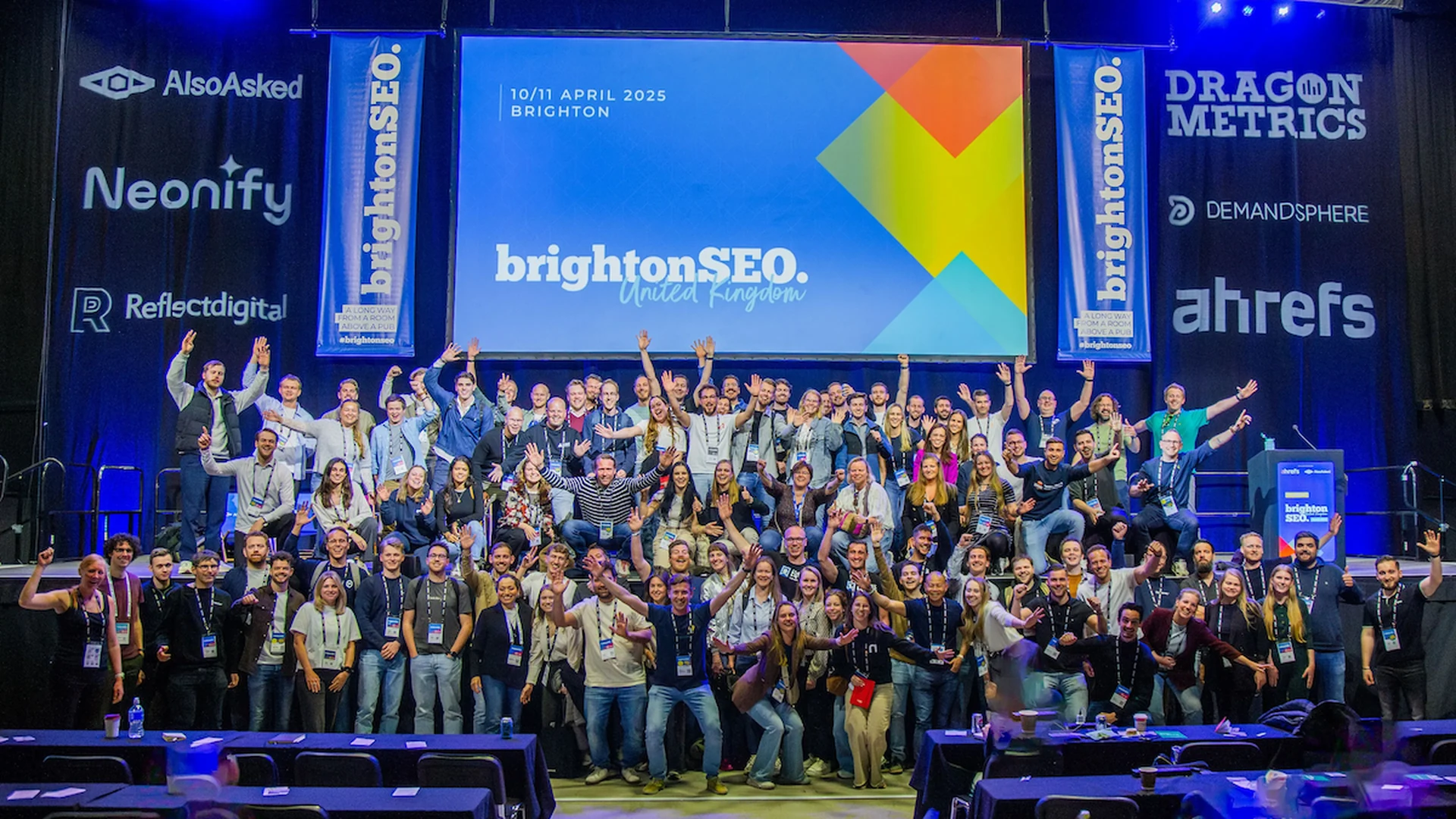
SEO conferences 2026
The curated guide to the global and regional SEO 2026 conferences every SEO, SEM, or AI SEO professional should weigh — with an ROI framework to decide which ones earn the spend.

Coworking near me
Searching coworking near me usually means a meeting tomorrow, a hybrid team that needs a base, or a founder tired of working from the kitchen counter — three different problems with three different answers. This guide ranks verified spaces in the seven largest US coworking markets.