
SaaS Metrics

Every SaaS operator has a dashboard. Far fewer have a measurement system — and in 2026 the gap is the difference between compounding growth and quiet leakage.

Every SaaS operator I’ve worked with in the last 25 years has a dashboard. Very few have a measurement system. In 2026, the gap between the two is the difference between compounding growth and slow leakage — and most teams are still measuring 2021’s funnel while their buyers live inside AI engines.
This is the operator’s view of which SaaS metrics actually predict growth this year, which ones to retire, and the three signals most teams are under-measuring while their competitors quietly take share.
Why most SaaS measurement stacks miss the new top of funnel
The top of the SaaS funnel moved. Most measurement stacks didn’t.
In 2026, the first impression a buyer forms about your category often happens inside ChatGPT, Perplexity, or a Google AI Overview — not on your homepage, not in a paid ad, not in a G2 listing. By the time a prospect lands on your site, the shortlist has already been written by a generative engine citing somebody. The question is whether that somebody is you.
The proof is in the zero-click data. AI Overviews now appear on a majority of commercial-intent SaaS queries, and branded search volume has become the cleanest leading indicator of pipeline that most teams don’t track properly. Operators who only measure MRR, CAC, and pipeline coverage are measuring lagging outputs of a top-of-funnel they can no longer see.
The reset for 2026: SaaS metrics are not just product and revenue numbers. They are the connective tissue between demand capture, authority, and revenue efficiency — and the dashboard has to reflect that. This is what an AI SEO growth operating system is built to measure, and where AI visibility tracking becomes a first-class input alongside MRR and CAC.
The four metric categories every SaaS operator should track in 2026
Forget twenty-metric dashboards. There are four categories that matter, and every metric you track should ladder up to one of them.
Revenue metrics — MRR, ARR, NRR, GRR, and why net revenue retention is the single most predictive number
Net revenue retention is the metric that separates durable SaaS from treadmill SaaS. A company growing new-logo ARR at 80% with 95% NRR is fragile. A company growing new-logo ARR at 30% with 125% NRR is compounding. In a 2026 capital market that rewards efficiency, NRR is the number boards open the deck with.
Efficiency metrics — CAC, CAC payback, LTV:CAC, and the Rule of 40 in a tighter capital market
The Rule of 40 has stopped being a vanity benchmark and started being a gate. Post-2022 correction, public SaaS multiples reward Rule of 40 performers at roughly double the rate of underperformers. CAC payback under twelve months is now table stakes for scale-stage companies raising on reasonable terms.
Retention and engagement metrics — logo churn, revenue churn, DAU/MAU, product-qualified leads
Retention is where revenue is won or lost before sales ever picks up the phone. Track logo churn and revenue churn separately — they tell different stories. DAU/MAU still matters for product-led motions, but PQL conversion to paid is the metric that connects product to pipeline.
Demand-capture metrics — organic sessions, AI citations, share of voice, branded vs. non-branded mix
This is the category most SaaS dashboards omit entirely. Organic sessions, AI citation count across the major engines, share of voice in your category cluster, and the ratio of branded to non-branded traffic — these are the leading indicators of next quarter’s pipeline, not this quarter’s reporting.
SaaS marketing metrics that map to pipeline in 2026
Marketing-attributed metrics have moved upstream. Last-click attribution is now actively misleading — it credits the final touch in a journey that was decided three weeks earlier inside a generative engine.
Pipeline-coverage metrics
MQL-to-SQL conversion, demo-to-close rate, and blended CAC by channel are the three numbers that reveal whether marketing is generating pipeline or generating activity. If MQL-to-SQL is below 15% for B2B SaaS, the qualification model is broken — not the volume.
Brand-demand metrics
Branded search growth, direct traffic from AI-cited pages, and share of voice in AI engines. The cleanest 2026 signal: when a prospect types your brand name into Google after never visiting your site, an AI engine cited you. Track how AI citations influence SaaS pipeline as a first-party signal, not a vanity number — that’s the surface AI visibility tracking is built to operationalize.
Content efficiency
Assisted conversions per indexed URL, indexation velocity, and cost per AI citation. The last one is the metric that will define content ROI for the rest of the decade — and almost nobody is calculating it yet.
SaaS performance metrics — the operator’s weekly scoreboard
Performance metrics answer one question: is the system compounding or leaking?
Activation and adoption
Time-to-first-value is the most under-tracked metric in product-led SaaS. Companies that get a user to value in under five minutes convert trial-to-paid at multiples of those that take an hour. Activation rate and feature adoption tell you whether the product is delivering what marketing promised.
Velocity metrics
Pipeline velocity (deal value × win rate ÷ sales cycle length) is the single number that captures sales-team health. When velocity drops, every input is broken — even if pipeline volume looks fine.
Unit economics in motion
Contribution margin per cohort and gross margin on net-new ARR. If your gross margin on net-new ARR is below your blended company gross margin, you’re growing yourself into a worse business.
B2B SaaS metrics that matter most for enterprise motions
B2B SaaS measurement diverges from product-led SaaS the moment average contract value crosses roughly $25K. Different signals predict different outcomes.
Account-based metrics
Pipeline coverage by ICP tier, account engagement score, and multi-threading depth. Enterprise deals with fewer than four contacts engaged close at less than half the rate of deals with seven or more.
Expansion and land-and-expand
Net dollar retention by cohort, seat expansion velocity, and cross-sell attach rate. The cohort view matters — blended NDR can hide a deteriorating recent vintage.
Sales-led signals
Win rate by source, average deal size trend, and procurement cycle time. When procurement cycles lengthen by more than 20%, it’s almost always a buyer-confidence signal — not a sales-team problem.
The SaaS metrics benchmark table for 2026
| Metric | Early-stage (<$5M ARR) | Growth-stage ($5M–$25M ARR) | Scale-stage ($25M+ ARR) |
|---|---|---|---|
| Net Revenue Retention | 100–110% | 110–120% | 120%+ |
| Gross Revenue Retention | 85%+ | 90%+ | 92%+ |
| CAC Payback (months) | <18 | <15 | <12 |
| LTV:CAC Ratio | 3:1 | 4:1 | 5:1+ |
| Rule of 40 | 30%+ | 40%+ | 40%+ |
| Annual Logo Churn | <10% | <7% | <5% |
These ranges reflect the tighter 2026 capital environment. Pre-2022, looser benchmarks were tolerated; today, the bar has reset upward across every stage. Cross-reference with Bessemer’s State of the Cloud and SaaS Capital for sector-specific cuts.
How to connect SaaS metrics to your growth operating system
Map each metric to a funnel stage and a channel owner
No metric should live without an owner. If three people own NRR, nobody owns NRR. Assign a single accountable operator per metric, and map each metric to a specific funnel stage so the dashboard reads as a system, not a list.
Build a single source of truth
GA4, GSC, product analytics, and CRM stitched together. The teams that compound fastest are the ones who can answer “what happened” in a single query — not by exporting four CSVs and arguing about attribution.
Review cadence
Weekly operator review on velocity and leading indicators. Monthly board view on revenue and efficiency. Quarterly strategy reset on demand capture and share of voice. Anything more frequent is noise; anything less is too slow to course-correct. The success metrics layer is where weekly operator reviews and quarterly board snapshots share a single source of truth.
The three SaaS metrics most teams under-measure in 2026
Share of voice in AI engines
ChatGPT, Perplexity, and Google AI Overviews are now the answer layer for category research. Measuring share of voice in AI engines — how often your brand is cited versus competitors for the queries that matter — is the cleanest leading indicator of branded demand we have in 2026. Pair it with classical rank tracking and the two together give you a real picture of category visibility.
Indexation velocity
How fast new content earns visibility — first index, first ranking movement, first AI citation. Tracking indexation velocity for SaaS content reveals whether your authority is compounding or your content is dying on arrival.
Assisted conversions from organic and AI-cited content
Last-click attribution kills SEO budgets. Assisted conversion view — every touch in the journey — reveals that organic and AI-cited content often influence 40–60% of pipeline that last-click credits to paid or direct.
Action plan — what to measure this quarter
A 30-day implementation for operators:
Week 1 — Audit your current dashboard against the four categories. Cut every metric that doesn’t ladder up.
Week 2 — Stitch GA4, GSC, product analytics, and CRM into a single source of truth. Assign one owner per metric.
Week 3 — Add AI citation tracking across ChatGPT, Perplexity, and Google AI Overviews for your top 50 category queries.
Week 4 — Set quarterly targets against the 2026 benchmark table. Identify the two metrics most off-pace and build a focused workstream for each.
Ongoing — Weekly operator review, monthly board view, quarterly demand-capture reset.
Direct clients like Lyssna and Ortto run versions of this measurement stack as part of their growth operating system. Dogelthy scaled from 100 to 100,000 organic users in three months once the measurement system was finally pointing at the right things — directional, not a guarantee. Pair the framework with a disciplined content engine, and the dashboard starts predicting growth instead of reporting it.
Frequently asked questions
What are the most important SaaS metrics in 2026?+
Net revenue retention, CAC payback, and the Rule of 40 remain the strongest predictors of durable SaaS growth in 2026. Share of voice in AI engines and indexation velocity have joined the operator dashboard as leading indicators of pipeline — both signal whether category authority is compounding or eroding before revenue metrics catch up.
What is a good LTV:CAC ratio for SaaS?+
A 3:1 LTV:CAC ratio is the standard floor for SaaS — anything below signals an efficiency problem. Scale-stage SaaS companies typically run 5:1 or higher, with CAC payback under twelve months. In the tighter 2026 capital environment, those benchmarks have moved from aspirational to expected at every stage above early.
How is net revenue retention different from gross revenue retention?+
Gross revenue retention measures retained revenue from existing customers excluding expansion. Net revenue retention includes expansion revenue from upsell and cross-sell, which is why best-in-class SaaS companies report NRR above 120%. GRR tells you whether you’re losing customers; NRR tells you whether the base is compounding.
Should SaaS companies track AI citations as a metric?+
Yes. AI Overviews and generative engines like ChatGPT, Perplexity, and Gemini now sit above the traditional click in many buyer journeys. Tracking citations across those engines gives operators a leading indicator of brand authority and pipeline influence — months before the impact shows up in branded search volume or direct traffic.
What is the Rule of 40 and why does it matter?+
The Rule of 40 states that a SaaS company’s growth rate plus profit margin should exceed forty percent. In a tighter 2026 capital environment, it is the single benchmark investors and boards use to evaluate balanced growth. Public SaaS multiples now reward Rule of 40 performers at roughly double the rate of underperformers.
Follow SEOTopSecret on LinkedIn
Weekly posts on AI SEO, GEO, and growth operating systems. No fluff.
Set SEOTopSecret as a preferred source
See more of our coverage in Top Stories on Google.
Keep reading

Why I built SEOTopSecret
After 25 years leading senior SEO for 100+ brands across four continents, the bottleneck was never the work — it was encoding how a senior consultant thinks so that thinking could run 24/7.
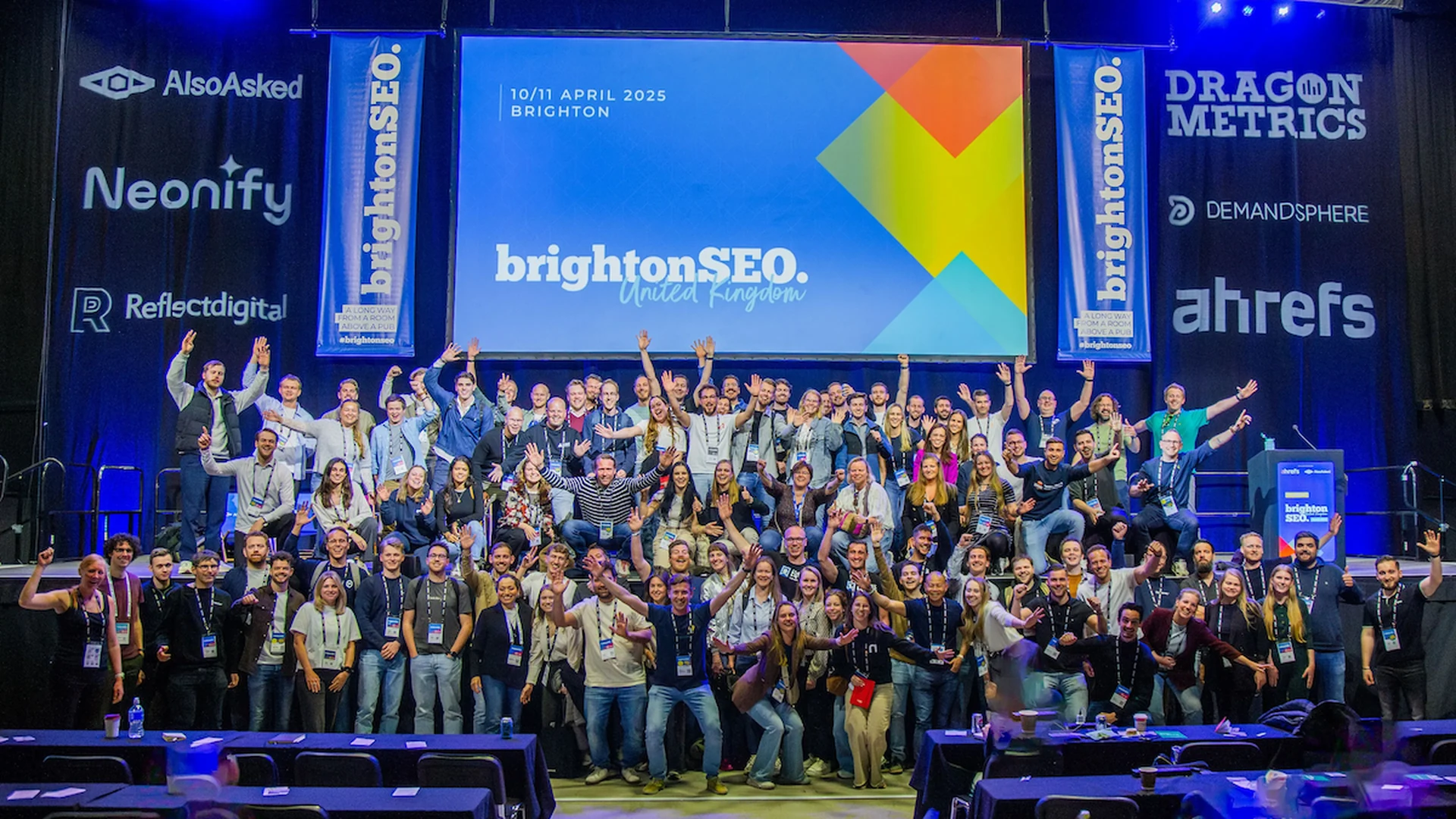
SEO conferences 2026
The curated guide to the global and regional SEO 2026 conferences every SEO, SEM, or AI SEO professional should weigh — with an ROI framework to decide which ones earn the spend.

Coworking near me
Searching coworking near me usually means a meeting tomorrow, a hybrid team that needs a base, or a founder tired of working from the kitchen counter — three different problems with three different answers. This guide ranks verified spaces in the seven largest US coworking markets.