
Brand Assets
Brand assets in 2026 aren’t design files in a Figma library — they’re the structured signals AI engines parse every time they decide whether to cite you. Treat them as a demand-capture system, not a logo lockup.

Brand assets in 2026 are not design files sitting in a Figma library. They are the structured signals AI engines parse — every time ChatGPT, Perplexity, Google AI Overviews, or Gemini decides whether to cite your brand in a generative answer, it is reading your assets: your verbal positioning, your schema, your proof, your entity graph. If those signals are inconsistent, fragmented, or missing, you are invisible before the click.
This is the reframe most operators are still missing. Brand assets are now a demand-capture system — and the companies treating them that way are taking share of voice from competitors who are still asking their design team to update the logo lockup.
Why brand assets are now AI-citation signals, not design files
The top of the funnel moved. It is no longer the SERP — it is the AI answer surface that appears before the SERP. And AI engines do not cite brands at random. They cite entities they can identify, verify, and trust based on structured, consistent, and repeated signals across the open web.
That means every brand asset — logo, tagline, positioning statement, schema entry, case study — is either reinforcing your entity or diluting it. There is no neutral.
What changed in generative search in 2026
Three shifts redefined the role of brand assets this year. First, AI Overviews now appear on a majority of commercial-intent queries in the US, and the citations are dominated by brands with consistent entity signals across schema, Wikipedia/Wikidata, and authoritative third-party mentions. Second, Perplexity and ChatGPT search modes lean heavily on structured data and well-defined entities to generate citations — schema-rich pages are cited at materially higher rates than schema-light ones. Third, Gemini’s deep integration with Google’s Knowledge Graph means your entity record is now a direct input into whether your brand surfaces in generative answers.
The consequence: brand assets that exist only as PDFs in a shared drive contribute nothing to AI visibility. Assets that are codified, structured, and deployed across indexable surfaces compound.
From DAM to demand capture — the operator reframe
Most brand asset conversations still center on DAM — digital asset management — as a storage and access problem. That framing is obsolete for growth operators. The real question is not “where do we store assets” but “which assets are working as demand-capture signals, and how do we deploy them at indexation velocity.”
This is the lens an AI SEO growth operating system applies: brand assets are inputs to a system that converts brand authority into AI citations, organic rankings, and pipeline — and the work shows up in AI visibility tracking weeks before it shows up in revenue.
The five categories of brand assets that matter for growth
For operators in 2026, brand assets fall into five categories — each with a distinct role in AI-era visibility.
Visual identity assets (logo, color, type)
Logos, color systems, and typography still matter — but their growth role is recognition and trust reinforcement, not discovery. Their job is to make your brand instantly identifiable once a user clicks through from an AI answer or SERP result. Visual consistency across owned and earned surfaces also strengthens entity disambiguation for AI engines.
Verbal and messaging assets (tagline, positioning, tone)
This is the highest-leverage category in 2026 — and the most neglected. Your positioning statement, value propositions, category language, and tone of voice are the raw material AI engines synthesize when summarizing your brand. If your messaging shifts page-to-page, the AI cannot form a coherent entity description, and you lose citation share to competitors with tighter verbal discipline.
Proof assets (case studies, testimonials, data)
Proof assets are the evidence layer. Case studies with specific outcomes, verified testimonials, original research, and proprietary data are disproportionately cited by AI engines because they offer something the model cannot generate on its own — verifiable specificity. A single well-structured case study with named clients, dates, and outcomes outperforms ten generic blog posts for AI citation purposes.
Structured data assets (schema, knowledge graph entries)
Organization schema, Product schema, Person schema for executives, FAQ markup, and entity references to Wikidata are the machine-readable layer of your brand. These are the assets AI engines parse most directly. Most B2B and SaaS sites are leaving 60–80% of their potential structured signal on the table. Treat schema as a brand asset, not a dev ticket — the schema generator is built around exactly that reframe.
Distribution assets (templates, social kits, sales collateral)
Templates, social kits, pitch decks, and email signatures determine whether brand assets get deployed consistently across every surface — owned, earned, and dark social. Distribution assets are the operational layer that turns governance into execution.
How to audit your brand assets for AI-era visibility
An audit is not a content inventory. It is a diagnostic that maps every asset to its growth function and its AI search surface.
The 2026 brand asset audit framework
| Asset category | Funnel stage | AI search surface | Governance owner |
|---|---|---|---|
| Visual identity | All stages | Brand recognition, entity disambiguation | Design lead |
| Verbal and messaging | TOFU, MOFU | AI Overviews, ChatGPT summaries | Brand + content lead |
| Proof assets | MOFU, BOFU | Perplexity citations, AI comparison answers | Marketing + customer marketing |
| Structured data | All stages | Google AI Overviews, Gemini, Knowledge Graph | SEO lead + engineering |
| Distribution assets | All stages | Social, email, sales touchpoints | Brand ops + revenue ops |
Run this against every existing asset. For each, ask: is it findable, indexable, structured, and consistent with the rest of the system? If not, it is liability, not equity.
Mapping assets to funnel stage and search surface
Not every asset belongs everywhere. Proof assets belong on comparison pages and review surfaces, where AI engines pull citations for evaluation-stage queries. Verbal assets belong on category pages and pillar content, where AI engines pull entity descriptions. Mapping is what turns an inventory into a capture strategy.
Governance — turning brand assets into a scalable system
Governance is where most teams collapse. They build the assets, then let them drift. In 2026, drift is expensive — every inconsistent message dilutes the entity signal.
Ownership, version control, and indexation velocity
Every asset needs a named owner, a versioning system, and a deployment SLA — internal, not contractual. The metric that matters is indexation velocity: how fast a new or updated asset gets crawled, indexed, and reflected in AI answer surfaces. Slow indexation is a governance failure, not a Google problem.
Operationalizing verbal assets at scale
Verbal assets are the hardest to govern at scale because they live in every page, prompt, email, and AI-facing surface. The operator tooling layer codifies tone, positioning, terminology, and forbidden vocabulary — then enforces it across every content surface, including AI generation workflows. The content brief engine and CMS publishing together close the loop between brand asset governance and AI-era distribution: one source of verbal truth, deployed consistently, at scale.
Signals that strengthen AI citations and share of voice
The signals that move the needle are not exotic. Consistent entity references across owned content, schema that matches your real-world entity, third-party mentions with the same positioning language, and structured proof assets cited by other publishers. Tracking share of voice across both classical SERPs and generative engines — through rank tracking and AI visibility tracking — is how you measure whether the system is working, and where competitors are taking ground.
The 30-day action plan for operators
Week 1 — Audit and inventory. Owner: SEO lead + brand lead. Output: complete asset inventory mapped to the five-category framework, gaps flagged, indexation status verified for every owned URL.
Week 2 — Verbal asset consolidation. Owner: content lead. Output: single source of truth for positioning, category language, tone, and forbidden vocabulary. Deploy that source of truth across the top 20 priority pages — pillar content, category pages, and homepage.
Week 3 — Structured data buildout. Owner: SEO lead + engineering. Output: Organization, Product, Person, and FAQ schema deployed across the site, with Wikidata entity references where applicable. Validate in Google Search Console and structured data testing tools.
Week 4 — Proof asset deployment and measurement. Owner: marketing lead. Output: top three case studies rebuilt with structured data, named outcomes, and citation-friendly formatting. Baseline measurement live: indexation velocity, AI citation tracking, and share of voice movement against named competitors — wired into success metrics so the dashboard reads as a system, not a snapshot.
Thirty days does not finish the work — it installs the system. From there, the compounding begins. For supporting references, see Google Search Central’s structured data documentation and the Schema.org Organization entity reference.
Frequently asked questions
What are brand assets in 2026?+
Brand assets in 2026 are the structured signals — visual, verbal, proof-based, schema-based, and distribution-based — that AI engines and search surfaces use to identify, verify, and cite your brand. They are growth inputs, not design artifacts. The reframe matters because every asset is now either reinforcing your entity in generative answers or quietly diluting it.
Why are brand assets important for AI search?+
AI engines like ChatGPT, Perplexity, and Google AI Overviews decide whether to cite a brand based on the consistency and structure of its signals across the open web. Strong, repeated brand assets — schema, positioning language, proof — make your entity legible to AI; weak or fragmented assets render you invisible at the new top of the funnel, regardless of how strong your design system looks internally.
How often should I audit my brand assets?+
A full brand asset audit every 12 months is the minimum cadence. Schema, proof assets, and verbal positioning should be reviewed quarterly because AI search surfaces evolve fast and competitor entity signals shift continuously. Treat the audit as a working diagnostic — mapping every asset to a funnel stage and an AI search surface — not a one-time inventory.
What is the difference between brand asset management and a brand asset library?+
A brand asset library is storage — where assets live. Brand asset management is governance — how assets are owned, versioned, deployed, and measured across owned, earned, and AI surfaces. Modern operators need both, but the governance layer is what drives AI-era visibility and converts brand authority into AI citations, organic rankings, and pipeline.
Can structured data really influence AI citations?+
Yes. Schema markup gives AI engines machine-readable confirmation of your entity, products, people, and content relationships. Pages with rich, accurate schema are cited at materially higher rates than schema-light pages — making structured data one of the highest-leverage brand assets a modern operator can ship, not a backend technicality the dev team handles in isolation.
Follow SEOTopSecret on LinkedIn
Weekly posts on AI SEO, GEO, and growth operating systems. No fluff.
Set SEOTopSecret as a preferred source
See more of our coverage in Top Stories on Google.
Keep reading

Why I built SEOTopSecret
After 25 years leading senior SEO for 100+ brands across four continents, the bottleneck was never the work — it was encoding how a senior consultant thinks so that thinking could run 24/7.
SEO conferences 2026
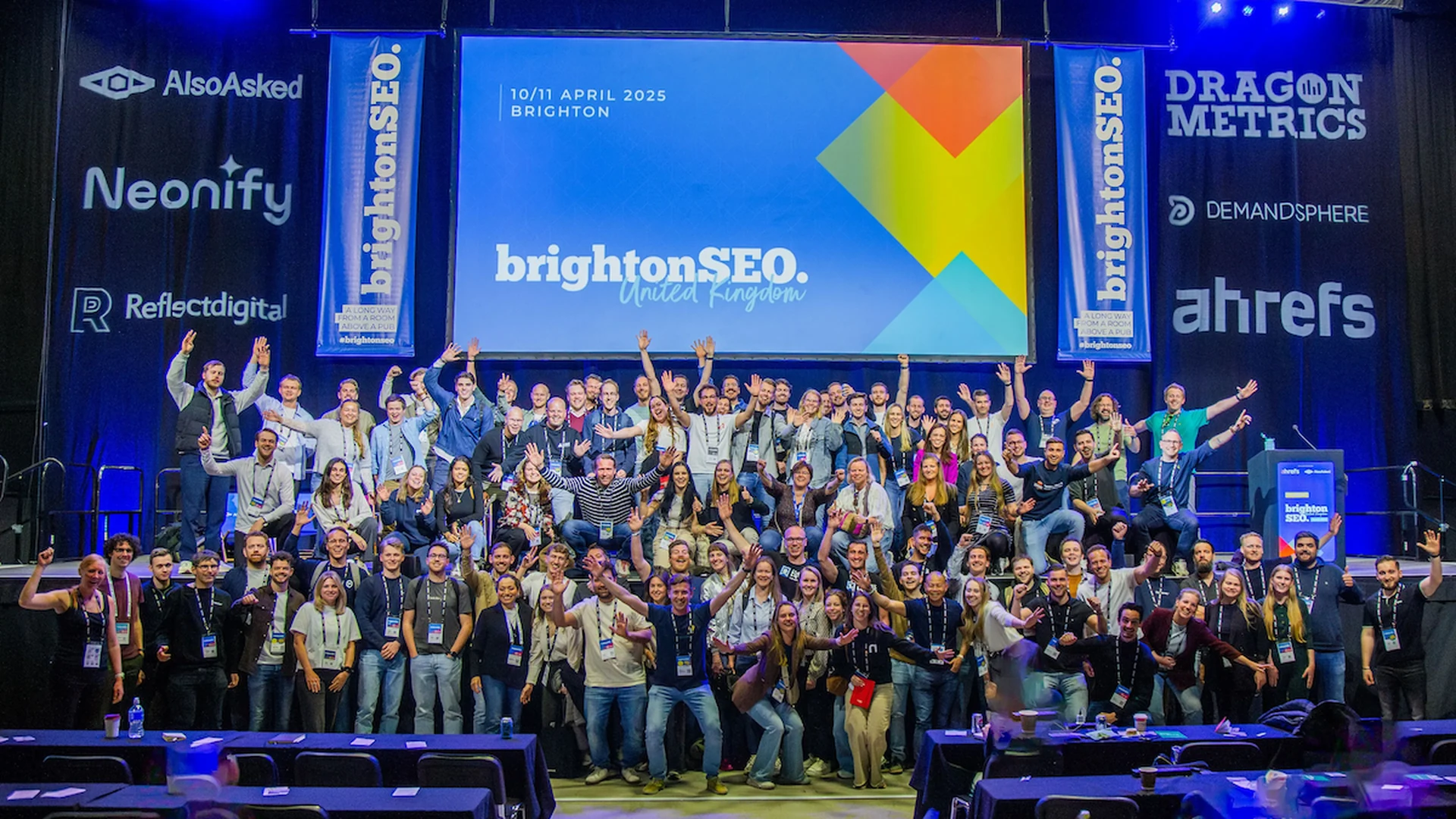
The curated guide to the global and regional SEO 2026 conferences every SEO, SEM, or AI SEO professional should weigh — with an ROI framework to decide which ones earn the spend.

Coworking near me
Searching coworking near me usually means a meeting tomorrow, a hybrid team that needs a base, or a founder tired of working from the kitchen counter — three different problems with three different answers. This guide ranks verified spaces in the seven largest US coworking markets.