What's an AI SEO Software
AI SEO software is a new category of tool that goes beyond keyword research and rank tracking. It encodes senior SEO methodology so a single platform can plan, write, audit, schema, publish, and track content across both Google and AI answer engines like ChatGPT, Gemini, Perplexity, and Claude. This guide covers what it is, why it matters in 2026, and the twelve modules that make up SEOTopSecret OS.


Ask ten marketing leaders what AI SEO software is and you’ll get ten partial answers. Some think it’s a chatbot bolted on top of a keyword research tool. Others think it’s a content generator with SEO labels. The most current camps think it’s anything that mentions ChatGPT in the marketing copy. None of those answers are wrong, and none of them are complete. AI SEO software in 2026 is something more specific — and understanding the definition is the difference between buying a tool that compounds growth and one that just adds another tab to your stack.
This is a senior-strategist-grade walkthrough of what AI SEO software actually is, why the category matters now and not five years ago, and exactly which capabilities make a platform useful rather than decorative. By the end you’ll be able to evaluate any AI SEO product on the market against a clear checklist instead of a vendor’s pitch deck.
What AI SEO software actually is
AI SEO software is a platform that combines traditional SEO capabilities — keyword research, technical audits, content creation, schema, rank tracking — with capabilities specifically designed for a search landscape where AI answer engines (ChatGPT, Gemini, Claude, Perplexity, Google AI Overviews) sit alongside Google’s classic results. The defining trait isn’t the use of AI models inside the product. It’s the fact that the product treats AI engines as a first-class destination, not an afterthought.
Three things distinguish AI SEO software from a traditional SEO tool with a chatbot grafted on:
- It optimizes for citation, not just position. AI engines cite passages, not pages. The platform helps content become citable at the paragraph level.
- It tracks AI visibility as a metric. Beyond Google rank, it measures brand mentions and citations across the four major AI engines.
- It encodes methodology, not just data. Senior SEO judgment — what to brief, when to audit, which schema to add, how to interpret a ranking shift — lives inside the platform, available 24/7 instead of buried in a strategist’s inbox.
Why AI SEO matters in 2026
Three forces converged in the last 24 months. First, Google rolled out AI Overviews to a meaningful share of commercial queries — and when AI Overviews appears, it captures 25%–60% of the clicks that used to flow to organic results. If your site isn’t cited there, you simply don’t exist on those queries. Second, ChatGPT search and Perplexity moved from research curio to default behavior for a younger and increasingly senior cohort of professional buyers — particularly in B2B and SaaS. Third, the cost-per-click in Google Ads kept rising faster than inflation in most competitive verticals, eroding the unit economics of paid acquisition.
The combination means organic search is more valuable than ever and harder to win with the playbook that worked five years ago. AI SEO software is the response: a tool category built to compete on both surfaces — Google’s classic results and the new AI answer layer — without forcing a marketing team to maintain two separate workflows.
The twelve modules of SEOTopSecret OS
SEOTopSecret OS is one implementation of the AI SEO software category. The platform is structured as twelve modules that share a single data model, so a brief generated for keyword X informs the schema generator and the rank tracker for the same query without you re-entering anything. Each module replaces a decision that, in a traditional agency engagement, would consume senior consultant hours.
1. Keyword research with intent mapping
Volume and difficulty are table stakes. The keyword research module layers in search intent (informational, navigational, commercial, transactional), maps each cluster to a specific page on your site, and flags gaps in your content footprint relative to competitors. The output is a prioritized roadmap, not a spreadsheet of 5,000 queries with no ranking.
2. Content brief engine
Every article or page starts from a brief. The content brief engine codifies senior methodology into each brief — intent, secondary keywords, FAQ structure, schema requirements, internal links, heading hierarchy. A writer (in-house or freelance) receives a brief that already meets the structural bar Google and AI engines reward. Time-per-brief drops from hours to minutes.
3. Technical SEO audit
Without a clean technical foundation, content can’t rank. The technical SEO audit runs continuously across nine categories: crawlability, indexability, security headers, URL structure, mobile, Core Web Vitals (including INP), structured data, JavaScript rendering, and IndexNow. Regressions get flagged within hours rather than showing up in next month’s report.
4. Schema generator
Structured data is how Google and AI engines understand the semantic meaning of a page beyond the visible text. The schema generator produces JSON-LD validated against Schema.org, covers the schema types your industry actually needs (Article, FAQ, Product, Organization, LocalBusiness, SoftwareApplication, etc.), and keeps markup synced with content changes.
5. AI visibility tracking
The new metric of 2026. AI visibility tracking runs prompts through ChatGPT, Gemini, Perplexity, and Claude on a recurring schedule and measures how often your brand is cited. The output: which prompts mention you, which mention competitors, and where the gaps are. This is the metric that’s replacing traditional share-of-voice for marketing teams operating in 2026.
6. Rank tracking
Real positions, not averaged guesses. Rank tracking measures real positions across mobile and desktop, from specific cities relevant to your business, with granular features like SERP feature detection (AI Overviews, featured snippets, sitelinks) and historic trend alerts when a query moves materially.
7. CMS publishing
Friction kills cadence. CMS publishing sends finished content to Webflow, WordPress, or any major CMS with a single click — preserving structured data, internal links, and meta tags. The 30–60 minutes of copy-paste fragility per article disappear, which is what allows a small team to publish the volume that drives results.
8. Brand voice engine
Consistency at scale is impossible without a system. The brand voice engine captures your voice — tone, do/don’t list, product language, forbidden words — and enforces it on every brief automatically. Twenty writers can ship across the same brand without an editor rewriting each piece, because the voice is constraints baked into the input rather than corrections applied to the output.
9. AI SEO chat
The conversational layer that sits on top of the rest. The AI SEO chat is your senior consultant on demand: ask what to prioritize this week, why a piece of content lost positions, which technical change broke schema, or how to repurpose last quarter’s top article. It answers from your data, with senior methodology encoded — not generic LLM guesses.
10. Content repurposing
One excellent long-form piece should become ten distribution artifacts. Content repurposing turns a published article into LinkedIn posts, X threads, short scripts for video, email sequences, and carousel decks — each adapted to the format’s native conventions, not just chopped from the source.
11. AI image generation
Editorial visuals tied to brand without a designer in the loop for every asset. AI image generation produces hero images, social previews, OG images, schema images, and infographics aligned with your visual system, in formats ready for the CMS and the social channels you actually use.
12. Success metrics
The output layer that translates everything else into business impact. Success metrics surfaces what the executive team actually cares about — organic sessions by intent, conversions assisted by organic, AI citations velocity, indexation speed — without the curated PowerPoint layer that hides the real numbers.
How to evaluate AI SEO software
Most vendors in this category are early. Many are repackaged ChatGPT wrappers with an SEO marketing site. Before you sign, run the platform against this checklist:
| Capability | What to verify | Red flag |
|---|---|---|
| AI visibility tracking | Does it actually run prompts on ChatGPT, Gemini, Perplexity, Claude on a schedule, or is it a static keyword-mention scraper? | “AI tracking” that only checks if your brand name appears in Google search results. |
| Schema generation | Validates against Schema.org, supports your industry’s primary types, updates with content changes. | Static template output that breaks when a page changes. |
| CMS publishing | Native integration with Webflow, WordPress, or your stack — not a CSV export. | Copy-paste workflow disguised as “export to CMS”. |
| Methodology | Briefs and audits reflect senior judgment — they prioritize, suggest tradeoffs, identify gaps. | Generic checklists indistinguishable from a free SEO blog post. |
| Single data model | A keyword you research informs the brief, the schema, and the rank tracker — no re-entry. | Disconnected modules that require maintaining the same data in three places. |
| Pricing transparency | Listed publicly, no “contact sales” for tier one. | Sales-led only — usually means inflated retainer pricing. |
Who needs AI SEO software
Three profiles benefit most:
- SaaS, B2B, and DTC companies that depend on organic discovery for top-of-funnel acquisition and watched paid CPCs erode their unit economics.
- Agencies and consultancies that want to deliver senior-level work to more clients without proportional head count growth.
- Marketing operators at established companies who saw AI Overviews start to canibalize their organic traffic and want a system to win the new layer instead of fighting it.
The wrong fit: hyper-local single-location businesses where the entire game is Google Business Profile and reviews. For those, a focused local SEO tool is more economical and direct.
The cost equation
AI SEO software economics work because the same senior judgment that used to require a $40,000–$80,000 monthly retainer is now encoded into software available at $300–$1,500 per month for self-serve plans. The software doesn’t replace the strategist entirely — it replaces the repetitive 80% of the work that didn’t require strategist judgment in the first place. What used to cost a quarter of a million dollars per year now starts at a few thousand.
Compare configurations and current numbers on the pricing page. For a deeper view of the underlying methodology, the founder letter at Why I built SEOTopSecret explains the full reasoning behind moving from agency model to operating system.
“AI SEO software isn’t SEO with a chatbot. It’s the operating system that runs the entire SEO loop — across Google and AI engines — with senior methodology encoded into every module.”
The category will keep maturing through 2026. Tools will consolidate, vendors will drop out, and the bar for what counts as “AI SEO” will rise. The companies that adopt the right platform now build a compounding advantage that becomes harder for competitors to close every quarter. The ones that wait for the dust to settle will find they’re a year behind in AI visibility, and AI visibility — like classic SEO — rewards the operators who started early.
Get a 1-page AI SEO audit for your site within 24 hours
We'll review your site's rank, AI visibility (ChatGPT, Gemini, Perplexity), and the three highest-leverage fixes. Sent by email within 24 hours. Free.
We use your details only to deliver this audit. No spam.
Frequently asked questions
What is AI SEO software?+
AI SEO software is a category of tool that combines traditional SEO functionality (keyword research, rank tracking, technical audits, schema markup) with capabilities specifically designed for the AI search era — passage-level citability optimization, AI crawler accessibility, brand mention tracking across ChatGPT and Gemini, and content generation aligned to how large language models pick sources. The best AI SEO software encodes senior strategist methodology into the platform itself, so the output reflects how an experienced consultant would do SEO rather than what a generic LLM guesses.
How is AI SEO software different from traditional SEO tools?+
Traditional SEO tools (Ahrefs, Semrush, Moz) were built for the world where Google's ten blue links were the only thing that mattered. They excel at keyword research and backlink analysis but treat AI engines as an afterthought. AI SEO software is built for a world where ChatGPT, Gemini, Perplexity, Claude, and Google AI Overviews answer queries directly with citations — and being the cited source matters as much as ranking #1 on Google. The technical layer also differs: traditional tools deliver data, AI SEO software acts on it (generating briefs, validating schema, publishing to your CMS, tracking AI mentions automatically).
What features should an AI SEO software include?+
Twelve modules cover the modern SEO loop end-to-end: keyword research with intent mapping, content brief engine with senior methodology codified, technical SEO audit across nine categories, schema generator with JSON-LD validation, AI visibility tracking across the four major engines, rank tracking with mobile/desktop and city-level granularity, CMS publishing (Webflow, WordPress) with one click, brand voice engine for tone enforcement, AI SEO chat for senior-level Q&A, content repurposing across formats, AI image generation for editorial assets, and success metrics dashboards that surface real impact. Anything less is partial coverage.
Does AI SEO replace traditional SEO?+
No, AI SEO extends traditional SEO. The technical foundation remains the same — fast sites, clean architecture, structured data, internal linking, authority building. What AI SEO adds is a layer that ensures your content is also citable by ChatGPT, Gemini, Claude, and Perplexity. About 80% of the work overlaps with classic SEO. The remaining 20% — passage-level citability, AI crawler accessibility, brand mention signals — is where companies win or lose discovery in 2026.
Who needs AI SEO software?+
SaaS, B2B, and DTC companies that depend on organic discovery for top-of-funnel acquisition. Agencies that want to deliver senior-level work without scaling head count. Marketing operators who saw ChatGPT, Perplexity, and Google AI Overviews start to canibalize their organic traffic and want a system to win that new layer. The wrong fit: hyper-local single-location businesses where the entire game is Google Business Profile and reviews — for those, a focused local SEO tool is more economical.
How much does AI SEO software cost?+
Pricing varies by scope. Lightweight tools focused on a single feature (just rank tracking, just briefs) range $30–$200 per month. Comprehensive AI SEO platforms covering the full loop typically run $300–$1,500 per month for self-serve plans. Enterprise tiers with managed delivery start at $5,000+ per month. SEOTopSecret OS sits in the comprehensive band, with starter/pro/scale tiers that replace the $40,000–$80,000 monthly retainer most agencies still charge for the same work — at a fraction of the cost. Compare on the pricing page for current numbers.
Keep reading

Why I built SEOTopSecret
Why I built SEOTopSecret: after 25 years leading senior SEO for 100+ brands across four continents, I learned the bottleneck was never the work — it was encoding how a senior consultant thinks so that thinking could run 24/7. That encoding is SEOTopSecret OS, and this is the letter behind it.
SEO conferences 2026
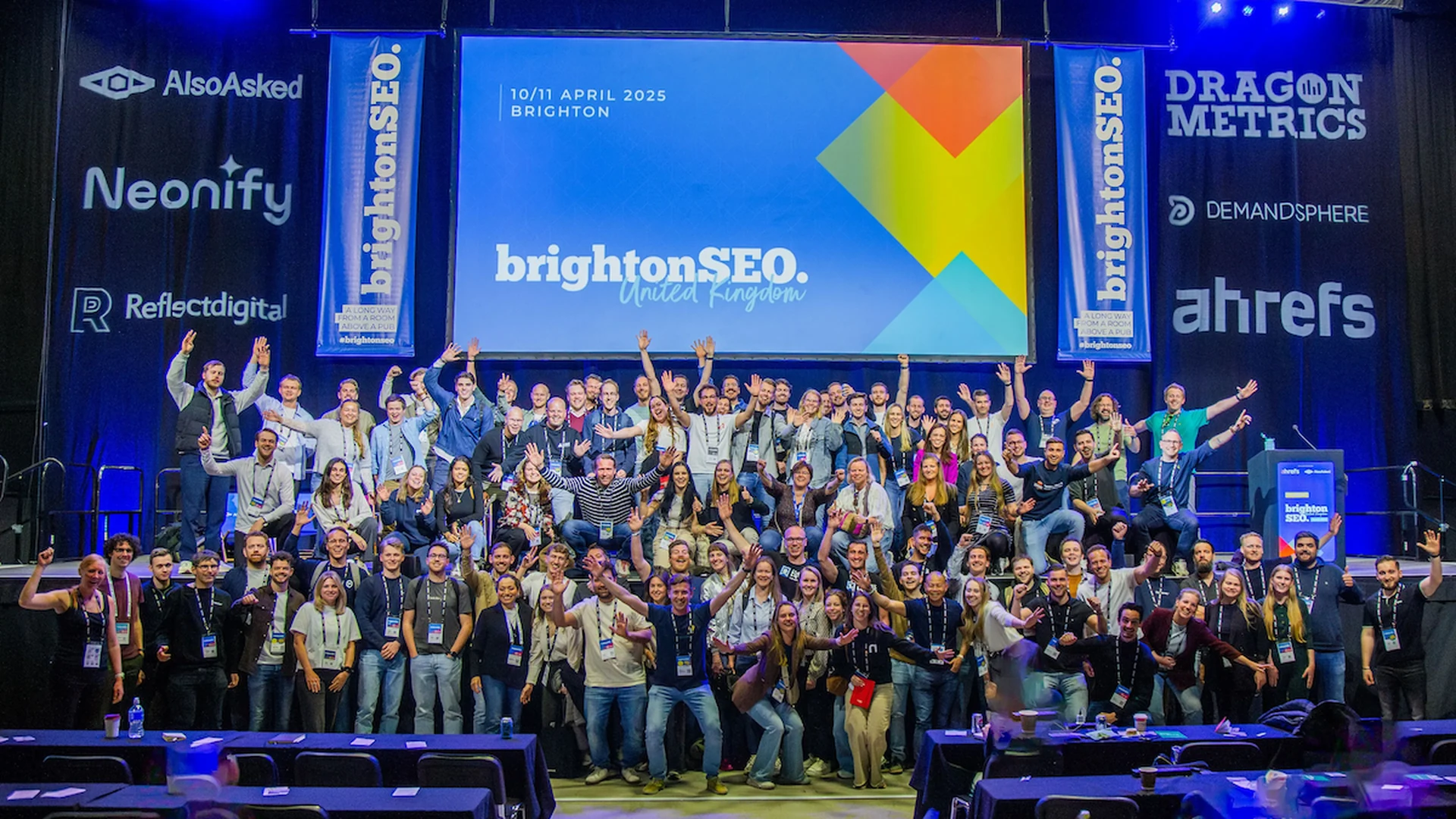
SEO conferences 2026 is the curated guide to the global and regional events every SEO, SEM or AI SEO professional should weigh this year. It covers tier-1 conferences (BrightonSEO, MozCon, SMX, Pubcon, INBOUND, Chiang Mai SEO), the new AI search and GEO-focused events, virtual vs in-person trade-offs, an ROI framework for deciding which one to attend, and the playbook to maximise every trip.

Tools for SEO
Thirty tools for SEO ranked for the 2026 stack — AI SEO platforms, all-in-one suites, keyword research, technical crawlers, rank trackers, analytics. AI SEO is treated as its own category, with SEOTopSecret OS at the top of it. Tools whose category was retired by AI search and the 2024–2025 spam updates are still listed but flagged OBSOLETE so you know what to cut.