
SEO for hotels
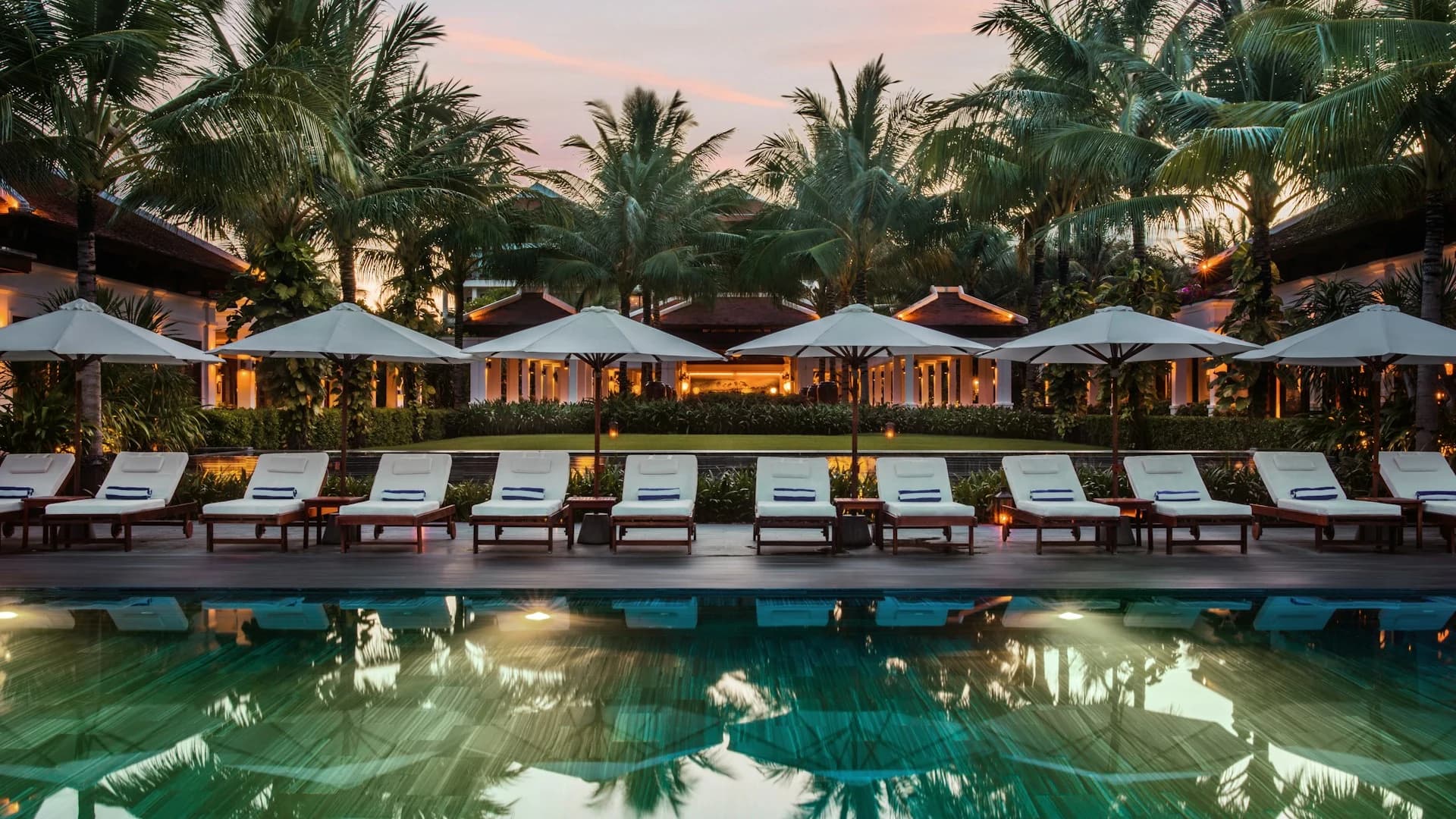
SEO for hotels combines organic rankings, Google Hotel Search, Maps, and Hotel/Room/Offer schema to grow direct bookings and reduce OTA dependency.

For decades the hotel industry relied on three distribution channels: direct bookings by phone, physical travel agents and, since the 2000s, OTAs like Booking.com, Expedia and Hotels.com. The landscape has shifted — the guest now starts their search in Google, ChatGPT or Maps, and the booking is won (or lost) long before the traveller ever opens an OTA. SEO for hotels has become the strategic lever that decides whether a hotel pays 18% commission on every room or captures the guest directly at near-zero marginal cost.
This guide is the playbook we use at SEOTopSecret with boutique hotels, regional chains and premium hospitality projects. It is not theory — these are the concrete steps that moved the direct-booking mix 8–15 percentage points in 12 months for clients who followed the order.
What hotel SEO really is
Hotel SEO is not “doing SEO” on a hotel site — it is a discipline with its own rules. It combines three layers that must operate in sync:
- Classic organic SEO: transactional keywords (“boutique hotel Mexico City”, “hotel with pool Tulum”), destination content, local backlinks, domain authority.
- Google Travel stack: Google Hotel Search (formerly Hotel Finder), Google Maps, Google Business Profile with native booking links, Google Hotel Ads as a paid complement.
- Structured data: Hotel, HotelRoom, Offer, LodgingBusiness schema — without it Google cannot surface your price and availability in the result.
“In hospitality, SEO does not compete against other hotels — it competes against Booking and Expedia. The win is measured in percentage points of direct-booking mix.”
Why hotel SEO is the highest-ROI investment in the sector
The maths is brutal. An 80-room hotel with an ADR of USD 180 and 72% occupancy generates roughly USD 3.8M a year in room revenue. If its booking mix is 55% OTA / 45% direct (sector average), it is paying close to USD 375K a year in OTA commissions (15–18% on the OTA portion). Shifting the mix to 35% OTA / 65% direct via SEO + direct frees ~USD 170K of margin per year — with an SEO investment that rarely exceeds USD 30–50K a year.
Ranking factors specific to the hotel sector
Classic SEO factors still apply, but the hotel sector has its own signals that move the needle far more than in other verticals.
| Factor | What it controls | Impact |
|---|---|---|
| Google Business Profile completeness | Photos, hours, attributes, booking link, posts, Q&A | High — foundation of Local Pack and Hotel Pack |
| Fresh reviews with responses | Volume, average rating, hotel response speed | High — quality signal for Google and the user |
| Valid Hotel + Room + Offer schema | Price, availability, amenities, aggregate rating | High — without valid Offer no free Hotel Search listings |
| Mobile Core Web Vitals (LCP, INP, CLS) | Load speed and responsiveness of booking engine | High — 78% of hotel searches are mobile |
| Destination and neighbourhood pages | Editorial content about the area, POIs, activities | Medium-high — captures informational long-tail |
| NAP consistency | Identical name, address, phone on site, GBP, directories | Medium — Google validates entity across sources |
| Local and travel backlinks | Mentions in travel media, destination guides, travel blogs | Medium — thematic authority of the domain |
| Hreflang if you operate multi-language | en / es versions correctly cross-linked | Medium — prevents cannibalisation between markets |
The 7-step hotel SEO playbook
This is the operational protocol we apply to new hotels and to rescues of sites with a low direct mix. The order matters — steps 1–3 are foundations, 4–7 are growth.
Step 1: 100% complete Google Business Profile with booking link
Before the website, before schema, before any backlink, your Google Business Profile must be flawless. Non-negotiable elements:
- Primary category: Hotel (exact — not “Resort” or “Lodging” if you are an urban hotel).
- Photos: at least 30 images — facade, lobby, every room type, amenities, restaurant. Refresh every 90 days.
- Attributes: every applicable one — pet friendly, EV charging, pool, gym, spa, parking, breakfast, accessibility.
- Booking link: connect your booking engine (SiteMinder, Cloudbeds, Mews, SynXis) via Google Hotel Booking Links so the “Book” button routes to your own site.
- Weekly posts: offers, events, updates — Google favours active profiles.
- Q&A: preload 10–15 common questions answered by the hotel (check-in, pets, parking, breakfast, transfer).
Step 2: Hotel + Room + Offer schema without errors
Schema is what allows Google to surface price, availability and rating directly in the result. Minimum implementation:
- Home / main hotel page:
@type Hotelwith name, url, address, geo, telephone, priceRange, starRating, aggregateRating, amenityFeature, image. - Each room page:
@type HotelRoomnested inside the Hotel, with bed (BedDetails), occupancy (QuantitativeValue), floorSize, amenityFeature. - Offer / price:
@type Offerwith priceCurrency, price (the minimum flex rate available), availability, validFrom/validThrough, url to the booking engine. - FAQPage: on the hotel FAQ page.
- BreadcrumbList: Home › Rooms › [Type].
Validate everything with the Schema Markup Validator and the Rich Results Test. A syntax error inside Offer keeps you out of free Hotel Search listings.
Step 3: Mobile Core Web Vitals in green
78% of hotel searches happen on mobile. If your site exceeds 2.5s LCP, you lose the ranking and the booking in the same session. Priorities:
- Room images in WebP with lazy loading and srcset — the gallery is the biggest offender for slow LCP.
- Booking engine widget loaded with
loading=“lazy”or deferred until interaction — heavy and blocks INP. - CDN with edge caching (Cloudflare, Fastly) — guests come from multiple countries.
- HTTP/2 or HTTP/3, HSTS, no unnecessary redirects in the booking flow.
Step 4: Destination, neighbourhood and experience pages
This is where you win the long-tail that OTAs do not cover with quality. Build editorial pages about:
- Your neighbourhood: “What to do in Surry Hills”, “Best restaurants near Fitzroy”, “How to get around Tulum without a car”.
- Area comparisons: “Polanco vs Roma Norte: where to stay”, “Playa del Carmen vs Tulum for couples”.
- Themed experiences: “Hotels with a pool in Mexico City”, “Pet-friendly hotels in Condesa”, “Sustainable hotels in the Riviera Maya”.
- Seasonal guides: “What to do on Day of the Dead in Oaxaca”, “Beach hotel sales during Hot Sale 2026”.
These pages link to specific rooms with clear CTAs (“Check availability”, “Book now”) and live under /blog/ or /destinations/, never in deep URLs with no hierarchy.
Step 5: Reviews — volume, freshness and responses
Google uses reviews as a quality signal for the Hotel Pack and the organic result. Protocol:
- Automated post-stay email 24 hours after checkout with a direct link to leave a Google review.
- Target: 4–8 new reviews a month (depending on size) with average rating > 4.4 stars.
- Respond to every one — positives within 48h, negatives within 24h, always with a human tone and no copy-paste.
- Never fake or pay for reviews — Google detects patterns and penalises Local Pack rankings hard.
Step 6: Manage the OTA vs direct balance
An OTA booking is not “a lost booking” — it is a guest who already arrived at your hotel. The work starts there: convert that OTA guest into a direct guest next time. Tactics:
- Visible Best Rate Guarantee on your home and booking engine — promise to match any OTA price.
- Direct perks: late checkout, welcome drink, upgrade if available — direct-only benefits.
- Loyalty programme — 10% off on second stay if they book through your site.
- Defensive SEM on your own hotel name to block OTAs bidding on your brand (it is legal and Booking does it to everyone).
Step 7: Continuous measurement and optimisation
Without measurement there is no hotel SEO — only hope. Minimum monthly dashboard:
- Pure SEO: rankings for 20 keywords (10 destination + 10 brand), impressions and clicks in Google Search Console, organic sessions in GA4.
- Product: impressions and clicks in Google Hotel Search, GBP views and clicks, booking-link CTR.
- Business: direct mix % (direct bookings / total bookings), direct ADR vs OTA ADR, RevPAR, CPA by channel.
Hotels in AI Overviews, ChatGPT and generative engines
In 2026 a growing share of travel decisions starts inside ChatGPT, Gemini or Perplexity — “give me 5 boutique hotels in Surry Hills with a good pool”, “compare this hotel to that one”. To get your hotel cited:
- Content with clear Q&A structure — models extract direct answers better than dense prose.
- Consolidated brand entity — LinkedIn, Wikipedia (if applicable), mentions in recognised travel media.
- Hotel + HotelRoom + Offer schema — generative engines use structured data to build comparisons.
- Allow OAI-SearchBot, PerplexityBot and GoogleOther in robots.txt.
- llms.txt at the root of the domain with a clear description of the hotel, its location and its differentiators.
More detail on this in our guides to SEO for ChatGPT and SEO for Gemini.
The 6 most common mistakes in hotel SEO
- Not defending your own brand in SEM. Booking bids on your hotel name. If you are not #1, you pay them 18% commission on a booking that was already yours.
- Incomplete or missing Offer schema. Without valid priceCurrency, price, availability and validThrough you do not qualify for free Hotel Search.
- Slow booking engine or one that blocks the main thread. A heavy widget kills INP and tanks mobile ranking.
- Generic or stock photos. Google favours profiles with unique photos of the real hotel. Refresh every 90 days.
- Not responding to negative reviews. The most visible signal of operational neglect — hits CTR and ranking.
- SEM-only, no SEO. Every peak season you pay more per booking because no compounding organic asset was built.
Closing: hotel SEO is profitability, not marketing
In almost no other vertical is the relationship between SEO and margin as direct as in hospitality. Every percentage point the direct mix climbs is net margin that used to leak to OTA commission. Hotels that understand this and treat SEO as a profitability lever — not as one more marketing line item — are the ones finishing the decade with healthy balance sheets.
The 7-step playbook is not optional or order-agnostic. It works in the sequence described: foundations first (GBP + schema + CWV), then growth (destination content + reviews), then mix optimisation (OTA vs direct) and continuous measurement. Skipping steps produces hotels with traffic but no direct bookings, or rankings but no conversion.
If you want to apply this framework to your property, at SEOTopSecret we operate hotel SEO end-to-end — from the initial audit to monthly management of the direct mix.
Frequently asked questions
What is SEO for hotels?+
It is the discipline of positioning a hotel in Google and in AI engines to capture qualified demand before the user lands on Booking, Expedia or any other OTA. It combines three fronts: (1) classic organic SEO — transactional keywords, destination content, local backlinks; (2) presence inside Google Travel surfaces — Google Hotel Search, Google Maps, Google Business Profile with booking links; (3) structured data (Hotel, Room, Offer, LodgingBusiness) that lets Google show price, availability and rating directly in the result. The end goal is shifting the booking mix toward direct.
What is the difference between hotel SEO and hotel SEM?+
SEO is organic and compounding — you invest in content, schema and domain authority to appear without paying per click. SEM is paid and transactional — you buy clicks in Google Ads, metasearch (Google Hotel Ads, Trivago, TripAdvisor) and display. A healthy hotel mix is 60–70% SEO + content + direct, 20–30% defensive SEM on brand and destination, and the rest OTAs. SEM-only means paying for every booking forever; SEO-only means being slow during peak season. Both complement each other.
How does Google decide which hotels to show in the Hotel Pack?+
Google combines relevance signals (destination keyword + transactional intent), proximity (distance from the searched city centre or point of interest), quality (review rating, NAP consistency, Google Business Profile completeness) and structured product data (fresh price, availability, cancellation policy via a feed to Hotel Ads or Offer schema). Domain authority of the hotel's own site and mobile page speed also matter. To appear consistently in the Hotel Pack you need a price feed + a pristine GBP + fresh reviews + valid LodgingBusiness schema.
What schema should a hotel use?+
The baseline is @type Hotel (or LodgingBusiness for broader lodging) on the homepage and every room page. Each concrete room uses @type HotelRoom nested inside the Hotel, with bed, occupancy, amenityFeature and photo properties. Pricing and availability are declared via @type Offer (priceCurrency, price, availability, validFrom/validThrough). Complement with PostalAddress, geo (GeoCoordinates), aggregateRating (when you have real on-site or Google reviews), FAQPage on FAQ pages and BreadcrumbList for hierarchy. Without a valid Offer you do not qualify for free Hotel Search listings.
Should a hotel compete against OTAs on the same keywords?+
Yes, but with strategy. Booking, Expedia and Hotels.com have massive domain authority and unlimited SEM budget on 'hotel in [city]'. The winnable battle is not the generic keyword — it is qualified long-tail ('boutique hotel central Melbourne', 'sustainable hotel Fitzroy', 'pet-friendly hotel Sydney harbour'), informational destination pages ('what to do in Surry Hills', 'best neighbourhoods to stay in Melbourne') and your brand. On your own brand NEVER give up the #1 position — OTAs bid on your hotel name to resell your own room charging you 15–22% commission.
How do you measure the real business impact of hotel SEO?+
Three levels. (1) Pure SEO: rankings for destination-transactional + brand keywords, impressions and clicks in Google Search Console, organic traffic in GA4. (2) Product: impressions and clicks in Google Hotel Search, GBP CTR, clicks on the 'Book' button from GBP. (3) Business: direct bookings / total bookings (direct mix %), ADR (average daily rate), RevPAR, CPA of the direct channel vs CPA via OTAs (which includes commission). The north-star metric is direct mix % — it should grow 2–5 percentage points per year if SEO is working.
Follow SEOTopSecret on LinkedIn
Weekly posts on AI SEO, GEO, and growth operating systems. No fluff.
Set SEOTopSecret as a preferred source
See more of our coverage in Top Stories on Google.
Keep reading

Why I built SEOTopSecret
After 25 years leading senior SEO for 100+ brands across four continents, the bottleneck was never the work — it was encoding how a senior consultant thinks so that thinking could run 24/7.
SEO conferences 2026
The curated guide to the global and regional SEO 2026 conferences every SEO, SEM, or AI SEO professional should weigh — with an ROI framework to decide which ones earn the spend.
Coworking near me
Searching coworking near me usually means a meeting tomorrow, a hybrid team that needs a base, or a founder tired of working from the kitchen counter — three different problems with three different answers. This guide ranks verified spaces in the seven largest US coworking markets.