
SEO vs UX
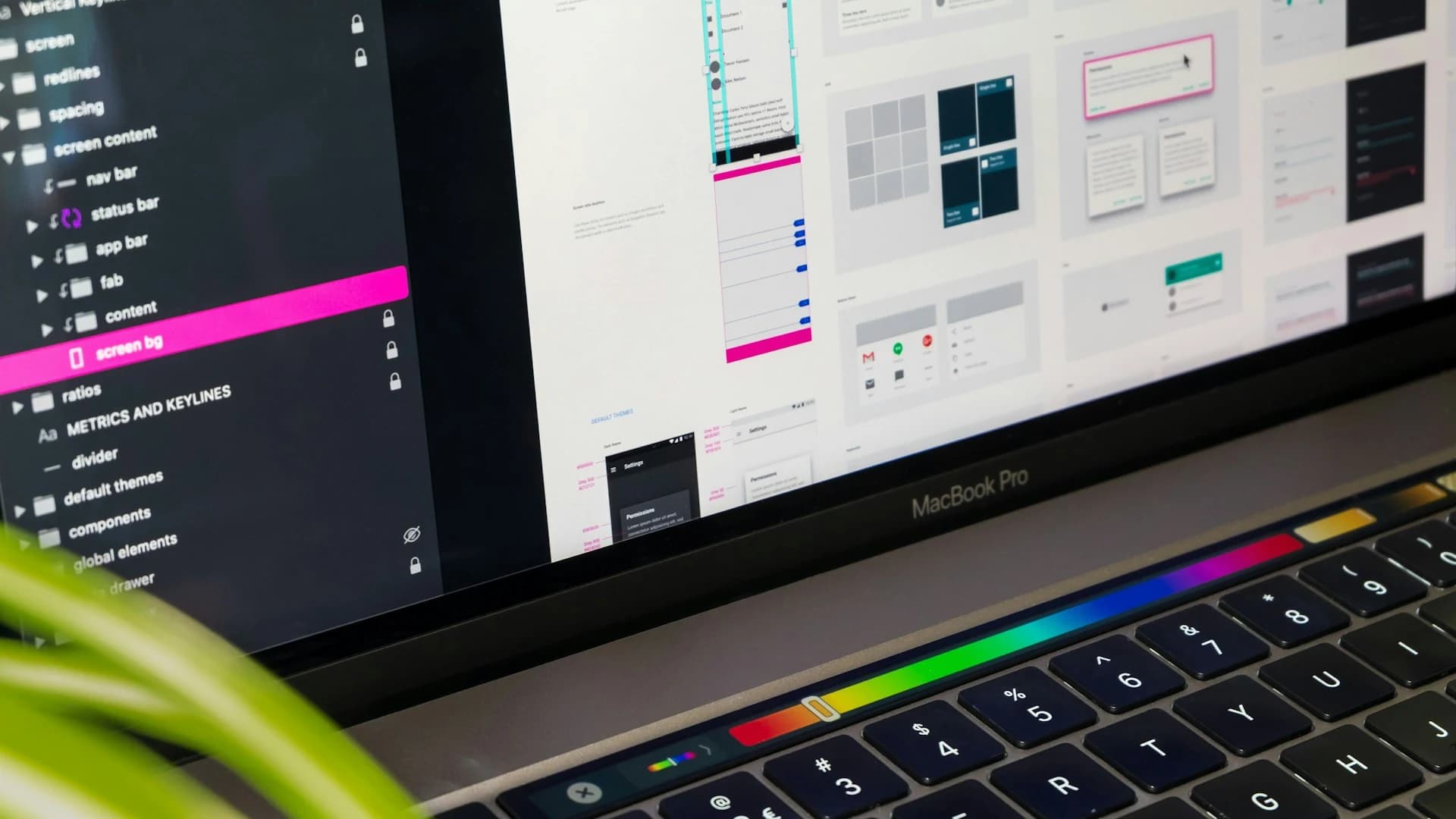
SEO vs UX stopped being two disciplines fighting for the same budget — in 2026 the same work serves both, and the Australian brands that lock it in a single operation are the ones winning rankings and citations at the same time.

Marketing teams still treat them as two separate kingdoms. One side optimises for the algorithm; the other side optimises for the human. Budget gets split, agencies get hired in parallel, and at the end of the quarter nobody can explain why traffic is up 40% and revenue is flat. The debate is framed as a rivalry because the org chart makes it one — not because the discipline demands it.
In 2026 the question isn't which one matters more. The question is whether your team is still running them in separate lanes while your competitors run them as a single operation. This article maps where the real overlap sits, where the friction historically was, and how the brands winning both rankings and conversions integrate the two under one KPI.
“Ranking without converting is a tax. Converting without ranking is a ceiling. The win is doing both in the same breath.”
Why the war was never real
The false rivalry comes from a 2010-era internet where SEO meant keyword density and UX meant visual polish. Those definitions don't hold anymore. Modern SEO is about serving search intent — which is a UX problem. Modern UX is about reducing cognitive load and friction to the next action — which is what search engines measure when they score a page. Every signal that matters in 2026 sits in the overlap.
| Signal | Feels like SEO | Feels like UX | Actually is |
|---|---|---|---|
| Core Web Vitals (LCP, INP, CLS) | Ranking factor | Page experience | Both — UX metric adopted as ranking signal |
| Title tag + meta description | On-page SEO | SERP preview copy | Both — conversion copy on a SERP surface |
| Internal linking | Link equity flow | Navigation | Both — crawl path AND user path |
| Content structure (H1/H2/H3) | Semantic hierarchy | Scannability | Both — bot readability AND human readability |
| Page speed | Technical SEO | Performance UX | Both — ranking signal AND conversion driver |
| FAQ sections | Schema + featured snippets | Answer-first layout | Both — AI Overview eligibility AND user clarity |
The five historical battlegrounds — and the actual resolution
1. Keywords vs. clarity
The old SEO stuffed keywords. The old UX stripped them out for readability. The 2026 resolution: semantic content written in natural language that hits the query verbatim in strategic anchors (H1, opening of H2s, image alt) without forcing it elsewhere. Search engines reward the first relevant mention; humans tolerate one precise keyword but punish repetition. The discipline is writing a citable passage, not counting density.
2. Long-form content vs. scannable layouts
SEO favours depth — 1,500–3,000 words of authoritative content. UX favours fast answers. The resolution isn't shorter content; it's better-structured depth. The first 150 words answer the query directly. Every H2 opens with a self-contained passage. Tables, bullet lists, and callouts carry the weight. Users who want the answer get it in 15 seconds; users who want the full reasoning stay for the scroll. Both read the same page differently — and that's the design goal.
3. Exact-match URLs vs. intuitive navigation
Keyword-rich slugs used to win rankings. Short, intuitive slugs used to win usability. Modern practice lands in the middle: slug matches the primary keyword verbatim when that keyword is how users would describe the page to a mate. If the keyword is awkward to say out loud, the page targets a cleaner phrase. H1, URL, and title tag stay aligned — but on the readable version of the phrase, not the scraped-from-Ahrefs version.
4. Links everywhere vs. focused conversion paths
SEO wanted internal links spraying every page. UX wanted a narrow funnel to the CTA. The resolution is contextual linking: every internal link is editorially useful — it takes the reader to the next logical step in the journey. Link sprawl that distracts from the primary action hurts both rankings (low engagement signals) and conversion. The rule: every internal link either deepens the reader's understanding or moves them toward the action. No third category.
5. Technical schema vs. clean frontend
Designers used to strip out anything that wasn't visible. SEOs insisted on layers of microdata. In 2026 the schema lives in the head of the document as JSON-LD — invisible to the user, readable to both search engines and AI models. There's no visual cost anymore. A site without Article + FAQPage + BreadcrumbList schema isn't cleaner; it's undercommunicating.
Core Web Vitals — the bridge everyone already crossed
If there's one place the old debate was definitively settled, it's Core Web Vitals. Google adopted three pure UX metrics — loading (LCP), interactivity (INP), and visual stability (CLS) — as ranking signals. A page that loads in under 2.5 seconds, responds to input in under 200ms, and doesn't shift layout during load ranks better and converts better. Same optimisations, two payoffs. Any team still treating performance as "a design concern" or "a SEO concern" is fighting a war their competitors stopped fighting in 2022.
SXO — Search Experience Optimisation
The modern name for running both as one discipline is SXO — Search Experience Optimisation. It's not a new tool or a new framework; it's an operating model. Instead of an SEO team optimising for keywords and a UX team optimising for conversion, one team owns the full journey from search intent to completed action. The KPI isn't ranking or conversion in isolation — it's qualified traffic that converts.
Concretely, SXO means: the person writing the brief understands both search intent and the conversion flow. The person building the page cares about Core Web Vitals and the hierarchy of the argument. The person measuring results reports rankings, engagement, and revenue on the same dashboard. If those three roles sit in three different agencies, the handoffs destroy the work.
A practical checklist — is your site already doing SXO?
- H1, URL, and title tag are aligned on the primary keyword — and the keyword is how real users describe the page, not an Ahrefs phrase nobody says out loud.
- Every H2 opens with a self-contained passage that answers the sub-query without needing the previous paragraph.
- Core Web Vitals pass on mobile — LCP under 2.5s, INP under 200ms, CLS under 0.1. Measured on real devices, not lab tests only; it's the foundation of mobile SEO.
- Internal links are editorial — every link either deepens understanding or moves the reader toward an action. No link farms at the bottom.
- Schema covers at minimum Article + FAQPage + BreadcrumbList, with commercial pages adding Product or Service.
- FAQs answer real questions — pulled from Search Console, AI engines, and sales calls. Not padded with keyword variants.
- The primary CTA is visible without scroll on mobile, and the action it describes matches the search intent of the keyword the page targets.
- Analytics track both ranking and conversion on the same dashboard — not in separate tools owned by separate teams.
The only winner is the customer
The end of the debate isn't that SEO won or UX won. It's that the user — the person typing a query or asking ChatGPT for a recommendation — doesn't care which team optimised the page. They care whether it answers the question, loads fast, reads clearly, and gets out of the way. A page that does all four ranks, converts, and gets cited by AI engines. A page that does three of four loses to the competitor that does all four.
SEOTopSecret is built on this logic. Briefs, schema, rank tracking, Core Web Vitals monitoring, and AI citation tracking sit in one workspace so the same operator ships the full page instead of handing it across three tools. Starter USD 249/mo, Pro USD 499/mo, Scale USD 1,499/mo, Enterprise from USD 3,000/mo. 7-day trial, cancel anytime.
Frequently asked questions
Is SEO more important than UX?+
Neither. In 2026 they are two sides of the same system: SEO brings qualified traffic and UX converts it. A site that ranks but doesn't convert is a leaky bucket; a site that converts but doesn't rank has no one to convert. The discipline that integrates them is called SXO — Search Experience Optimisation.
What is SXO?+
SXO (Search Experience Optimisation) is the operational framework that unifies SEO and UX under a single KPI: qualified traffic that converts. Instead of optimising rankings on one side and conversion on the other, SXO designs the journey from search intent to completed action as one flow — matching content, layout, speed, and calls-to-action to what the user came to do.
Do Core Web Vitals belong to SEO or UX?+
Both. Core Web Vitals (LCP, INP, CLS) are UX metrics that Google adopted as a ranking signal. That's exactly why they sit in the overlap: a page that loads in under 2.5 seconds, responds to interaction in under 200ms, and doesn't shift layout ranks better AND converts better. Ignoring them penalises you twice.
Can a page with perfect UX fail at SEO?+
Yes, and it happens constantly. A site can have flawless design, smooth navigation, and fast load times — and still have no schema, thin metadata, broken internal linking, or content that doesn't answer any real search intent. Search engines don't feel beauty; they parse structure. UX without SEO stays invisible.
How do you know if your team is working on SEO or UX in isolation?+
Three signals: (1) the SEO agency hands over keywords and briefs, the design team ships layouts, and nobody owns the handoff; (2) rankings go up but conversion rate stays flat or drops; (3) the homepage has a hero the design team loves and copy the SEO team bolted on. If any of those apply, the problem isn't SEO or UX — it's that neither owns the final output.
Follow SEOTopSecret on LinkedIn
Weekly posts on AI SEO, GEO and growth operating systems. No fluff.
Set SEOTopSecret as a preferred source
See more of our coverage in Top Stories on Google.
Keep reading

Why I built SEOTopSecret
After 25 years leading senior SEO for 100+ brands across four continents, the lesson stayed the same: the bottleneck was never the work — it was encoding how a senior consultant thinks so that thinking could run 24/7.
SEO conferences 2026
The curated guide to the global and regional SEO 2026 conferences worth attending — with an APAC and Australian lens, plus an ROI framework for each event.

Coworking near me
Searching coworking near me usually means a meeting tomorrow, a hybrid team that needs a base, or a founder tired of working from the kitchen bench — three different problems with three different answers. This guide ranks verified spaces in every Australian state and territory.