
SEO for Legal Firms
SEO for legal firms in Australia combines high buyer intent with sharply rising Google Ads CPCs — family law and personal injury searches in Sydney, Melbourne, and Brisbane regularly clear AUD 40 a click. This guide covers the full stack: Google Business Profile, Attorney and LegalService schema, practice-area content clusters, reviews, and how to win citations in AI Overviews when someone searches for a family lawyer in Sydney or a conveyancing solicitor in Melbourne.


The Australian legal market has a property that makes it exceptional for SEO: search intent is among the highest in any vertical. When someone types family lawyer Sydney or conveyancing solicitor Melbourne, they are not browsing — they are days away from instructing a firm. The question is not whether demand exists. The question is why most Australian firms continue to pour budget into Google Ads at AUD 12–60 per click when the same dollars, applied to SEO, capture identical intent at unit economics 5–10x better.
This guide is what a senior SEO consultant would explain to the managing principal of an Australian firm before approving the next year's marketing plan. No empty promises, no tactics that stopped working in 2022, and enough technical depth to tell apart an agency that knows legal SEO from one that just knows how to ship blog posts.
5 truths about Australian legal SEO in 2026
- The local 3-pack captures more than 70% of clicks on searches like [practice] lawyer near me. If your Google Business Profile is not optimised, you are not in the game.
- Google rewards E-E-A-T (Experience, Expertise, Authoritativeness, Trustworthiness) with extra weight on YMYL (Your Money or Your Life) queries — and legal topics are textbook YMYL.
- Generic content no longer ranks. A 1,200-word piece titled "Top 10 reasons to hire a lawyer" will not even enter the index. What ranks: practice-specific content, anonymised real matters, citations to legislation and case law, authored or reviewed by an admitted solicitor with credentials visible.
- AI Overviews and ChatGPT are already cannibalising informational legal queries. If your content is not citable at the passage level, Gemini and ChatGPT skip you even when you rank in blue links.
- Reviews are a ranking signal, not just social proof. Firms with fewer than 4.5 stars and fewer than 30 reviews on Google rarely surface in competitive 3-packs in Sydney, Melbourne, Brisbane, or Perth.
Local SEO: the heart of legal firm SEO
SEO for Australian legal firms is, before anything else, local SEO. The dominant search intent is geographic — solicitor near me, [practice] lawyer in [suburb], law firms in [city]. That makes Google Business Profile priority one, ahead of the website itself.
What an Australian solicitor's GBP must contain
- Correct primary category: Law firm, or the most specific subcategory available (Family law attorney, Conveyancer, Criminal justice attorney, Employment attorney, Personal injury attorney).
- Dense description: 600+ characters covering practice areas, jurisdictions of admission (NSW, Victoria, Queensland, etc.), years of experience, office location, and representative matter types.
- Complete attributes: languages spoken (Mandarin, Cantonese, Vietnamese, Arabic — high signal in multicultural Australian metros), consultation options (free first consult vs paid), accessibility, payment methods, virtual consults.
- Weekly GBP posts: anonymised matter outcomes, legislative updates (changes to the Family Law Act, state conveyancing reforms, Fair Work amendments), CPD presentations, community work.
- Real photos: chambers, principals, conference rooms, exterior — never stock imagery (Google detects it and de-weights it).
- Pre-filled Q&A: anticipate the questions prospects ask and answer them yourself in the GBP Q&A; do not let a stranger answer for you.
Reviews — the decisive signal
On legal queries, Australian users read reviews before anything else — often before the practice-area pages. The threshold to compete in Sydney, Melbourne, or Brisbane is 4.7+ stars with 50+ recent reviews (last 12 months). The right process: ask every closed client for a review via SMS or email with a direct link, respond to every review (even 5-star) within 48 hours, and handle negative reviews with professional restraint — never disclose matter details, never get defensive. Be aware: the Australian Solicitors' Conduct Rules and state Legal Profession Uniform Law (NSW/VIC) place limits on testimonials and comparative claims; review replies must comply.
Practice-area content architecture
The most common mistake on Australian legal sites is one "Practice Areas" page with bullet points. The right structure is a content cluster per practice area, where each area has its own pillar page plus 8–15 satellite articles. Each satellite answers a specific question your market actually asks.
Building this content tree at scale without sacrificing senior quality is where a system of structured content briefs changes the math. Instead of asking a paralegal to "write something on adverse possession," you generate a brief with the correct intent, secondary keywords, the questions people actually search, and the exact format Google and AI Overviews reward.
Minimum structure per practice area
| Page type | Example (area: family law) | Approx volume |
|---|---|---|
| Practice pillar | Family lawyer in Sydney: complete guide to family law in NSW | 1 per practice area |
| Matter-type pages | Divorce, parenting orders, property settlement, binding financial agreements, AVOs | 5–10 per area |
| How much does it cost | How much does a divorce cost in Australia 2026 | 1 per area (high intent) |
| How to choose | How to choose a family lawyer in Sydney | 1 per area |
| Industry / scenario | Property settlement in de facto vs married relationships | 3–5 per area |
Upstream keyword research is what decides which practice areas you prioritise. Real volume, difficulty, and intent data — not the managing principal's intuition — should drive the order.
Attorney and LegalService schema — the technical layer almost no firm ships
Schema markup is JSON-LD that tells Google and AI engines exactly what your site is. For an Australian legal firm, five schemas are mandatory:
- Attorney or LegalService on the homepage, defining the firm as a legal entity with explicit practice areas.
- LocalBusiness with NAP identical to the Google Business Profile listing.
- Person schema for each principal and senior solicitor, including admission jurisdiction (e.g., admitted to the Supreme Court of NSW), year admitted, accreditations (Accredited Specialist — Family Law, Wills & Estates, etc.), and areas of practice.
- FAQPage on every practice-area pillar, with the 8–15 questions people actually search.
- Article + Author on every blog post, where the author is a real solicitor with a linked bio page.
Implementing and validating this stack manually is tedious, and most firms introduce errors on the first attempt — missing fields, NAP inconsistencies, badly nested objects. That is where a schema generator becomes critical: it produces JSON-LD validated against Schema.org and updated on every site change, without depending on the dev team for each adjustment.
E-E-A-T for Australian legal sites
Google treats legal queries as YMYL — the category where the quality and authority of the author matter more than in any other vertical. Five non-negotiable E-E-A-T signals for an Australian legal site:
- Admission and practising certificate visible on every author byline and every principal page — admission jurisdiction, year admitted, current practising certificate number where applicable.
- Real bios with years of experience, notable matters (anonymised), publications, CPD talks, Law Society memberships (NSW, VIC, QLD), and accreditations (Accredited Specialist designations).
- Citations to legislation and case law — specific sections of the Family Law Act 1975, Fair Work Act 2009, state Civil Procedure Acts, and controlling High Court or Federal Court decisions, not generic claims.
- Visible update dates: Australian law evolves — federal amendments, state legislative sessions, new appellate decisions. An undated article or one last reviewed three years ago loses credibility with Google and with the reader.
- Privacy Policy, Terms, and Disclaimer pages covering solicitor-client relationship, jurisdictional limits, Privacy Act 1988 compliance, and "this is not legal advice" language. Google audits whether a legal site complies with the very rules it practises.
Brand voice for an Australian firm — authority without arrogance
The tone of an Australian legal site is a brand decision, not just stylistic. The boutique firms winning organic in 2026 are adopting a clear, direct voice without unnecessary legalese — precisely because the top-tier incumbents still write in jargon the average client cannot decode. Holding that voice consistent across hundreds of pages takes discipline, and is where an enforced brand voice system stops being nice-to-have: it defines tone, banned words, explanation structure, and applies automatically to every new content brief. The result: 20 solicitors writing in a consistent voice without an editor reviewing every article.
AI Overviews and ChatGPT — the new layer
A growing share of informational legal queries in Australia are resolved by Google with AI Overviews before any blue links render. When someone asks how much does a divorce cost in Australia, Gemini answers directly in the SERP citing 2–4 sources. If your site is not one of those sources, you do not get the click — or the lead. The difference between citable and invisible reduces to three factors:
- Passage citability: your content has paragraphs that answer the question self-sufficiently, without the reader needing to read the whole page.
- Crawler accessibility: GPTBot, ClaudeBot, and PerplexityBot can read your site (not blocked in robots.txt).
- Brand mentions: your firm is mentioned in legal directories (LawTap, FindLaw Australia, Doyle's Guide, Best Lawyers Australia), state Law Society listings, and industry press — AI engines have ingested those signals.
Mistakes that sink Australian firms in SEO
- WordPress site running a generic "law firm" theme that takes 6+ seconds to render on mobile.
- A single "Practice Areas" page with bullets instead of dedicated pillar pages per area.
- Missing admission badges, no real solicitor photos, no biographies — generic "Our team" page that could belong to any firm.
- Reviews left unanswered or, worse, a duplicate GBP listing accidentally created at a serviced-office address with reviews split across two profiles.
- Spun or copied content from other Australian legal sites — Google detects it within hours and de-indexes the page permanently.
- Schema markup absent or misconfigured (this is where we find the most errors when auditing Australian legal sites).
- Review replies that disclose matter facts, breaching the Australian Solicitors' Conduct Rules on confidentiality.
“SEO for legal firms in Australia is not just another channel. It is the difference between paying Google Ads in perpetuity and building a digital asset that captures identical intent at a fraction of the recurring cost.”
A firm that invests in senior SEO with consistent method over 18–24 months builds a defensible moat: organic ranking on high-intent terms, citations in AI Overviews, accumulated reviews, and domain authority that compounds with every practice-area article. New competitors entering the market would need to invest twice as much for twice as long just to catch up.
Get a 1-page AI SEO audit for your site within 24 hours
We'll review your site's rank, AI visibility (ChatGPT, Gemini, Perplexity), and the three highest-leverage fixes. Sent by email within 24 hours. Free.
We use your details only to deliver this audit. No spam.
Frequently asked questions
Why does SEO matter for Australian legal firms?+
Because legal searches in Australia combine two characteristics that make organic the highest-ROI channel a firm can run: extreme buyer intent (someone searching for a family lawyer Sydney or conveyancing solicitor Melbourne is not browsing — they are days away from instructing) and Google Ads CPCs that have climbed sharply since 2023 (AUD 12–60 per click on family law, personal injury, and commercial litigation in tier-one metros). For a mid-sized firm, replacing paid clicks with organic capture means dozens of qualified leads per month at near-zero marginal cost after year one.
Which keywords should an Australian legal firm target?+
Three clusters. First, transactional local keywords: [practice area] [solicitor/lawyer] [city/suburb] — family lawyer Sydney, conveyancing solicitor Melbourne, employment lawyer Brisbane, criminal defence lawyer Perth. Second, informational queries by practice area: how much does a divorce cost in Australia, what to do after a workplace injury, how long does conveyancing take, statute of limitations for negligence claims. Third, comparison queries: best family lawyers in Sydney, top employment lawyers Melbourne, how to choose a personal injury solicitor. Informational content builds authority and feeds AI Overviews; transactional pages convert directly.
How does Google Business Profile affect SEO for an Australian law firm?+
Google Business Profile (GBP) is the single most underrated lever in Australian legal SEO. Around 70% of clicks on searches like [practice] lawyer near me go to the local 3-pack — the three results with the map at the top of the SERP. If your GBP is not optimised (correct primary category, dense practice-area description, photos, weekly posts, attributes), you do not surface. Multi-office firms with chambers in Sydney CBD, North Sydney, Parramatta, and a Melbourne branch need a per-office GBP strategy; mismanaging it leads to suspended profiles and reviews scattered across ghost listings.
What schema markup does an Australian legal firm website need?+
Five schema types are mandatory. Attorney or LegalService on the homepage to identify the firm as a legal entity. LocalBusiness with consistent NAP (name, address, phone). Person schema for each principal and senior solicitor with credentials (state Law Society admission, year of admission, areas of practice, accreditations such as Accredited Specialist). FAQPage on each practice-area pillar with the questions clients actually search. And Article + Author schema on every blog post, with the author's admission jurisdiction and bio linked. Schema, done correctly, signals to Google and AI engines that your site is operated by admitted practitioners — not a content farm.
How much does SEO for a legal firm cost in Australia?+
Three typical bands. Boutique firms (1–5 solicitors): AUD 3,500–8,000/month for specialised legal SEO produces visible results in 6–9 months. Mid-tier firms (6–25 solicitors, multiple practice areas): AUD 8,000–22,000/month for full-stack local SEO + content + technical + AI visibility. Large firms (multi-office, top tier): AUD 25,000+/month with practice-area content clusters, institutional authority work, and B2B query positioning. What does not work: generalist agencies at AUD 1,500/month producing thin content with no schema, no reviews program, and no practice-area depth.
How long does SEO take to rank an Australian legal firm?+
For a new domain: 9–14 months to start ranking on head terms (family lawyer Sydney). Long-tail (how to file X, statute of limitations for Y) can produce results from month 4. For an established domain with backlink authority: 4–7 months to substantive movement. The accelerators are three: senior content cadence (minimum 6–8 pieces per month with real E-E-A-T), pristine local SEO (GBP + a structured reviews program), and correct schema. Biggest delays: copied content, slow sites, missing solicitor bios with admission details, and a low or unanswered review profile.
Keep reading

Why I built SEOTopSecret
Why I built SEOTopSecret: after 25 years leading senior SEO for 100+ brands across four continents — including a chapter at Reprise Australia (IPG Mediabrands) in Sydney — the lesson stayed the same. The bottleneck was never the work. It was encoding how a senior consultant thinks so that thinking could run 24/7. That encoding is SEOTopSecret OS.
SEO conferences 2026
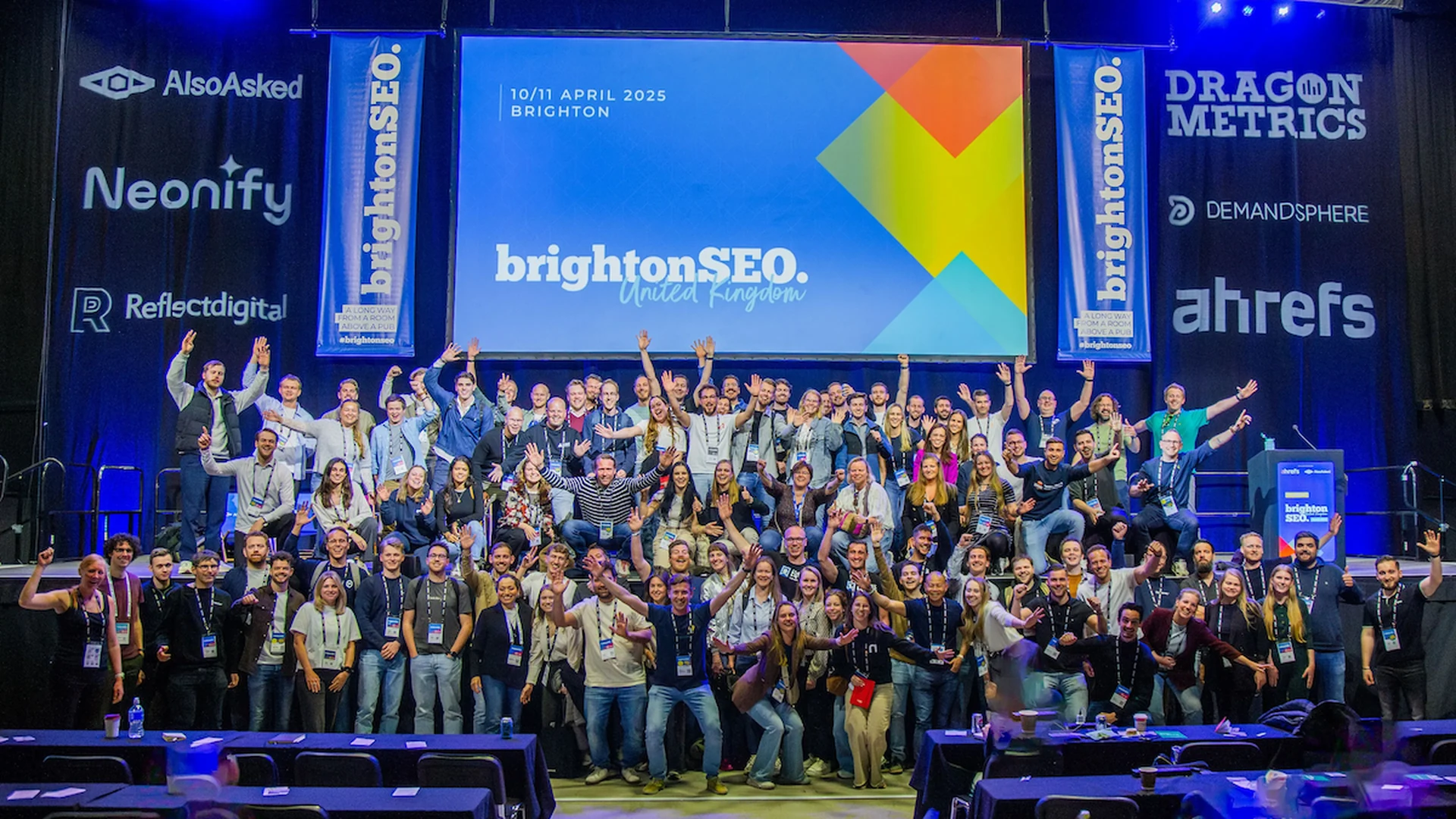
SEO conferences 2026 is the curated guide to the global and regional events every SEO, SEM or AI SEO professional should weigh this year, with a strong APAC and Australian lens. It covers the tier-1 conferences (BrightonSEO, MozCon, SMX, Pubcon, INBOUND, Chiang Mai SEO), the new AI search and GEO-focused events, the best picks in the Asia-Pacific region, virtual vs in-person trade-offs, an ROI framework and the playbook to maximise every trip.

SEO Agency Software
The classic Sydney SEO agency model — AUD 5,000–12,000/month retainers, fortnightly status calls, end-of-month decks — worked for fifteen years. In 2026 it stopped being the right answer for most Australian businesses. This guide explains why SEOTopSecret OS is the agency software replacing the retainer, includes a real-money savings calculator, and is honest about the three cases where a traditional agency still wins.